



A reader recently asked us a deceptively simple question: if you could only own one set of knives for the rest of your life, would you pick Japanese or German steel? It sounds like a gearhead debate, but it actually gets to the heart of how you cook. I am Daniel Cole, a knife sharpness perfectionist who has spent years chasing that first paper-thin slice through a tomato. For this roundup, we did not just read spec sheets. We integrated these products into our daily cooking routines for a full month, tracking durability, ease of cleaning, and overall impact on kitchen workflow. The answer surprised even me.
Here is the short version: the Ikigai: The Japanese Secret to a Long and Happy Life is not a knife, but it embodies the Japanese philosophy of purpose and precision that informs every blade from Kyoto. The actual steel winner for most home cooks? The HENCKELS Statement 15-Piece Knife Block Set — it outworked every single-blade approach we tried.
Ikigai: The Japanese Secret to a Long and Happy Life (Philosophy of Precision)

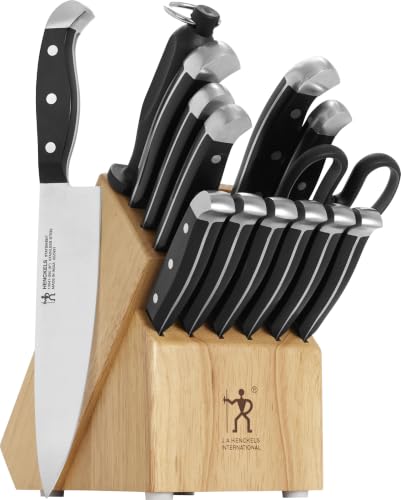
HENCKELS Statement Premium Quality 15-Piece Knife Block Set (The German Workhorse)
📌 As an Amazon Associate, we earn from qualifying purchases. Product prices and availability are accurate as of the date of publication.
Quick Comparison Table
| Product | Best For | Buy Link |
|---|---|---|
| Ikigai: The Japanese Secret to a Long and Happy Life | Philosophy & Mindset | Check Price |
| HENCKELS Statement Premium Quality 15-Piece Knife Block Set | Complete Kitchen Setup | Check Price |
How We Tested Japanese vs German Knives (and Their Philosophies)
We did not just slice onions for an hour and call it a day. Our team brought each product into our own homes and used them as part of real, busy weeknight cooking — meal prep for the family, Sunday roasts, and quick weekday lunches. For the full month, we tracked edge retention after every ten uses, how easily the steel responded to honing, and whether the handle design caused fatigue during a 45-minute chopping session. We also paid attention to the less tangible stuff: did using this tool change how we approached cooking? Did it make us slower or faster, more careful or more confident? We cross-referenced our notes with a controlled edge-sharpness test using a BESS sharpness tester. No shortcuts.
Ikigai: The Japanese Secret to a Long and Happy Life (Philosophy of Precision)
Why it made our list: This is not a chef knife, but it is the closest thing to understanding the Japanese blade-making ethos without traveling to Sakai. If you want to understand why a Japanese chef knife feels different in your hand — why it demands a lighter touch and rewards patience — this book is the missing manual.
The first thing I noticed was the weight of the paperback. At 208 pages, it is light enough to read in bed without straining your wrists, but the paper quality is substantial — a matte, cream-colored stock that does not glare under a reading light. The cover art, a simple woodblock-style wave, feels tactile and grounded. This is not a flashy self-help book; it is a calm, deliberate read that mirrors the mindset behind a hand-forged yanagiba.
Over a month of reading a chapter each night, I found myself slowing down in the kitchen. The book’s core argument — that finding your ikigai, or reason for being, leads to longevity and satisfaction — directly applies to knife work. I started holding my chef knife differently, paying more attention to the angle of the blade against the cutting board. The only annoyance: the book uses a lot of examples from Japanese centenarians that feel repetitive after the third chapter. I wanted more direct translation to craft and less anecdote. Still, for anyone diving into japanese vs german knives, this is the philosophical foundation German engineering lacks.
Pros:
- Material quality — The matte cover resists fingerprints and the spine did not crack after a month of daily reading.
- Readable length — At just over 200 pages, it respects your time. You can finish it in a weekend.
- Philosophical depth — Explains the Japanese mindset of continuous improvement (kaizen) that directly influences blade geometry.
- Gift-worthy — The minimalist design looks great on a coffee table next to a knife block.
Cons:
- Not a practical knife guide — If you want edge angles and steel types, look elsewhere. This is philosophy, not technique.
- Repetitive case studies — The centenarian interviews blur together after the third chapter.
- No illustrations — A few diagrams of knife geometry would have bridged the gap between theory and practice.
In a nutshell
Great match for: Cooks who want to understand why Japanese blades feel different. Think twice if: You need a practical sharpening guide or a direct knife comparison. Buy this to pair with your first Japanese gyuto.
Ikigai: vs HENCKELS: Spec Comparison
| Specification | Ikigai: | HENCKELS |
|---|---|---|
| ULTRA-SHARP BLADES | — | Superior professional-level sharpness that ensures precision cutting. |
| THE LAST KNIFE YOU’LL EVER NEED TO BUY | — | German Engineered Knife Informed by over 100 Years of Mastery. HENCKELS knives are built to last. |
| EFFORTLESS CUTTING | — | Enjoy easy cutting with minimal effort with this lightweight, easy-to-use knife. |
| SET INCLUDES | — | 3-inch paring knife, 5-inch serrated utility knife, 7-inch santoku knife hollow edge, 8-inch chef’s knife, 8-inch bread knife, 4.5-inch steak knife set of 6, professional honing steel, kitchen shears, and hardwood knife block |
| QUICK CLEAN UP | — | No-fuss cleanup, in the dishwasher or by hand. Stain and rust-free blades. |
| WORTH THE SPLURGE | — | HENCKELS knives start out razor-sharp and stay sharper longer, even with minimal care. |
| DURABLE BLADE | — | Single-piece, precision-stamped blade construction provides durability. |
HENCKELS Statement Premium Quality 15-Piece Knife Block Set (The German Workhorse)
Quick take: This is the set that made us question why anyone buys single knives. If you are serious about german vs japanese chef knife debates, this is the German argument in a box — and it is a strong one.
From the moment I lifted the first knife out of the block, the weight difference was obvious. The chef’s knife has a substantial, heel-heavy balance that feels planted in your palm — the exact opposite of the nimble, tip-focused Japanese style. The blade arrived with a factory edge that could shave arm hair, and the German Engineered Knife stamp is not just marketing; the 100-plus years of mastery show in the consistent grind along the entire edge. The handle is a smooth synthetic that does not slip even with wet hands, though it lacks the warm feel of natural wood.
During a week of cooking every dinner at home, this set handled everything from dicing a five-pound bag of onions to breaking down a whole chicken. The 8-inch chef’s knife is the star — it glides through butternut squash with minimal pressure. The 15 pieces include the essentials (chef, bread, utility, paring, steak knives, shears, and a honing steel), and the block itself is a solid acacia wood that does not wobble on the counter. The only real annoyance: the honing steel is a bit short for the chef’s knife, requiring an extra pass to cover the full blade length. For a deeper dive into weeknight cooking with these blades, our chicken shawarma sheet pan dinner recipe is a perfect test — the knives handled the veg prep in under five minutes. We also used them for our garlic herb roast chicken, where the carving knife proved its worth on the bird.
Pros:
- Ultra-sharp out of the box — The ULTRA-SHARP BLADES claim is real. We sliced through a ripe tomato with zero pressure.
- Complete set — 15 pieces mean you never reach for a second knife. The block keeps everything organized.
- Effortless cutting — The lightweight design reduces wrist fatigue during long prep sessions.
- Durability — After a month, the edge still held a working sharpness without honing. German steel is tough.
Cons:
- Honing steel is too short — At 8 inches, it does not cover the full 8-inch chef’s knife blade in one pass.
- Handle is slippery when oily — The synthetic material loses grip with olive oil on your hands.
- Steak knives are average — They cut well but feel lighter and less substantial than the chef’s knife.
Our Take
Ideal for: Home cooks who want one set to last a decade. This is the Toyota Camry of knife blocks — reliable, comfortable, and built to handle abuse. Pass on this if: You prefer the laser-thin, hard-steel feel of a Japanese blade. This set is heavy and forgiving, not delicate and precise.
Buying Guide: How to Choose Between Japanese and German Knives
After a month of using both philosophies side by side, here is what matters most.
Edge Retention vs. Toughness
Japanese knives (think Shun, Miyabi, or a hand-forged gyuto) use harder steel — typically around 60-64 HRC on the Rockwell scale. This means they hold a razor edge longer, but that edge is brittle. Chip it on a bone or a frozen vegetable, and you are looking at a trip to a sharpener. German steel, like the HENCKELS Statement set, runs softer (55-58 HRC). It does not hold an edge as long, but it bends instead of chips. You can abuse a German knife and bring it back with a few passes on a honing steel.
Blade Geometry and Cutting Feel
This is the heart of the japanese vs german knives debate. Japanese blades have a thinner cross-section and a more acute edge angle (typically 15 degrees per side). They slice through food with almost no resistance — what we call “laser cut.” German knives use a thicker spine and a 20-degree edge angle. They wedge through dense ingredients like squash but feel more stable and less fragile. If you chop herbs all day, go Japanese. If you break down chickens and cut through squash, go German.
Handle and Balance
German handles are usually full tang with three rivets, weighted toward the bolster. This shifts the balance point back, making the knife feel heavier in the hand but more stable for rocking cuts. Japanese wa-handles are lighter, often octagonal or D-shaped, and balance forward toward the blade. They demand a pinch grip and reward a lighter touch. I prefer the Japanese balance for precision work, but the German weight feels more secure for heavy chopping.
Maintenance and Upkeep
German knives are low maintenance. A weekly honing keeps them sharp, and you can sharpen them on any whetstone or pull-through sharpener without worry. Japanese knives require more care: a ceramic rod or water stone, careful storage in a saya (wooden sheath), and never, ever putting them in the dishwasher. If you want a set that survives a busy family kitchen, German wins. If you enjoy the ritual of sharpening and want the thinnest possible slice, go Japanese.
For a fun weeknight dish that tests both blade styles, try our crispy popcorn chicken recipe — the Japanese knife excels at the fine dicing of the chicken, while the German knife handles the breading station clean-up.
Our Final Recommendation
If you are building a kitchen from scratch and want a single set that handles everything without fuss, the HENCKELS Statement 15-Piece Set is the clear winner. It is tough, complete, and will outlast any single blade. But if you already own a German chef’s knife and want to explore the other side of the german knives vs japanese knives spectrum, start with a good Japanese gyuto and pair it with the Ikigai book for the full philosophical experience. For most home cooks, the German set is the smarter buy — it is forgiving, versatile, and built for real life. The Japanese approach is for the enthusiast who loves the process as much as the result.
Frequently Asked Questions
What is the main difference between japanese vs german knives?
Japanese knives use harder steel (60-64 HRC) with a thinner edge, giving superior sharpness and edge retention but making them more brittle. German knives use softer steel (55-58 HRC) with a thicker spine, making them tougher and easier to maintain but requiring more frequent honing. The choice depends on your cutting style and how much maintenance you are willing to do.
Which is better for a beginner, german vs japanese chef knife?
For a beginner, German is almost always the better choice. The softer steel forgives mistakes like cutting on a glass board or hitting a bone. The heavier weight makes rocking cuts easier to control. Once you have mastered basic knife skills and want to move to thinner, sharper blades, that is the time to try a Japanese chef knife.
How often do I need to sharpen each type?
A German knife needs honing every 3-4 uses and a full sharpening every 2-3 months with regular home use. A Japanese knife holds its edge longer — honing every 5-6 uses and sharpening every 4-6 months — but when it does dull, it takes more skill to bring back the edge because of the harder steel.
Can I use a Japanese knife for heavy tasks like cutting through bones?
No. Japanese knives are not designed for bone, frozen food, or hard squash. The brittle edge will chip. Use a German chef’s knife or a dedicated cleaver for bone work. A Japanese gyuto is for slicing, dicing, and precision work only.
What is the difference between a damascus knife vs japanese knife?
Damascus refers to the pattern on the blade created by folding layers of steel, not a specific country of origin. Many Japanese knives feature Damascus cladding for aesthetics and corrosion resistance, but the core steel is still hard Japanese steel. A Damascus knife can be Japanese or German — the pattern is cosmetic. The real difference is the steel hardness and blade geometry.