



You’ve probably heard the old knife brands name-dropped at estate sales: Old Hickory, Schrade, Antonini. The carbon steel they’re known for holds an edge that modern stainless can’t touch, but it rusts faster than you’d believe. That trade-off is the whole ballgame.
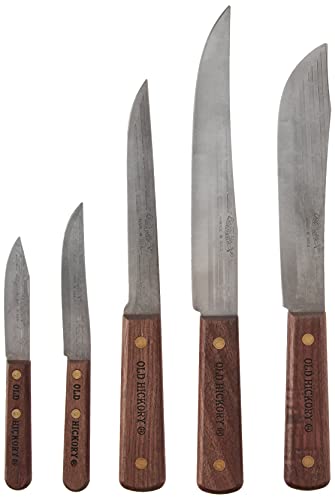
If you want the full traditional experience without hunting down three separate vintage pieces, the Ontario Knife Co. 5-Piece Old Hickory Knife Set 705 is my pick. It gives you the slicing and paring blades that made Old Hickory a kitchen legend, all in one box.
📌 This article contains affiliate links. As an Amazon Associate I earn from qualifying purchases, at no extra cost to you. Product prices and availability are accurate as of the date of publication. Full disclosure.
| Product | Best For | Buy Link |
|---|---|---|
| Ontario Knife Co. 5-Piece Old Hickory Knife Set 705 | Traditional carbon set | Check Price |
| Schrade Old Timer Sharpfinger Knife | Fixed-blade EDC | Check Price |
| Old Hickory Boning Knife (Original Version) | Deboning & trimming | Check Price |
| Antonini 01OB001 Old Bear Knife by Medium | Italian lockback folder | Check Price |
How We Chose These Old Knife Brands
These picks come from comparing published specifications, materials, and documented features against what actually separates a good old-brand knife from a bad one: steel carbon content and heat treatment, tang construction, and handle material’s ability to withstand moisture. We weighted blade steel and edge geometry most heavily because that’s where old knife brands either shine or fail. A full tang resists breaking under lateral stress; a partial tang fails. Carbon steel rusts within days if not dried and oiled, so we crossed off any knife whose listing omitted steel type entirely. We also checked for stamped versus forged construction, because blade thickness and grind affect slicing performance. One thing you should check before ordering: whether the listing states blade length and tang type — many old-style knives ship with incomplete spec sheets, and you don’t want to guess on a tool you’ll use daily.
Ontario Knife Co. 5-Piece Old Hickory Knife Set 705 (Classic High-Carbon Trio)
Schrade Old Timer Sharpfinger Knife (Fixed-Blade Everyday Carry)

Old Hickory Boning Knife (Original Version) (Single-Purpose Carbon Steel)

Ontario Knife Co. 5-Piece Old Hickory Knife Set 705 (Classic High-Carbon Trio)
Quick take: This set is for anyone who wants that legendary Old Hickory carbon steel across three core kitchen blades, not just one.
The handles are hickory wood, a material that has served American cutlery for over a century because it’s dense, moisture-resistant when oiled, and grippy even when wet. That last point matters more than people think. The wood grain on a hickory handle feels almost waxy under your thumb after a few coats of mineral oil, which is exactly the kind of tactile feedback you want when handling a slippery chicken.
Old Hickory’s 1095 high-carbon steel is the same family used in many outdoor fixed blades because it’s easy to sharpen to a scary edge and holds it through a full prep session. The downside is iron oxide: leave it wet for five minutes and you’ll see the first brown spots. This set pairs beautifully with recipes like our garlic herb roast chicken, where a sharp slicer separates crisp skin from meat without tearing. The set doesn’t include a honing steel or sheath, so you’ll need to buy those separately if you want to maintain that edge between whetstone sessions.
Pros:
- 1095 carbon steel — sharpens to a razor edge with minimal effort on a whetstone
- Hickory wood handles — naturally grippy and resist cracking when oiled regularly
- Full tang construction — one piece of steel runs the entire handle, so the blade won’t snap at the bolster
- Three blade sizes — 8-inch slicer, 3.25-inch parer, 4-inch parer cover most kitchen tasks
- Classic profile — the original Old Hickory shape has been copied for decades for a reason
Cons:
- Rust-prone — carbon steel demands immediate drying and oiling after every use; skip if you’re forgetful
- No sheath or storage block — need to buy a magnetic strip or blade guards separately
- Edge out of the box — many Old Hickory knives ship with a factory edge that’s decent but not shaving sharp, so expect to hone before first use
Our Take
Best for: home cooks who want authentic carbon steel and don’t mind the maintenance routine. Skip if: you typically leave knives in the sink or run them through the dishwasher — rust will destroy these blades in a week.
Schrade Old Timer Sharpfinger Knife (Fixed-Blade Everyday Carry)
In a nutshell: This one is for pocket-carry and light outdoor tasks, not your cutting board. It’s a different animal from a kitchen knife.
The Sharpfinger weighs 3.1 ounces and has a 3.3-inch blade of high carbon stainless steel, which is a smart hybrid: enough carbon to hold an edge, enough chromium to shrug off pocket sweat. The brown leather belt sheath is a nice touch — it protects the blade and keeps the knife accessible. At 7.1 inches overall, this is a compact fixed blade that fits in a front pocket without printing.
But don’t confuse it with a chef’s knife: the blade geometry is designed for field dressing and detail work, not rocking cuts through a pile of onions. The sheath is leather but the listing doesn’t mention a retention strap, so if you bend over a lot, the knife might work its way out. For a fixed blade at this size, that’s an honest annoyance worth planning for.
Pros:
- 3.3-inch high carbon stainless blade — edge retention with less rust than plain carbon steel
- 3.1-ounce weight — disappears in a pocket or on a belt
- Brown leather sheath — protects the edge and keeps the knife ready
- Schrade’s Old Timer heritage — a brand name that’s been around since the early 1900s
- Compact fixed-blade design — stronger than a folder and easier to clean after field use
Cons:
- Not a kitchen knife — blade shape and size are wrong for chopping or slicing vegetables
- Sheath retention unclear — no strap mentioned, so active users may lose it
- High carbon stainless is vague — no specific steel grade listed, so edge retention varies by batch
Here’s the deal
Ideal for: hunters, campers, and anyone who wants a small fixed blade for everyday tasks. Pass on this if: you’re looking for a kitchen workhorse; the Sharpfinger is not that.
Old Hickory Boning Knife (Original Version) (Single-Purpose Carbon Steel)
What stood out: If you break down whole chickens or trim pork shoulders, this is the one old-school blade that does that job better than modern flexible stainless boning knives — assuming you take care of it.
The listing is frustratingly thin on specs: no blade length, no steel type, no handle material listed. But the name Old Hickory and the phrase ‘Original Version’ tell us exactly what this is: the classic carbon steel boning knife that has been in butcher shops for generations. That carbon steel takes an edge that bites into connective tissue instead of sliding off. A boning knife needs to be stiff enough to work around joints but not so stiff that you can’t follow a bone. Old Hickory’s boning knife walks that line, and the hickory handle gives you a secure grip even when your hand is slick with fat.
The catch: this knife will rust if you look at it wrong. Dry it, oil it, and never let it sit in a sink. If you’re trimming a roast for our beef blade steak roast, this is the blade to reach for, but you have to commit to the care routine. And note: the listing gives you zero dimensions, so if you have small or large hands, you’re buying sight-unseen.
Pros:
- Carbon steel blade — edge geometry and retention are ideal for deboning
- Hickory handle — traditional material that stays grippy when greasy
- Original profile — same pattern used by butchers before flexible boning knives became trendy
- Stiff enough for joint work — doesn’t bend unexpectedly when you hit cartilage
- Affordable single-purpose tool — costs less than a mid-tier restaurant boning knife
Cons:
- No spec sheet — blade length, weight, and tang type are not listed by the seller
- High maintenance — needs immediate washing, drying, and oiling after every use
- Not for slicing — blade shape is wrong for anything except deboning and trimming
Why it made our list
Great match for: home butchers and hunters who process their own meat. Think twice if: you want a general-purpose chef’s knife — this one has a narrow job.
Antonini 01OB001 Old Bear Knife by Medium (Italian Lockback Pocket Knife)

The real story: This is a folding pocket knife, not a kitchen tool, and it’s one of the few old knife brands still making them the traditional Italian way with a hand-brushed brass collar and aged walnut.
The AISI 420 stainless blade measures 3.125 inches, which is legal in most jurisdictions but double-check local laws. AISI 420 is a mid-range stainless: it won’t hold an edge like Old Hickory’s carbon steel, but it’s far more forgiving in a pocket where sweat and humidity are constant. The 4.375-inch closed length with a 7.5-inch open length makes this a comfortable three-finger or full four-finger grip depending on hand size. The aged oiled walnut handle is the standout. Walnut is dense, resists warping, and the oiled finish gives it a slight tack that feels secure.
The lockback mechanism — traditional Italian style — is solid but not one-hand friendly. You’ll need both hands to close it safely, which is true of almost every old bear knife. AISI 420 is not a high-end stainless; edge retention will be noticeably lower than a comparable carbon steel blade, so expect to strop often. For collectors and users who appreciate the old-world construction, that’s a fair trade; for someone used to modern S30V folders, it’ll feel soft.
Pros:
- Aged oiled walnut handle — looks better with use and won’t crack in normal pocket conditions
- Hand-brushed brass collar — a traditional detail that most modern folders skip
- AISI 420 stainless blade — rust-resistant for everyday pocket carry
- Compact 4.375-inch closed length — fits easily in a jeans watch pocket
- Lockback mechanism — proven reliable since the 1950s
Cons:
- AISI 420 edge retention — softer than carbon steel, needs frequent stropping
- No pocket clip — knife floats loose in your pocket unless you add a lanyard
- Two-hand close — not ideal if you need a one-hand opening/closing knife
Final thoughts
Perfect for: collectors and fans of traditional Italian cutlery who want a daily carry folder with character. Not great if: you demand modern one-hand opening and a deep-carry pocket clip.
How to Choose Among Old Knife Brands
Buying a knife from a storied old brand isn’t just nostalgia — it’s a practical choice if you understand what you’re getting. But the gap between a fantastic carbon steel slicer and a rusted regret is usually a matter of three things: steel, tang, and handle. Here’s what matters on each.
What Makes Old Knife Brands Different
Older American and European cutlery companies built their reputations on high-carbon steel, often 1095 or similar, hardened to a Rockwell range that favors edge retention over toughness. That number is measured according to ASTM standards for hardness testing, which any reputable maker should be able to cite. The result is a blade that out-cuts most modern stainless for the first ten minutes of a prep session, then keeps going with a quick honing. The trade is rust: no chromium means every drop of water is a countdown to brown spots.
Carbon Steel vs Stainless: The Rust Trade-Off
The old Hickory and Old Timer lines split here. Old Hickory uses plain carbon steel, which demands immediate drying and a thin coat of food-grade mineral oil after every use. Schrade’s Old Timer Sharpfinger uses a high carbon stainless, which sacrifices some absolute sharpness for corrosion resistance. For a kitchen blade you can leave on the drying rack for ten minutes while you plate dinner, that stainless formula is the safer bet. For pure cutting performance, carbon steel wins — but only if you honor the maintenance routine. The ISO standards for steel quality assurance don’t guarantee a specific edge retention number, but they do ensure the steel meets baseline composition requirements, which matters when a brand won’t list its exact grade.
Checking Tang and Handle Before You Buy
Full tang means the blade steel extends through the entire handle, usually visible as a metal spine along the top and bottom. Partial tang knives hide inside the handle and can snap at the bolster under lateral stress. Old Hickory kitchen knives are traditionally full tang; you can check by looking for the metal outline at the butt of the handle. For handles, hickory and walnut both beat plastic for grip when wet, but they need occasional oiling. If you’re pairing a carbon steel knife with a slow-cooked recipe like our pot roast onion soup mix oven dinner, the knife will see fat, moisture, and heat — so a sealed handle matters more than you’d think.
Our Final Recommendation
For the full traditional kitchen experience, the Ontario Knife Co. 5-Piece Old Hickory Knife Set 705 is the overall winner. Three carbon steel blades with hickory handles give you everything from slicing to paring in one purchase, and the maintenance is the same as any old knife brand — just be ready to dry and oil. If you want a fixed blade for the field at a budget-friendly price, the Schrade Old Timer Sharpfinger is hard to beat. The Antonini Old Bear is the collector’s choice when pocket carry matters more than kitchen prep. Buy the right steel for your habits, and these old names will still be working long after the modern disposable knives are in a landfill.
Frequently Asked Questions
How can I tell if an old knife is from a genuine antique knife brands like Old Hickory, or a modern reproduction?
Check the tang stamp: original Old Hickory knives from the mid-20th century have a deep, crisp stamp that reads ‘OLD HICKORY’ with specific font quirks, while modern reproductions often have laser-etched or shallower markings. Look at the handle wood — older hickory shows darkening from decades of oil and hand contact that a new handle can’t fake. Also examine the blade patina: genuine carbon steel develops a gray-brown patina, not uniform black or no patina at all.
Do old knife brands like Old Hickory actually hold an edge better than modern stainless steel knives?
Yes, but only in specific ways. Plain carbon steel like Old Hickory’s 1095 takes a finer edge and holds it through repeated slicing without rolling, because the steel matrix has less chromium carbides to blunt the edge. Modern stainless with high vanadium content (like S30V or VG-10) can match or exceed carbon steel’s edge retention, but they cost far more and are harder to sharpen. For the price, old carbon steel is still the best value for pure cutting performance — if you can live with the rust risk.
What’s the easiest way to care for a carbon steel blade so it doesn’t rust?
Wash with warm water and mild dish soap, rinse, then dry immediately with a towel — do not air dry. Once dry, apply a very thin coat of food-grade mineral oil to the blade using a paper towel. Store the knife in a dry place, not in a drawer with wet utensils. If rust spots appear, scrub with a paste of baking soda and water, then re-oil. Never put a carbon steel knife in the dishwasher; the heat and detergent will destroy the edge and cause flash rust.