



Most home cooks ruin their knives not from cutting but from choosing the wrong steel for the job. A knife that can’t hold an edge through a single prep session is a liability, not a tool. If you want to skip the research, the Victorinox Fibrox Pro 8 Inch Chef’s Knife is the one I’d put my own money on.
📌 This article contains affiliate links. As an Amazon Associate I earn from qualifying purchases, at no extra cost to you. Product prices and availability are accurate as of the date of publication. Full disclosure.
| Product | Best For | Buy Link |
|---|---|---|
| ZWILLING J.A. Henckels 7-pc ZWILLING Pro Knife Block Set | Complete kitchen set | Check Price |
| Beaditive High Precision Detail Craft Knife Pro | Precision craft cutting | Check Price |
| Victorinox Fibrox Pro 8 Inch Chef’s Knife | Daily chef knife | Check Price |
| PROKNIFE Black Auto Lock Stainless Steel Knife | Box cutting safety | Check Price |
| NT Cutter PRO Auto-Lock Stainless Steel Utility Knife | Light utility cutting | Check Price |
| Kai PRO 6.5″ Master Utility Knife | Precise kitchen utility | Check Price |
| WORKPRO Quick-Change Utility Knife | Comfortable craft cutting | Check Price |
| imarku 8.5 Inch Pro Chef Knife | Budget high-carbon chef knife | Check Price |
How We Chose These Pro Knife Picks
We narrowed this list by comparing published specifications, materials, and documented features against what actually separates a reliable pro knife from a drawer ornament. Blade steel composition and hardness sit first on the list, because edge retention is the difference between a knife you sharpen monthly and one you sharpen daily. Handle ergonomics and balance come second: a knife that tires your wrist after five minutes of dicing is not a pro tool. For utility knives, the security of the auto-lock and the ease of blade replacement are non-negotiable. We also flagged brands that lean on marketing instead of material specs. Before you order, check the steel type and handle material yourself, and confirm the locking mechanism on any retractable blade.
ZWILLING J.A. Henckels 7-pc ZWILLING Pro Knife Block Set (Complete Kitchen Arsenal)

Beaditive High Precision Detail Craft Knife Pro (30° Precision Cutter)

ZWILLING J.A. Henckels 7-pc ZWILLING Pro Knife Block Set (Complete Kitchen Arsenal)
Quick take: If you’re equipping a kitchen from scratch and want a matched set with a lifetime outlook, this block covers every task except heavy butchering.
The set includes a 4-inch paring knife, a 5.5-inch prep knife, an 8-inch chef’s knife, an 8-inch bread knife, kitchen shears, a sharpening steel, and a storage block. Each blade is SIGMAFORGE forged from a single piece of special formula high-carbon NO STAIN stainless steel, which eliminates weld points that can weaken over time. The curved bolster acts as an extension of the hand, encouraging a pinch grip that improves precision and safety. For a home cook who preps daily, that curved bolster matters more than you’d think: it keeps your index finger from sliding forward onto the blade when your hands are wet or greasy.
Forged construction like this adds heft, which helps the knife fall through produce but also demands more wrist strength during a long mincing session. Compared to the stamped Victorinox later on this list, the ZWILLING blades will feel heavier and more authoritative on dense root vegetables, yet more fatiguing on herbs. One real limitation: the listing gives no HRC hardness number, so edge retention is harder to predict against a known steel like AUS6M or 10Cr15MoV. The block also eats counter space, and if you already own a decent chef’s knife, half this set may sit unused.
Pros:
- Single-piece SIGMAFORGE construction — no welded seams to fail under torque.
- Curved bolster — promotes a safe pinch grip and reduces blade slip.
- Complete set with sharpening steel — covers paring, prep, chef, and bread tasks.
Cons:
- No stated HRC rating — edge retention is a guess without a hardness number.
- Block storage requires counter space — awkward in small kitchens.
- No dishwasher-safe claim — forged high-carbon steel should be hand washed, which adds routine care.
Why It Earns a Spot
Best for: Families or serious home cooks starting fresh who want one matched system. Skip if: You have limited counter space or already own a chef’s knife you like.
Beaditive High Precision Detail Craft Knife Pro (30° Precision Cutter)
In a nutshell: This is not a kitchen knife — it’s a craftsman’s precision tool for paper, vinyl, stencils, and fine cutting where wobbly blades ruin edges.
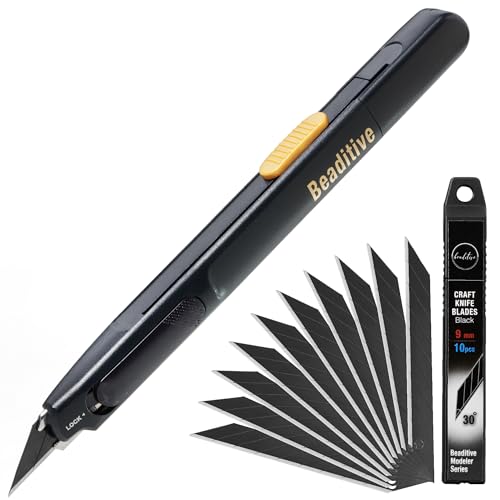
The Beaditive craft knife features a patented anti-wobble blade control system that holds the 30-degree tip steady through curves and corners. A slide-lock mechanism lets you set the blade length and keep it there, so the blade doesn’t creep back mid-cut. The 30° tip is ultra-fine, delivering pinpoint accuracy on tight turns. For anyone doing detail work like model making or vinyl decals, that stability is the difference between a clean line and a torn edge.
This design wins on precision but gives up everything else. The blade is disposable and not food-safe, so it has zero place in a kitchen. The slide-lock is secure for light pressure, but the narrow blade will flex if you try to cut cardboard or thick plastic. Compared to the WORKPRO utility knife below, the Beaditive has better anti-wobble but less handle bulk, making it a poor choice for heavy box cutting. A real limitation is that replacement blades for this exact fit may require ordering from the same brand.
Pros:
- Patented anti-wobble control — precise cuts on curves and corners.
- Slide-lock mechanism — holds blade length without drift.
- 30-degree fine tip — handles intricate patterns cleanly.
Cons:
- Not for kitchen use — blade is not food-safe.
- Light-duty only — blade flexes on thick materials.
- Replacement blade availability unclear — may be brand-specific.
The Real Deal
Ideal for: Crafters, stencil artists, and model builders who need precision. Pass on this if: You want a knife for food prep or heavy utility cutting.
Victorinox Fibrox Pro 8 Inch Chef’s Knife (The Workhorse)
Here’s the deal: This is the knife I recommend to anyone who wants pro-level cutting without pro-level price or maintenance fuss.
The Fibrox Pro 8 Inch Chef’s Knife pairs a razor sharp, laser-tested edge with an ergonomic handle made from thermoplastic elastomer (TPE). That TPE handle is the star: it stays grippy even when wet or greasy, which directly reduces the squeeze force you need to control the blade. For a former culinary instructor focused on wrist fatigue, that non-slip grip is a safety feature as much as a comfort one. The 8-inch length is the sweet spot for most home cooks, long enough to slice large vegetables but short enough to feel nimble.
This stamped blade is lighter than the forged ZWILLING set, which means less wrist strain during a long prep session but less authority when you try to split a butternut squash or cut through chicken bones. The lack of a bolster keeps the full edge accessible for sharpening but removes the finger guard that the curved bolster on the ZWILLING provides. The listing never states the steel type or HRC rating, which is a genuine gap for a knife marketed to professionals. If you demand a specific steel like VG-10 or AUS6M, you’ll need to look at the Kai or imarku options later in this list.
Pros:
- Non-slip TPE handle — secure grip even when wet.
- Laser-tested razor sharp edge — ready to cut out of the box.
- Lightweight stamped blade — reduces wrist fatigue during long sessions.
Cons:
- No stated steel type or HRC — edge retention is unspecified.
- No bolster — less finger protection for pinch grip users.
- Not for heavy butchery — stamped blade may flex on bone or hard squash.
Our Take
Best for: Home cooks and line cooks doing high-volume vegetable prep. Skip if: You need a heavy forged blade for butchery or prefer a full bolster.
PROKNIFE Black Auto Lock Stainless Steel Knife (Red 30° PROBLADE)

What sets it apart: A utility knife that prioritizes lock security and blade visibility over kitchen duty.
The PROKNIFE features a rust-resistant stainless steel body and a distinctive red 30-degree PROBLADE. The red blade isn’t a gimmick: it makes the cutting edge easier to see against packaging tape or cardboard, reducing the chance of a misplaced cut. An auto-lock slider holds the blade securely in place during use, which is the single most important safety feature on any retractable utility knife. If the lock slips mid-cut, the blade can close on your fingers.
This design is built for boxes, plastic strapping, and light demolition — not food. The 30-degree angle is sharp for slicing but less durable for prying or heavy cutting. The auto-lock mechanism adds safety but also adds a step when you want to change blade depth quickly. Compared to the NT Cutter below, the PROKNIFE’s red blade is easier to spot, but the 9mm snap-off design on the NT Cutter gives you fresh sharp edges more often. A stated limitation: replacement red PROBLADE availability may be limited to PROKNIFE’s own supply chain.
Pros:
- Auto-lock slider — prevents accidental blade retraction.
- Rust-resistant stainless steel body — survives damp workspaces.
- Red 30° PROBLADE — high visibility for safer cuts.
Cons:
- Not for kitchen tasks — blade is not food-contact rated.
- 30° blade is light-duty — not for prying or heavy material.
- Replacement blades may be brand-specific — supply chain uncertainty.
Who Should Buy This
Perfect for: Warehouse workers, DIYers, and anyone who opens dozens of boxes daily. Not great if: You need a kitchen knife or a heavy-duty demolition blade.
NT Cutter PRO Auto-Lock Stainless Steel Utility Knife (A-1P) 9mm
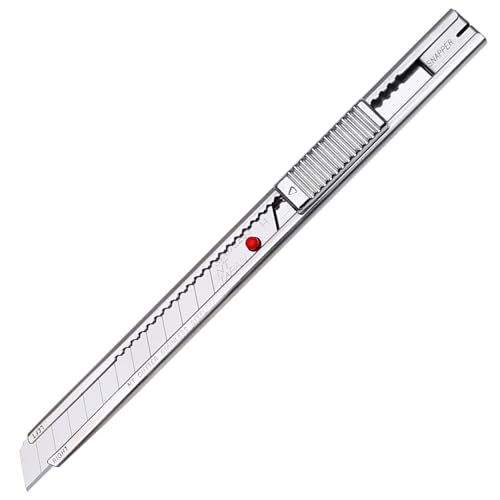
Quick take: A compact snap-off blade utility knife that’s standard duty, rust resistant, and built for repetitive cutting.
The NT Cutter PRO A-1P uses a 9mm snap-off blade housed in a stainless steel body. The automatic blade lock keeps the blade fixed during use, and the snap-off design means you can break off a dull segment to expose a fresh sharp edge in seconds. For tasks like cutting paper, vinyl, or thin plastic, that constant sharpness is more valuable than a long-lasting but eventually dull fixed blade.
The 9mm blade width limits this knife to light-duty work. Try to score thick cardboard or cut drywall and the blade will snap at the score line, leaving a jagged edge that needs disposal. The stainless steel body is rust-resistant, which is good for a tool that lives in a garage or toolbox, but it also lacks the warmth and grip of the WORKPRO’s rosewood handle. One clear limitation: snap-off blade segments are small and sharp, requiring careful disposal to avoid injury. The auto-lock is reliable but adds a slight delay when you need to adjust blade length quickly.
Pros:
- Rust-resistant stainless steel — ideal for damp environments.
- Automatic blade lock — blade stays put during cuts.
- Snap-off 9mm blade — always-sharp edge with no sharpening.
Cons:
- Light-duty 9mm blade — not for thick cardboard or drywall.
- Snap-off segments require disposal — small sharp pieces can be a hazard.
- No cushion in handle — metal body can feel cold and hard over long use.
In a Nutshell
Great match for: Office workers, crafters, and light package openers. Think twice if: You need to cut heavy materials or prefer a wood handle for comfort.
Kai PRO 6.5″ Master Utility Knife (Japanese AUS6M Steel)

Here’s the deal: A kitchen utility knife that bridges the gap between paring and chef’s knife, with Japanese steel for edge retention.
The Kai PRO Master Utility Knife features a 6.5-inch blade crafted from Japanese AUS6M stainless steel. That steel is known for balancing edge retention with ease of sharpening, and the 6.5-inch length handles precise cuts like trimming fat or segmenting citrus where an 8-inch chef’s knife feels clumsy. The slightly curved blade profile lets you rock through herbs or mince shallots without lifting the tip off the board.
AUS6M is a step up from the unspecified steel in the Victorinox, but it’s not a premium VG-10. You’ll get better edge retention than a basic stamped blade but less than a high-carbon 10Cr15MoV like the imarku uses. The Kai’s handle material is not specified in the listing, which is frustrating for a knife marketed on grip comfort. The 6.5-inch size is a genuine limitation if you cook large batches: it’s too short for slicing roasts or watermelons, and too long for delicate peeling. If you own only one knife, this isn’t it. But as a second knife for detail work, it’s a thoughtful pick.
Pros:
- AUS6M Japanese steel — holds an edge longer than basic stainless.
- 6.5-inch curved blade — precise for small tasks, still rocks for mincing.
- Pro-level durability design — built for repeated hand washing and daily use.
Cons:
- Not a full chef’s knife — too short for large ingredients.
- Handle material unspecified — grip comfort is unverified by spec sheet.
- Pricier than comparable German utility knives — may not justify the cost for casual cooks.
Final Thoughts
Best for: Home cooks who want a precise utility knife for fruit, sandwiches, and small vegetables. Skip if: You need a do-it-all blade or are on a tight budget.
WORKPRO Quick-Change Utility Knife (Rosewood Handle)
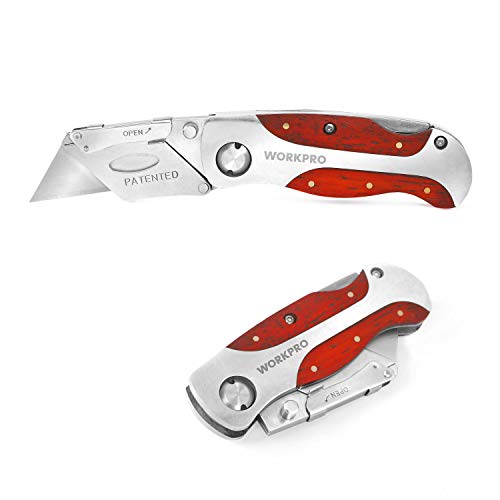
Why it earns a spot: A utility knife with a genuine rosewood handle and tool-free blade changes, aimed at craft and light construction.
The WORKPRO utility knife combines a high-quality rosewood handle with an easy blade release design that allows safe blade changes without tools. The dark brown texture of the rosewood gives a secure, anti-slip grip even when your hands are dry from packing tape or sawdust. For anyone who opens dozens of boxes a day, the quick-change mechanism saves time and reduces the frustration of fumbling with a screwdriver.
Rosewood is a beautiful material but it demands care. Wood handles require hand washing and must not be soaked, or they will warp or crack over time. That makes this knife a poor fit for wet workshops or outdoor use in rain. The listing does not mention an auto-lock mechanism, which is a safety consideration if you apply pressure at odd angles. Compared to the PROKNIFE’s auto-lock slider, the WORKPRO relies on the quick-change design to hold the blade, but the security of that hold under lateral force is not documented. Still, for light craft and package opening, the comfortable wood handle is a genuine upgrade over cold steel bodies.
Pros:
- Quick-change blade mechanism — tool-free and safe blade swaps.
- Genuine rosewood handle — warm, comfortable grip with anti-slip texture.
- Dark brown finish — hides dirt and wear better than bright colors.
Cons:
- Wood handle requires hand washing — moisture will warp or crack it.
- No documented auto-lock — blade may shift under heavy lateral pressure.
- Not for kitchen food prep — blade is not food-safe.
The Short Version
Ideal for: Crafters, box cutters, and light-duty workshop users who value a comfortable grip. Pass on this if: You need a locking utility knife for heavy cuts or work in wet conditions.
imarku 8.5 Inch Pro Chef Knife (10Cr15MoV High-Carbon Steel)

Quick take: A budget-friendly chef knife with premium steel claims and a Pakkawood handle, offering high-carbon performance at a lower price.
The imarku Pro Chef Knife uses 10Cr15MoV high-carbon stainless steel in a triple-layer composite blade. The 10Cr15MoV steel holds an edge noticeably longer than the Victorinox’s unspecified stainless, while the triple-layer construction adds toughness to resist chipping. The 8.5-inch blade is slightly longer than a standard 8-inch chef’s knife, giving extra reach for slicing roasts. The Pakkawood handle is ergonomically shaped and provides a secure grip, even when your hands are wet from rinsing produce.
High-carbon steel means better edge retention but also more care. This knife will rust if left wet or put in the dishwasher, so hand washing and immediate drying are mandatory. The Pakkawood handle follows the same rule: wood handles require hand washing, and extended moisture contact will warp them. The listing never states an HRC rating, which is a missed opportunity to prove the steel’s hardness. Compared to the ZWILLING forged set, this imarku is lighter and more maneuverable but lacks the curved bolster for finger protection. If you’re buying pro cutlery on a budget, the imarku delivers sharpness where it counts, but you’re trading away brand warranty depth for the price.
Pros:
- 10Cr15MoV high-carbon steel — long-lasting sharpness with proper care.
- Triple-layer composite blade — resists chipping and adds toughness.
- Ergonomic Pakkawood handle — comfortable grip and balanced feel for an 8.5-inch blade.
Cons:
- High-carbon steel rusts if not dried — dishwasher is off-limits.
- Pakkawood handle requires hand washing — no soaking, no dishwasher.
- No stated HRC hardness — edge retention claims rest on steel chemistry alone.
What Sets It Apart
Best for: Budget-conscious home cooks who want a sharp chef knife and are willing to hand wash. Skip if: You want a proven brand with a deep warranty or need a dishwasher-safe knife.
How to Choose a Pro Knife That Won’t Let You Down
A sharp chef’s knife turns prep for recipes like our garlic herb roast chicken from a chore into a minute of work. But before you buy, understand what separates a daily workhorse from a drawer ornament.
Blade Steel and Hardness: What Actually Matters
Carbon steel is an alloy of iron and roughly 1% carbon, while stainless steel is iron with 10–15% chromium, nickel, and/or molybdenum, plus under 1% carbon. That chromium resists rust but also reduces maximum edge retention. A pro knife with 10Cr15MoV or AUS6M will hold an edge longer than basic stainless but demands immediate drying. Rockwell hardness (HRC) is not the whole story; a very hard blade chips easily, while a softer blade needs frequent honing. The Victorinox doesn’t state HRC, which is why I hesitate to call it a lifetime edge-holder, while the Kai’s AUS6M sits in the sweet spot for kitchen use.
Handle Ergonomics and Wrist Fatigue
The TPE handle on the Victorinox or the Pakkawood on the imarku directly affect how long you can prep without a break. Wood handles require hand washing; extended contact with moisture causes standard varnished hardwood handles to warp or crack. For a pro knife used daily, choose a handle material you can maintain. A full bolster like on the ZWILLING set gives a forward balance point that reduces wrist torque for some users, but adds weight. If you have small hands or wrist issues, a lighter stamped blade like the Victorinox may feel more forgiving.
Forged vs. Stamped: The Pro Knives Debate
Forged knives like the ZWILLING are pressed from a single piece of steel, eliminating weld points and adding heft. Stamped knives like the Victorinox are cut from sheet steel, lighter and often cheaper, but can flex. For home use, stamped is usually enough; for pro kitchens or heavy chopping, forged wins. The imarku’s triple-layer composite blade sits between: it adds toughness to a stamped base, which is why it’s a compelling budget option.
Safety Features for Utility Knives
If you’re looking at the Beaditive, PROKNIFE, NT Cutter, or WORKPRO, the locking mechanism is the first thing to check. An auto-lock like on the PROKNIFE and NT Cutter prevents the blade from retracting accidentally, which is a leading cause of box-cutter injuries. For commercial kitchen use, look for knives that meet NSF certification standards for food contact safety at https://www.nsf.org. None of the utility knives here are food-safe, so keep them out of the kitchen entirely.
Our Final Recommendation
If you want one knife that does 90% of kitchen work without breaking the bank, the Victorinox Fibrox Pro 8 Inch Chef’s Knife is the overall winner. For a matched set with a lifetime build, the ZWILLING Pro Knife Block Set is the premium pick. On a budget, the imarku 8.5 Inch Pro Chef Knife delivers high-carbon sharpness at a lower price. The craft and utility knives — Beaditive, PROKNIFE, NT Cutter, WORKPRO — belong in a toolbox, not on a cutting board. For daily cooking, choose the Victorinox and pair it with a honing rod and a good cutting board.
Frequently Asked Questions
What does ‘pro’ actually mean on a pro knife?
In practice, ‘pro’ means materials and balance designed for daily use, not occasional chopping. A pro knife should have steel that holds an edge through hours of prep, an ergonomic handle that doesn’t fatigue your wrist, and safety features like a curved bolster or secure lock. The Victorinox Fibrox Pro earns the label through its TPE handle and laser-tested edge; the imarku gets there with 10Cr15MoV high-carbon steel. Avoid buying on branding alone — check the steel type and HRC if listed.
Should I buy a set or individual pro knives?
Individual knives nearly always win. A set like the ZWILLING Pro Block covers paring, prep, chef, and bread, but you’ll likely use the 8-inch chef knife 80% of the time. Buying one excellent chef knife (like the Victorinox) plus a paring knife costs less and takes less space than a block set. If you bake bread regularly, add a serrated bread knife separately. Sets make sense only if you’re starting from zero and want matched aesthetics.
How often should I sharpen my pro chef knife, and what’s the best method?
Hone with a honing rod before every use to realign the edge, and sharpen on a whetstone every 3-6 months depending on steel hardness. High-carbon steel like imarku’s 10Cr15MoV needs sharpening less often than softer stainless but is more prone to rust if not dried. Hand wash always; dishwashers dull and pit blades. For recipe prep that puts your knife to work, try our chicken shawarma sheet pan dinner.