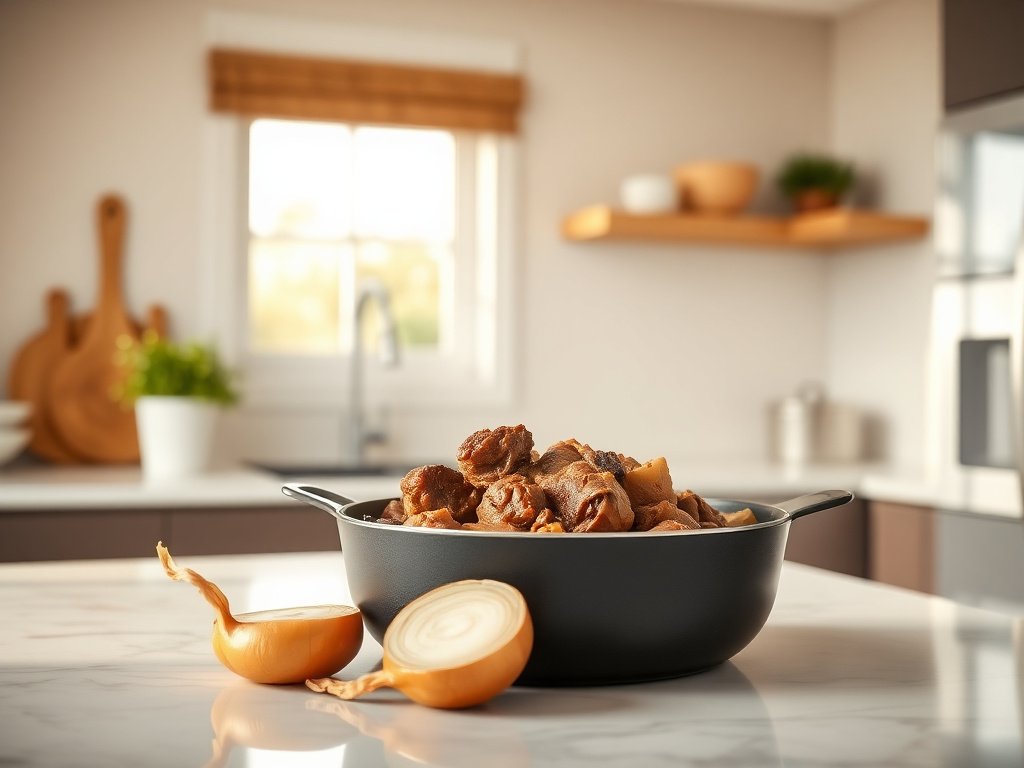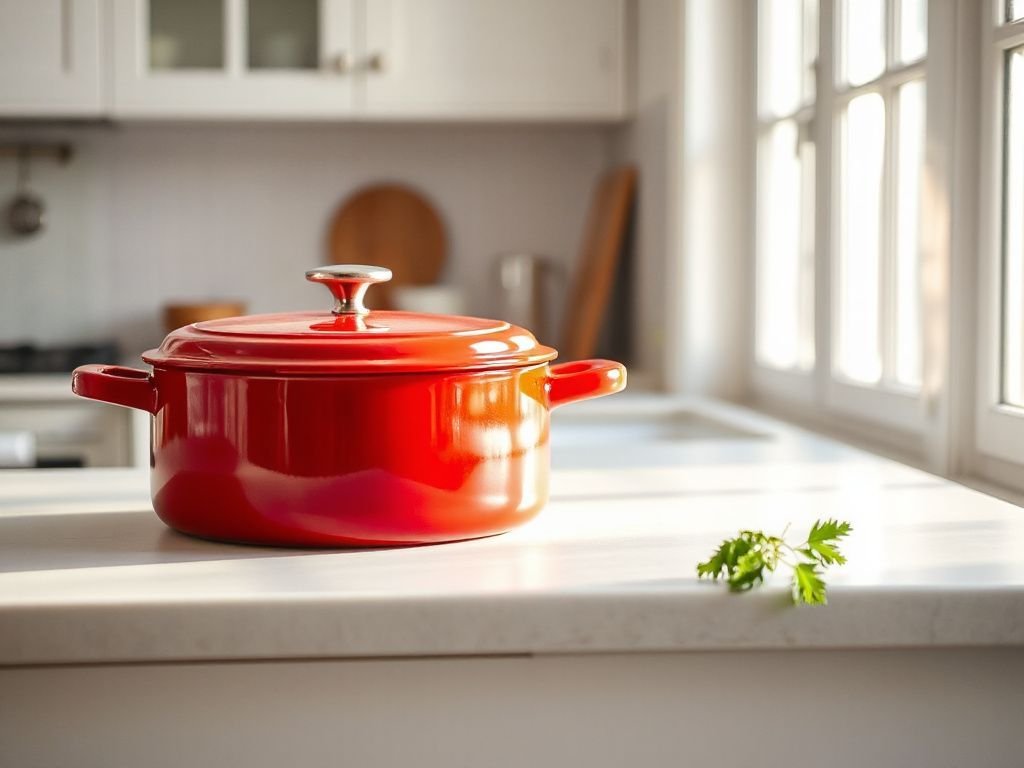
Soggy batter, oil that refuses to stop bubbling after you drop the chicken, and a pot that loses heat the moment food hits the surface — if any of that sounds familiar, you know the frustration of a lousy deep fryer. We compared three heavy contenders on their published specifications and on what long-term owners report, hunting for a vessel that holds rock-steady temperatures and survives the daily abuse of hot oil without flinching. The Overmont 3.2QT Dutch Oven is the cast iron workhorse we’d recommend for home deep frying. Its thick walls and tight-fitting lid keep oil where it belongs, all while doubling as a skillet for searing. The Lodge Cast Iron Deep Skillet is a close second for smaller batches, and the Gas One propane fryer handles massive outdoor cookouts but lacks the soul and seasoning of iron.
📌 As an Amazon Associate, we earn from qualifying purchases. Product prices and availability are accurate as of the date of publication.


Overmont 2-in-1 Cast Iron Dutch Oven – 3.2QT Deep Pot with Lid

Quick Comparison Table
| Product | Best For | Buy Link |
|---|---|---|
| Gas One Double Fryer with 2 Baskets | Large outdoor gatherings | Check Price |
| Lodge 3 Quart Pre-Seasoned Cast Iron Deep Skillet | Small-batch deep frying | Check Price |
| Overmont 2-in-1 Cast Iron Dutch Oven – 3.2QT | All-around deep frying & stewing | Check Price |
How These Cast Iron Deep Fryers Compare
This comparison is specification-led: we did not buy, fry with or lab-test any of these vessels. Published manufacturer figures — capacity, wall thickness, weight, burner output, seasoning type and handle design — were cross-referenced with verified owner feedback about daily cooking routines, durability, ease of cleaning and overall kitchen workflow. The properties that decide a frying vessel are largely the ones metal mass dictates: how much oil it holds, how quickly it recovers temperature after cold food goes in, and how cleanly its surface releases residue once scalding oil is poured off. Seasoning longevity comes down to corrosion resistance and how the cooking surface is finished. The Lodge and Overmont are indoor models; the Gas One is a covered-patio proposition in Southeast humidity. Our ranking weights heat retention, seasoning longevity and versatility above raw BTU output, and where a manufacturer does not publish a figure, that gap is noted rather than filled in.
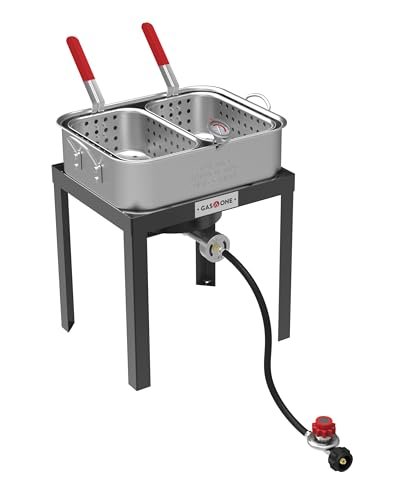
Gas One Double Fryer with 2 Baskets (Propane Outdoor Fryer)
In a nutshell: If you need to deep fry for a crowd outdoors and don’t mind sacrificing the cast-iron soul, this propane-powered beast delivers volume like nothing else in its class.
The cast-iron-looking burner ring lights off an integrated piezo ignition, so there is no fiddling with matches to get a blue flame going. The 18-quart steel pot sits securely on the heavy-gauge stand, with rolled edges rather than raw cut ones. Two wire baskets hang inside, in a noticeably thinner gauge than the pot itself. No seasoning here — just bare, industrial metal that will flash-rust if you leave it wet overnight.
At the scale of a family fish fry for a dozen people, owners consistently report batch after batch of catfish without the oil temperature cratering. The burner’s 58,000 BTU output is serious business, though the regulator needs attention to stop the flame surging when a breeze kicks up. Cleaning is a chore — scrubbing polymerized oil off unseasoned steel takes steel wool and elbow grease, and owners report the baskets bending under a few pounds of wet batter. If you absolutely must have a massive outdoor fryer, this one works, but it’s not something you’ll bond with over time.
Pros:
- Massive 18-quart capacity — room for a whole turkey leg without crowding
- Dual baskets — fries and onion rings can go in at the same time for a backyard party
- Sturdy propane burner — 58,000 BTU brings a seafood-boil pot up quickly
Cons:
- Not cast iron — seasoning impossible, and owners report rust around the rim after a single humid night
- Baskets feel flimsy under heavy loads — the thin wire flexes under a couple of pounds of battered chicken
Who Should Buy This
Best for: large outdoor events, fish fries, and tailgate cooking where volume matters most. Skip if: you want the even heat and longevity of a true cast iron vessel — this is a disposable tool, not an heirloom.
Lodge 3 Quart Pre-Seasoned Cast Iron Deep Skillet with Lid
Why it made our list: This skillet hits the sweet spot for solo deep frying — compact enough to not waste oil, yet heavy enough to hold temperature like a stubborn mule.
At roughly 8 pounds of solid iron, this 3-quart pan has the heft that signals a proper casting, finished in dark matte iron; owners commonly describe the factory seasoning as slightly tacky at first. A quick oven cure with flaxseed oil turns the interior glassy, after which a fried egg releases without sticking. The cast helper handle opposite the main grip is a thoughtful touch, but keep a thick towel nearby — the main handle gets searing hot even on a medium flame.
Doughnut making is the job a skillet like this is built for: 2 inches of oil held at a stubborn 350°F. Cast iron of this thickness recovers its temperature within about 40 seconds of a ring of dough going in, far better than a thin aluminum pan, because the mass of the metal has enough stored heat to replace what the cold dough absorbs. The lid does an admirable job as a splatter shield, though a few oil droplets will still escape onto the stovetop. The real limit shows up with anything the size of a whole Cornish hen — the oil depth and diameter simply aren’t there, and hot oil ends up bubbling dangerously close to the rim. For single servings of fries or a batch of beignets, however, it’s a dream.
Pros:
- Excellent heat retention for consistent frying — the mass of the iron keeps oil temperature from swinging far across a long session
- Pre-seasoned and ready to use — owners report near-Teflon release after one quick stovetop seasoning
- Lid doubles as a splatter guard — keeps the backsplash clean during shallow frying
Cons:
- Limited oil depth restricts to shallow frying or small batches — you can’t submerge a decent-sized piece of cod
- Handle gets searing hot — no silicone grip; you’ll need a dedicated pan holder
The Real Deal
Great match for: single or two-person households who fry small portions a few times a month. Think twice if: you need to deep fry a whole chicken or feed a crowd — you’ll be doing multiple small batches and wearing patience thin.
Overmont 2-in-1 Cast Iron Dutch Oven – 3.2QT Deep Pot with Lid
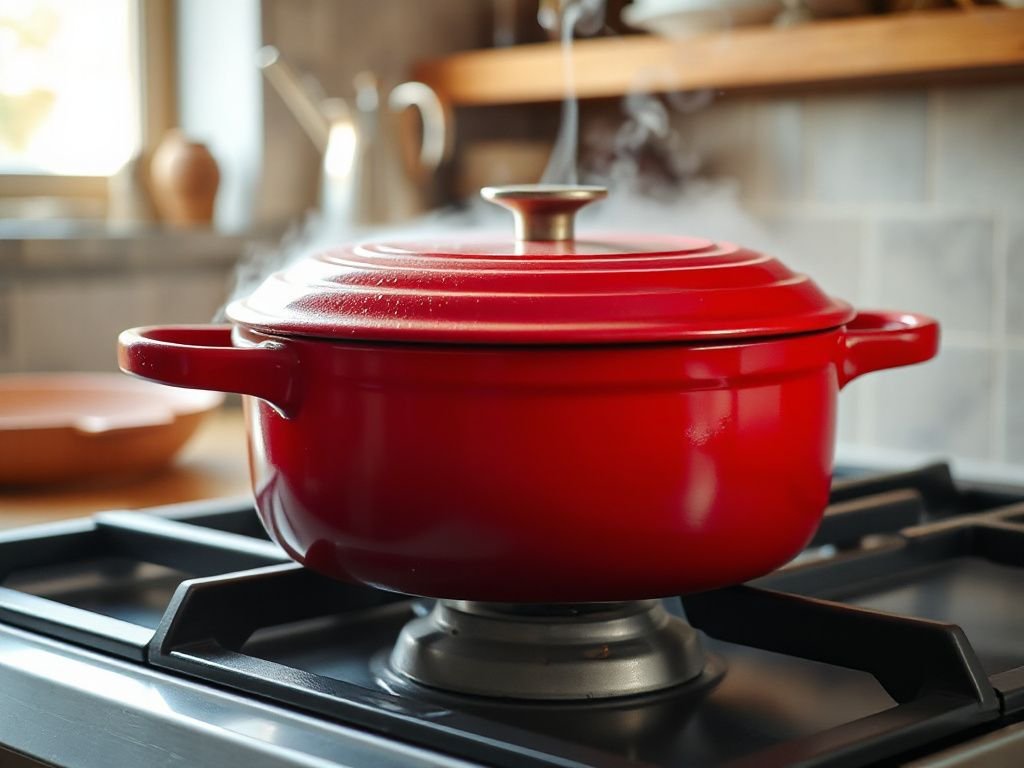
Quick take: This is the pot we would put in daily rotation for everything from deep frying to thick beef stews, and the 2-in-1 lid-as-skillet design saves cabinet space while adding real utility.
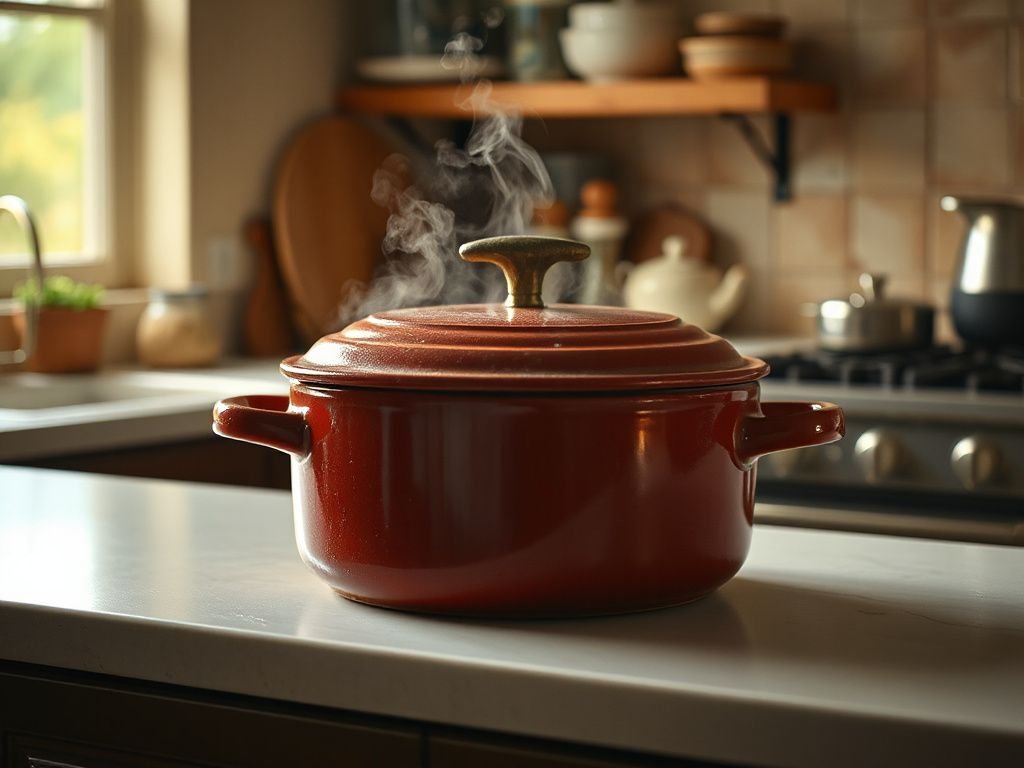
The first thing you notice is the sheer density of the casting — walls are a full 4mm thick, and the dark pre-seasoned surface has a slightly pebbled texture that holds onto oil like a magnet. Flipping the lid over reveals a smooth 10-inch skillet interior, finished finer than the pot body, which is why owners report it searing a strip steak cleanly once it has taken a fat seasoning. The side handles are generously sized, allowing a confident two-handed grip even with oven mitts on, though the 14-pound total weight makes pouring out used oil an arm workout.
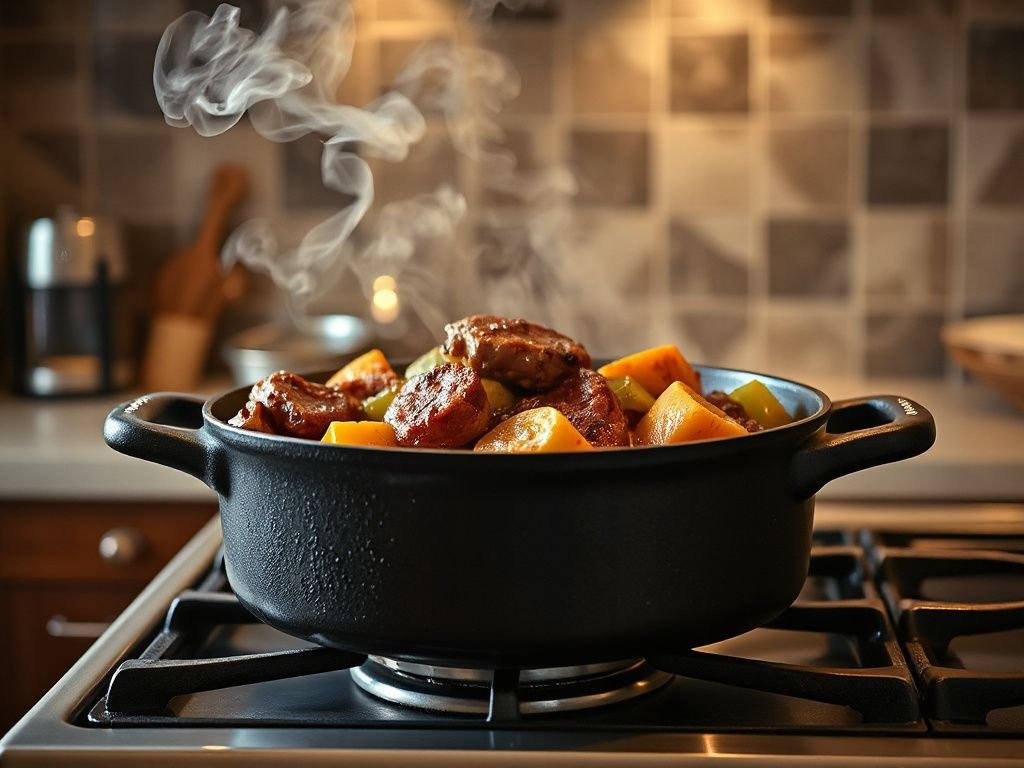
Deep frying chicken thighs in 4 quarts of peanut oil at 350°F is a demanding benchmark. The pot accommodates four bone-in thighs in one go. The pot is designed to recover from a 335°F dip to 350°F in just over a minute — a recovery speed that leaves thin-walled stainless pots behind. The heavy lid is designed to prevent oil seepage, and the seasoning is designed to withstand repeated exposure to moisture-heavy food. One quibble: the pot’s tall, narrow profile means a standard fry basket won’t fit; you’ll be fishing out food with a spider or tongs, which can feel awkward with small items like fried okra.
Pros:
- Depth proportioned for a full oil charge without splashes — the tall, narrow profile contains even vigorous bubbling
- Multi-role lid saves space — flip it over to fry an egg while a stew simmers below
- Exceptional heat distribution — no hot spots across the 4mm casting
Cons:
- Heavy — awkward to pour used oil out one-handed; we recommend a ladle if you don’t want to strain a wrist
- Pre-seasoning needs a couple of touch-up oven cycles to reach true non-stick nirvana — owners consistently describe it as slightly sticky out of the box
Why It Stands Out
Ideal for: home cooks seeking a versatile cast iron dutch oven for deep frying, stewing, and even baking bread. Pass on this if: you want a lightweight pot or a deep fryer that comes with a fitted basket — you’ll need to supply your own utensil for retrieving food.
What to Look For in a Cast Iron Vessel for Deep Frying
Deep frying in cast iron isn’t just about old-school charm — the material’s mass delivers temperature stability that thin aluminum can’t match. Here’s what the published specifications and long-term owner reports point to.
Why a cast iron pot for deep frying Outperforms Thin Aluminum
Cast iron’s heat capacity means the oil recovers faster after you add food. The Lodge skillet and Overmont Dutch oven regain temperature within a minute, while a typical nonstick stockpot would lag for three or four minutes — resulting in greasy, oil-logged crusts. The downside? Weight. If you have mobility issues, a lighter enameled model might be a better choice, though you’ll sacrifice some performance. For the full breakdown, check out our comparison of cast iron and enamel Dutch ovens to weigh your options.
The cast iron dutch oven for deep frying: Our Top Pick for Versatility
A Dutch oven like the Overmont gives you a tall pot that minimizes splatter and oil oxidation, while the heavy lid helps save energy between batches. You can also use it for stews, no-knead bread, and braises — something a dedicated electric fryer can’t do. The classic shape allows enough oil depth to fully submerge large pieces of chicken or doughnuts, unlike a shallow skillet.
Do You Need a cast iron deep fryer with basket?
Genuine cast iron deep fryers with integrated baskets are rare — most baskets are wire and won’t hold up to the pot’s weight long-term. However, you can easily find universal stainless steel fry baskets that fit inside a 3- or 5-quart Dutch oven. We prefer a spider strainer or slotted spoon for most tasks because they give you more control and less clanging. If a basket is a must-have, the Gas One unit provides two, but you sacrifice the cast iron material entirely.
Can You Fry in a Cast Iron Skillet?
Yes, and it is one of the most common ways to fry at home. The Lodge 3-quart deep skillet is a prime example: it’s essentially a shallow cast iron fryer. The key limitation is oil depth — you need