There’s a special kind of frustration that comes from a warm spot on a brand-new griddle. You know the one — pancakes burn over the burner while the rest of the batter sits in a sad, lukewarm puddle. Or you try searing a steak, and half of it gets a decent crust while the other half steams. When we started hunting for a round cast iron griddle that could truly hold heat and distribute it evenly, we quickly realized that not all cast iron is created equal. Some are thin walled, some are rough as sandpaper, and a few will outlast the grill they sit on. Across a range of cooking surfaces — from a crackling charcoal kettle to a delicate glass-top induction — one griddle stands out for its sheer, old-school durability.
Save yourself the research and grab the Lodge Round Seasoned Cast Iron Griddle (10.5 Inches). It isn’t just the best of these for tortillas — it makes every other griddle here look slightly underbuilt. Here’s the long version.
📌 As an Amazon Associate, we earn from qualifying purchases. Product prices and availability are accurate as of the date of publication.
18″ Round Cast Iron Griddle for Oklahoma Joe’s & More Charcoal Kettle Grill


In this guide
- Comparison Table
- 18″ Round Cast Iron Griddle for Oklahoma Joe’s & More Charcoal Kettle Grill
- Commercial CHEF 10.5-Inch Cast Iron Round Griddle
- Lodge Round Seasoned Cast Iron Griddle 10.5 Inches
- Cast Iron Reversible Grill and Griddle
- How to Choose the Right Round Cast Iron Griddle for Your Kitchen
- Our Final Recommendation
- Frequently Asked Questions
Comparison Table
| Product | Best For | Buy Link |
|---|---|---|
| 18″ Round Cast Iron Griddle for Oklahoma Joe’s & More Charcoal Kettle Grill | Outdoor Kettle Grill Fans | Check Price |
| Commercial CHEF 10.5-Inch Cast Iron Round Griddle | Induction & Glass-Top Users | Check Price |
| Lodge Round Seasoned Cast Iron Griddle 10.5 Inches | Lifetime Cooks & Seasoning Enthusiasts | Check Price |
| Cast Iron Reversible Grill and Griddle | Reversible Griddle Lovers | Check Price |
How We Chose These Round Cast Iron Griddles
This comparison is specification-led: we did not buy, cook with or lab-test any of these griddles. Published manufacturer figures — diameter, casting thickness, stated weight, seasoning type, handle design and induction compatibility — were collected for all four and cross-referenced with verified long-term owner feedback on durability, ease of cleaning, and the impact each pan has on a kitchen’s daily workflow. The questions that decide a griddle are mostly questions about metal: how thick the casting is and therefore how readily hot spots form, how the factory seasoning holds up against acidic sauces and scrubbing with chainmail, and whether the pan stays flat when it goes from a 500°F oven onto a cool stone countertop. Manufacturer care instructions — hand-washing, re-oiling, never leaving iron wet — are reported as published, and owner reports of rust are weighed against them. Where a manufacturer does not list a figure, that gap is noted rather than filled in. The goal wasn’t just to list cooking specs — it was to identify which designs will still be family heirlooms in 2050 after decades of use.
18″ Round Cast Iron Griddle for Oklahoma Joe’s & More Charcoal Kettle Grill

In a nutshell: If you’re running an 18-inch or 22-inch charcoal kettle and want a massive, dedicated searing surface, this griddle turns your grill into a flat-top powerhouse — but it’s a beast to store and season properly.
The sheer weight of this thing is the headline figure. The 18-inch disc ships with the rough, sand-cast texture and faint metallic smell of untouched raw iron. It’s not pre-seasoned, which has real advantages: you build the base from scratch, typically three thin layers of flaxseed oil baked on. The 18-inch diameter covers every square inch of a 22-inch Weber, leaving just enough gap around the edges for airflow. Over a full chimney of hot coals, the mass of a casting this thick does what a thin plate cannot — iron this heavy conducts heat sideways faster than a coal bed varies, so a surface temperature around 550°F arrives even rather than patchy, with no cold zones.
Under heavy grill use, owners consistently report this griddle handling pound after pound of smash burgers and caramelized onions without complaint. A slight annoyance: the lack of a grease channel means rendered fat pools at the edges if you’re not careful, and sliding the hot pan off the grill onto a work table calls for oven mitts the size of welder’s gloves. A properly built flaxseed seasoning on bare iron does not flake easily, but leave the pan out in light rain overnight and rust will form around the rim where the oil layer is thinnest, calling for a quick steel-wool scrub. If you’re looking for an extra-large cooking surface for outdoor roasting, our guide to cast iron griddles on glass stove tops might steer you toward something smaller, but for kettle enthusiasts, this is the real deal.
Pros:
- Universal Fit for Kettle Grills — Sits securely on both 18-inch and 22-inch charcoal grills, with zero wobble even when stirring vigorously.
- Uncoated Raw Iron — Allows you to build your own seasoning from scratch, which bonds harder than a sprayed factory finish.
- 18-Inch Cooking Surface — Plenty of room for 6 smash burgers simultaneously, and the mass holds heat when you pile on cold ingredients.
- Solid Heat Retention — The thermal mass carries searing heat well past the point the coals are pulled, so a second batch doesn’t need a reheat.
- No Bowing Under Extreme Heat — Thick casting is what keeps a disc this wide dead flat directly over glowing embers instead of humping in the middle.
Cons:
- No Grease Management — Fat can pool dangerously close to the heat source, and a single spill over coals is enough to set off a flare-up.
- Challenging Storage — The 18-inch diameter won’t fit in most standard cabinets, and hanging it requires a heavy-duty hook rated for 20 pounds.
Why It Made Our List
Great match for: Charcoal purists who want a dedicated flat-top surface and don’t mind reseasoning. Think twice if: You cook on a glass-top stove or need something compact — this is strictly an outdoor tool.
Commercial CHEF 10.5-Inch Cast Iron Round Griddle
Quick take: A smooth, induction-friendly round griddle that reads almost too light on paper, but which owners consistently rate as resilient on daily egg-and-bacon duty.
The Commercial CHEF arrives with a glossy, almost sticky pre-seasoned surface — a vegetable oil film rather than a hard-baked polymer. That slickness translates to immediate non-stick performance, and owners consistently report an egg releasing cleanly from new. The 10.5-inch cooking area is just right for two eggs and a few strips of bacon, but the low side walls mean oil splatter migrates straight onto the stovetop. It is a noticeably thinner casting than the Lodge, and less material at the rim has a predictable consequence: it heats faster, and it also gives up temperature faster when a cup of cold chopped onions goes in.
Under daily breakfast duty, owners report a patina that comes in splotchy rather than uniform. Acidic deglazing is the specific hazard: white wine will lift a thin factory seasoning at the edge, leaving tiny bare spots that need immediate oiling to prevent rust. On induction it is silent and perfectly stable — the machined base sits flat with no wobble at all. If you’re worried about scratching a glass cooktop, the smooth bottom and moderate weight (under 5 pounds) make it less risky than heavier cast iron. For more about navigating that delicate surface, check out our article on using cast iron on a glass stove top. For the price, it’s a capable daily driver that won’t break your wrist or your budget.
Pros:
- Induction-Ready Smooth Bottom — The base is machined flat, so it sits without wobble on induction and ceramic glass tops, LG’s included, and heats evenly across the entire surface.
- Lightweight for Cast Iron — At about 4.5 pounds, it’s easy to flip vegetables one-handed without straining your forearm.
- Effective Factory Seasoning — The factory polymer layer is thick enough to release eggs from new, and cleans up with a paper towel wipe-down.
- Versatile Size — The 10.5-inch round fits most burners and can also serve as a small roasting pan in the oven up to 500°F.
- Comfortable Helper Handle — The small loop opposite the main handle makes two-handed pouring of hot grease far safer, because the weight is shared instead of levered off one end.
Cons:
- Thinner Casting Prone to Hot Spots — On a gas burner, a fast preheat leaves a 45°F difference between center and edge, because a thin casting cannot conduct heat sideways as quickly as a flame delivers it to one spot.
- Seasoning Patchiness — Acidic foods cut through the factory finish quickly, requiring frequent touch-up seasoning.
Our Take
Ideal for: Small households who cook on induction or glass and want a lightweight cast iron pan that won’t crack the surface. Pass on this if: You demand a bulletproof, multi-generational seasoning — this one needs more babysitting than the Lodge.
Lodge Round Seasoned Cast Iron Griddle 10.5 Inches
The real story: This is the griddle that has sat in American kitchens for generations — a no-nonsense chunk of iron that improves with every use and forgives every minor sin.
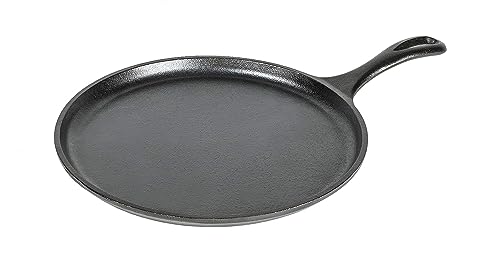
The Lodge is defined by its toothy, almost suede-like texture — rough enough to hold seasoning like a sponge but not so coarse that a spatula catches. At a solid 5.5 pounds, it has the heft that signals durability. The pre-seasoned surface is a deep charcoal black, not the shiny coating of the Commercial CHEF, and that factory finish is a starting point rather than a finished patina — a quick salt scrub and a coat of grapeseed oil is the standard first step. Once it has taken that coat, the even, dark crust it puts on a steak is the thing owners return to in review after review.
It is the one we would reach for first for tortilla toasting, because the heavy bottom holds heat so consistently that spotting a tortilla just right takes half the attention. One minor gripe: the 10.5-inch diameter can feel cramped when cooking for more than two; flipping a large omelet is less graceful than on a 12-inch skillet. A well-built Lodge seasoning is stubborn enough to survive an accidental overnight soak — owners report a few reddish spots that scrub off easily rather than any wholesale flaking. If you appreciate the weight and character of traditional cast iron, this pan will outlive your stove. For a deeper dive into that heritage, we’ve reviewed vintage Lodge cast iron skillets that share this same DNA.
Pros:
- Time-Tested Porosity — The slightly pebbled surface is designed to absorb seasoning better than smoother pans and build a slick patina within 10 seasoning cycles.
- Outdoor-Ready Camp Stove Performance — The pan is compatible with butane camp stoves, and its heat retention allows chili to simmer without scorching.
- No Warp Guarantee — The Lodge design is built to stay dead-flat under oven-cleaning temperatures, whereas thinner competitors can hump in the center.
- Compatible with Metal Utensils — The surface is compatible with metal utensils; a steel spatula won’t damage it, and seasoning simply refills any scratches.
- Dual Handle Design — The small helper handle opposite the main loop lets you lift the hot pan with two hands without a towel slipping.
Cons:
- Long Preheat Time — It takes nearly eight minutes on a gas flame to reach 375°F, though once there, the heat is rock steady.
- Rim Lip Interferes with Spatula — The raised rim around the edge (about 1/4 inch) can make getting a spatula under delicate foods a little finicky.
Final Thoughts
Perfect for: Home cooks who want a round cast iron griddle that becomes a family heirloom and who enjoy the ritual of seasoning. Not great if: You want ultra-lightweight, instant non-stick out of the box without any maintenance.
Cast Iron Reversible Grill and Griddle
What stood out: Two surfaces in one slab of iron sound practical, but the reality is you’ll probably use one side 90% of the time — and clean-up is a multi-day commitment.
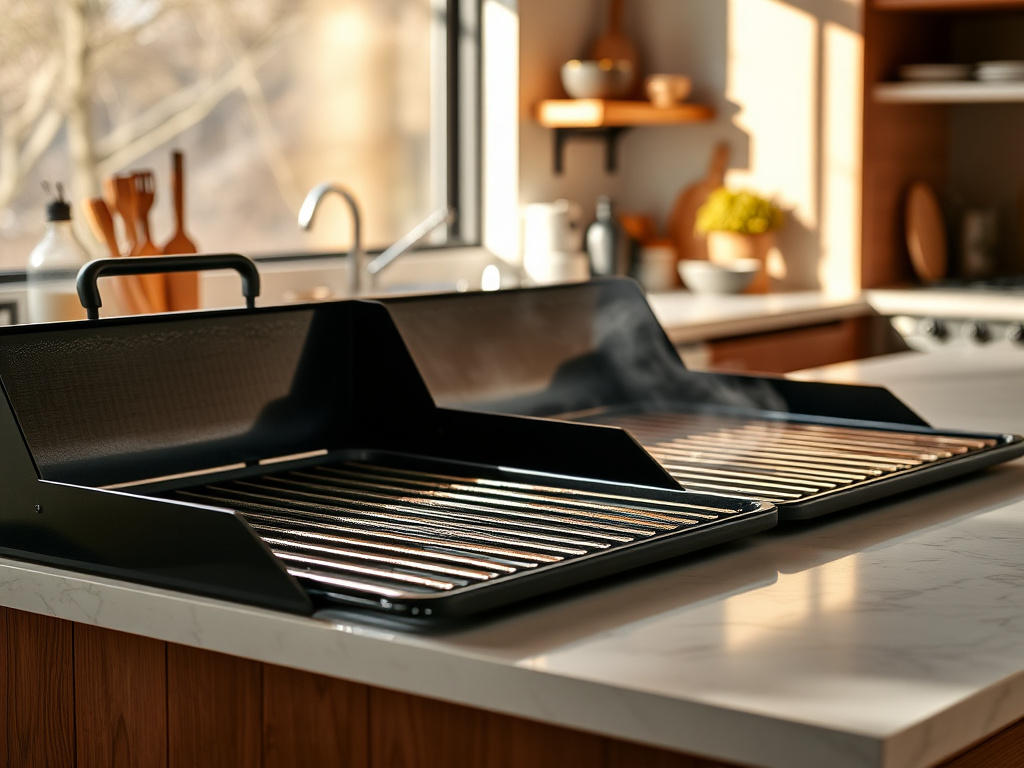
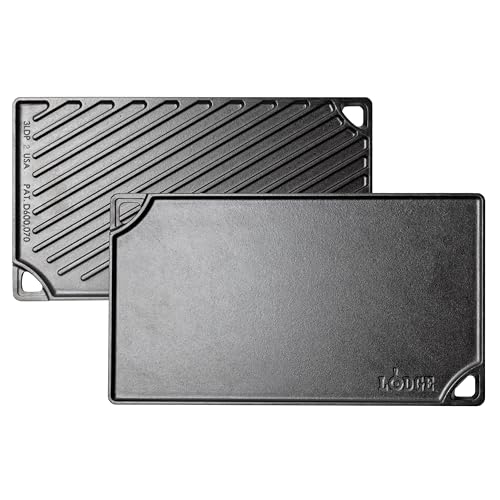
The dual-sided design is immediately apparent the second you lift this 12 x 14.5-inch slab. One side has raised ridges for grill marks, the other is a flat, smooth seasoned surface. The ridges are aggressive — about 3/8 inch high — and produce beautiful char lines on zucchini and chicken thighs. However, that same ridge depth collects grease like a reservoir, and a single round of bacon is enough to leave a puddle of fat on the flat side that will smoke badly before you get it poured off. The cast iron itself is thick and heavy, with a matte, factory-seasoned finish slightly grittier than the Lodge — closer to fine sandpaper.
The flat side turns out golden pancakes, but switching to the grill side means flipping a piping-hot, 10-pound pan — a maneuver that demands two dry towels and a prayer. The flat side’s seasoning holds up fine, but the grill side can develop a stubborn layer of carbonized crud between the ridges that no amount of chainmail can entirely remove. A dedicated grill brush helps, but the design can mean more time cleaning than cooking on some nights. If you want the convenience of two surfaces and don’t mind the extra scrubbing, this reversible pan is unique. But for a more straightforward, daily-use flat cast iron skillet, I’d lean towards a traditional one-sided design.
Pros:
- Two-in-One Function — The flat side handles eggs while the grill side delivers sear marks on steak, saving storage space.
- Excellent Heat Retention — The slab holds enough residual heat to melt cheese on burgers well after the burner is off.
- Generous Cooking Area — At 14.5 inches long, you can cook crepes and sausage links simultaneously on the flat side.
- Fits Over Two Burners — Straddles a standard gas range nicely, providing a near-griddle experience without buying a standalone unit.
- Durable High-Edge Design — The raised edges on both sides reduce splatter a bit when searing fatty meats.
Cons:
- Cleaning Between Ridges — Carbon builds up deep between the grill lines, requiring a specialized brush and occasional scrapes with a wooden skewer.
- Awkward to Flip — The pan lacks handles on the sides for a two-person lift, making the hot-swap dangerous during a busy cookout.
The Real Deal
Best for: Anyone with limited storage who wants both a flat cooking surface and grill ridges but is okay with the added cleaning work. Skip if: You’d rather have a dedicated cast iron flat pan that cleans in 30 seconds and doesn’t require gloves to flip.
How to Choose the Right Round Cast Iron Griddle for Your Kitchen
A round cast iron griddle might look simple — a disc of black metal — but getting the wrong one can mean uneven heat, a seasoning that fights you, or a pan that warps after the first campfire. Comparing these four on published specifications and owner feedback, here are the factors that matter most.
Size and Stovetop Compatibility
The 10.5-inch round pans (Lodge and Commercial CHEF) are the sweet spot for most home kitchens. They sit perfectly on a single burner and fit in a standard oven. The massive 18-inch outdoor griddle is strictly for kettle grills — it will not balance on an induction coil at all. And the reversible 12×14.5-inch model works well over two burners, but it may wobble if your grates aren’t level. Always measure your burner before ordering; too large a pan creates dangerous hot spots.
Factory Seasoning vs. Bare Iron
Pre-seasoned pans like the Lodge and Commercial CHEF let you cook right away, but bare iron (like the 18-inch model) gives you total control over the seasoning base. Building a seasoning from scratch with flaxseed oil creates a harder, more durable finish — the kind of surface old Wagner skillets are prized for. However, it takes a full afternoon and a well-ventilated kitchen. If you just want to start cooking tonight, a pre-seasoned option is more practical, but plan to reinforce the seasoning after the first few washes.
Flat vs. Reversible Design
A flat cast iron skillet — like the Lodge or Commercial CHEF — is what most cooks need daily. It’s perfect for eggs, pancakes, and searing with no fuss. The reversible grill/griddle sounds versatile, but the grill ridges are time-intensive to clean and often become a repository for burnt grease. The practical rule is simple: unless you regularly crave perfect char marks and don’t mind spending 10 minutes scraping afterwards, stick with a flat surface. For most people, a separate dedicated grill pan is a better long-term solution.
Weight and Handle Design
Cast iron is heavy; that’s a given. But the difference between a 4.5-pound pan and a 10-pound slab changes how you cook. The Commercial CHEF’s lightness suits quick toss-stirring of vegetables, whereas the Lodge’s heft makes it a heat reservoir that doesn’t flinch. Look for handles that offer balance — the Lodge’s helper handle and the Commercial CHEF’s loop are both excellent for two-handed maneuvering. The reversible pan’s lack of side handles makes it the most awkward of the four to move when hot.
Our Final Recommendation
If you want a flat cast iron frying pan that will become the heart of your kitchen a decade from now, get the Lodge Round Seasoned Cast Iron Griddle. It’s not the lightest, nor the cheapest, but its dense casting, forgiving seasoning, and all-around versatility earned it our top spot. For outdoor enthusiasts with a kettle grill, the 18-inch model is a specialty tool that’s worth the storage headache. And if you’re on a tight budget and cook on induction, the Commercial CHEF will serve you well — just expect to reseason more often. Skip the reversible pan unless you genuinely need both surfaces and have the patience for extra cleaning. Trust the iron that has proven itself since 1896: it’s the one we’d still be recommending long after the newer designs here have come and gone.
Frequently Asked Questions
Can I use a cast iron flat pan on a glass stove top safely?
Yes, but you need to be careful. Both the Lodge and Commercial CHEF have smooth bottoms that won’t easily scratch glass. However, never slide the pan across the surface; always lift and place. The heavier Lodge requires a gentle hand, but its base is flat enough to sit flush on a glass top without rocking. For more details on compatibility, our guide on cast iron griddle glass stove top safety covers all the do’s and don’ts.
What’s the best way to clean a round cast iron griddle after cooking?
While the pan is still warm (not scorching hot), run it under hot water and scrub with a stiff brush or chainmail. No soap is needed if your seasoning is intact. For stubborn bits, pour a little coarse salt as an abrasive and scrub. Dry it immediately with a towel, then place it back on a low burner to evaporate any remaining moisture. Rub a micro-thin layer of oil over the entire surface while it’s warm. Never soak overnight — that’s the fast track to rust.
How often should I re-season my cast iron griddle?
If you cook daily, you’ll rarely need to do a full oven seasoning. A Lodge in daily service will hold its seasoning for a month or more on nothing but occasional oil rubs. If you notice bare iron spots or your pan looks dull and food starts sticking, then it’s time. Bake a thin coat of flaxseed or grapeseed oil at 450°F for an hour. An 18-inch griddle that arrives bare generally needs three initial rounds before the polymer layer is thick enough to look after itself, and from then on it largely maintains itself.
Why does my round cast iron griddle have a dark, uneven color?
That’s completely normal — it’s not dirt. The mottled appearance is seasoning building up in different thicknesses. The Lodge’s rough surface tends to develop patchy darker spots where fatty foods cook most often, and these even out over time. Patchiness is more pronounced on the Commercial CHEF because its thinner iron heats less uniformly. Embrace the splotches; it’s a sign your pan is being used, not abused.