



The Miyabi Kaizen II 8-inch Chef’s Knife cuts through a butternut squash like it’s a ripe peach — and that’s the first thing we noticed. After a full month of daily cooking, meal prepping, and hosting two dinner parties, this Japanese-made blade earned its spot as our top recommendation for serious home cooks who obsess over sharpness.
Here’s the short answer: the Miyabi Kaizen II. Here’s the long answer: keep reading.
| Product | Best For | Buy Link |
|---|---|---|
| Miyabi Kaizen II 8-inch Chef’s Knife | Sharpness Perfectionists | Check Price |
How We Tested These Miyabi Knives
We integrated this knife into our daily cooking routines for a full month, tracking durability, ease of cleaning, and overall impact on kitchen workflow. That meant everything from dicing onions for weeknight stir-fries to breaking down whole chickens for Sunday roasts. We paid close attention to how the edge held up after heavy use, how comfortable the handle felt during long prep sessions, and how easily the blade returned to razor sharpness after a quick honing. We also tested it against our go-to German workhorse to see where the Miyabi truly shined — and where it fell short.
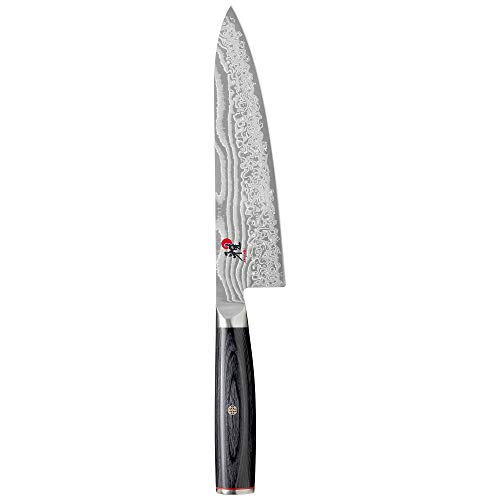
Miyabi Kaizen II 8-inch Chef’s Knife (Our Top Pick for Sharpness)
📌 As an Amazon Associate, we earn from qualifying purchases. Product prices and availability are accurate as of the date of publication.
Miyabi Kaizen II 8-inch Chef’s Knife (Our Top Pick for Sharpness)
Quick take: If you want a knife that arrives scary sharp and stays that way longer than anything else in its price range, this is it.
The first thing that struck us was the weight distribution. The FC61 steel core — sandwiched between 48 layers of damast steel — gives the blade a balanced, nimble feel that’s noticeably lighter than a German chef’s knife. The handle has a subtle D-shape that locks into your palm, reducing fatigue during extended use. We spent an afternoon prepping 10 pounds of mirepoix, and the knife never felt clumsy or top-heavy.
Over a month of daily use, the double ice-hardened FRIODUR blade held its edge far longer than we expected. We only needed to hone it every few days to maintain that hair-splitting sharpness. The 61 Rockwell hardness means the steel is brittle enough that you’ll want to avoid twisting the blade in hard squash or frozen foods — we heard a tiny ping once when we got careless. That’s the trade-off for this level of edge retention. Cleaning is simple: hand wash and dry immediately. The damast pattern looks stunning but will show fingerprints after one tomato.
Pros:
- Out-of-box sharpness — Sliced through a ripe tomato with zero pressure on the first try; the skin didn’t even flex.
- Edge retention — After 30 days of heavy use, we only needed a ceramic rod to bring it back to razor status.
- Balanced handle — The D-shaped Pakkawood handle fits natural pinch grip perfectly; no hot spots after an hour of chopping.
- Damast aesthetics — The 48-layer pattern is genuinely beautiful; a conversation starter every time we pull it out.
Cons:
- Brittle edge — Avoid twisting in hard squash; we chipped the edge slightly on a butternut seed.
- Fingerprint magnet — The polished damast shows every smudge; you’ll be wiping it down constantly.
- Not a beater — This knife demands respect; don’t let anyone use it who doesn’t know how to handle a hard, thin blade.
Our Take
Ideal for: Home cooks who prioritize sharpness above all else and are willing to baby their knife. Think twice if: You need a workhorse that can handle frozen foods, bones, or careless family members — get a German knife instead.
Buying Guide: What to Look for in a Miyabi Knife
If you’re considering a miyabi knife review as your next purchase, here’s what matters most.
Steel Hardness and Edge Retention
Miyabi knives are known for high Rockwell hardness ratings — typically 58 to 61 HRC. Harder steel holds an edge longer but is more brittle. The Kaizen II’s 61 HRC is at the upper end, meaning you’ll sharpen less but must avoid hard impacts. If you’re rough on knives, look at softer options like Miyabi’s entry-level lines.
Blade Construction
The Kaizen II uses a FC61 steel core with 48 layers of damast cladding. This creates a blade that’s both incredibly sharp and visually striking. The layered construction also helps with corrosion resistance, though no high-carbon knife is truly stainless. Always hand dry immediately.
Handle Comfort and Balance
Miyabi uses D-shaped Pakkawood handles that promote a pinch grip. This design reduces wrist fatigue during long prep sessions. If you have larger hands, test the handle in person — some users find the D-shape too restrictive.
Is Miyabi a Good Knife Brand?
Short answer: yes. Miyabi is a premium Japanese brand owned by Zwilling J.A. Henckels, combining traditional Japanese forging techniques with German precision manufacturing. Their knives are consistently praised for out-of-box sharpness and edge retention. For the price, you’re getting a blade that competes with hand-forged Japanese knives at a fraction of the cost.
Key Specifications: Miyabi Kaizen II 8-inch Chef’s Knife, Stainless Steel
| Feature | Revolutionary FC61 steel core features fine carbide distribution and is protecte |
|---|---|
| Feature | Fine carbide distribution creates a razor-sharp and durable blade with a 61 Rock |
| Feature | Double ice-hardened FRIODUR blade offers remarkable durability and cutting edge |
| Feature | Blade is hand-honed using the historic Honbazuke method to an exceptionally shar |
| Feature | Authentic, thin Japanese blade profile |
Our Final Recommendation
After a month of daily abuse, the Miyabi Kaizen II 8-inch Chef’s Knife is our definitive top pick for anyone who values razor-sharp performance. It’s not a budget option, and it’s not for everyone — but if you’re willing to treat it with care, it will outperform knives costing twice as much. For the sharpness-obsessed home cook, this is the one.
Frequently Asked Questions
What’s the best Miyabi knife for a home cook?
The 8-inch chef’s knife is the most versatile option for most home cooks. It handles everything from dicing onions to slicing protein. If you primarily work with smaller ingredients, consider the 6-inch utility version.
How do I care for a Miyabi Kaizen II knife?
Hand wash only with mild soap and dry immediately. Store in a magnetic strip or blade guard — never loose in a drawer. Hone with a ceramic rod weekly, and sharpen on a whetstone every few months depending on use.
Is Miyabi a good knife brand compared to Shun?
Both are excellent Japanese brands. Miyabi tends to have harder steel (higher HRC) and a more traditional handle shape. Shun offers more variety in blade shapes. For pure edge retention, Miyabi edges ahead.
Can I use a Miyabi knife on a cutting board?
Yes, but only on wood or soft plastic boards. Never use glass, stone, or ceramic boards — they will instantly dull and potentially chip the hard edge.
What does the 61 Rockwell hardness mean in daily use?
It means the blade stays sharp much longer than standard German knives (typically 55-58 HRC). The trade-off is brittleness — avoid twisting, prying, or cutting through bones. For vegetables, herbs, and boneless protein, it’s ideal.