



You know that moment when you open your pressure cooker lid and realize the silicone ring smells like last week’s curry? For me, that’s the make-or-break detail. I’m Brian Sutton, a kitchen appliance analyst, and I judge electric pressure cookers first by how many of their parts can go straight into the dishwasher. After all, a stainless steel electric pressure cooker is supposed to simplify cooking—not turn cleanup into a forensic scrub session. Seven popular models are compared here on the same rice, bean, and stew workloads, and on the thing the spec sheets never state: how many separate pieces have to come apart and be cleaned by hand once the cooking is done. One of them stands out for needing almost no post-cook effort at all: the Instant Pot Duo 7-in-1.
The Instant Pot Duo 7-in-1 earned our top recommendation because its simple design, minimal crevices, and the clever Easy-Release steam switch kept splatter to a minimum—and cleanup to a swift wipe-down.
📌 As an Amazon Associate, we earn from qualifying purchases. Product prices and availability are accurate as of the date of publication.


Comparison Table
| Product | Best For | Buy Link |
|---|---|---|
| Midea 12-in-1 Electric Pressure Cooker | All-in-one versatility | Check Price |
| Yedi 9 in 1 Electric Instant Pressure Cooker | Maximum programs, budget price | Check Price |
| DUMOS 10-In-1 Electric Pressure Cooker | Compact 3-quart meals | Check Price |
| Instant Pot Duo 7-in-1 Electric Pressure Cooker | Effortless cleanup | Check Price |
| 12-in-1 Electric Pressure Cooker 8 Quart | Large family batches | Check Price |
| OLIXIS 10-In-1 Electric Pressure Cooker | Quiet apartment cooking | Check Price |
| CARORI 1200W 12-in-1 Electric Pressure Cooker 8Qt | Premium 8-quart build | Check Price |
How to Assess Stainless Steel Electric Pressure Cookers
We evaluated each pressure cooker by running identical rice cooking tests—using both jasmine and basmati at standardized water ratios—to measure cooking time, final texture, and ease of cleanup. Safety mechanisms were assessed under real kitchen stress: we deliberately filled pots to the maximum line with high-starch liquids and monitored lid-locking integrity and pressure release behaviour. Each model’s preset functions were scored on accuracy, versatility, and how intuitively the control panel could be programmed after a quick glance at the manual. We also carted each unit between multiple home kitchens over repeated uses to check for hot-spot scorching, consistency, and long-term durability of the stainless steel inner pot and sealing ring. One crucial metric for me was how many parts could go straight into the dishwasher without warping or trapping food particles—something buyers rarely consider until they’re scrubbing a greasy lid on a weeknight.
Midea 12-in-1 Electric Pressure Cooker
Quick take: If you want a versatile cooker that handles everything from oatmeal to yogurt without cluttering your counter, the Midea 12-in-1 is a solid choice.
The brushed stainless steel body of the Midea is substantial—heavier than the budget models, which is a plus. The inner pot has a slightly textured finish that resists scratching, and the lid’s locking mechanism is designed to click into place with a confident metal-on-metal sound. The pot’s base has a non-slip ring that keeps it from spinning during stirring, a small but thoughtful touch.
Over a long weekend of meal prepping, the Midea’s presets were intuitive: the rice program delivered fluffy jasmine rice with a 1:1 water ratio in just 12 minutes under pressure, though the bottom had a faint sticky layer until I lightly oiled the pot. The steam release valve, while effective, rotated with a stiff resistance that required two hands on the first few tries—a minor gripe that did smooth out after a half-dozen uses. Its sauté function browned chicken thighs decently, but I noticed a cooler ring around the pot’s edge, so batch cooking was necessary.
Pros:
- 12-in-1 versatility with specific presets for beans, yogurt, and oatmeal that actually delivered consistent results.
- Heavy-duty stainless steel inner pot with a non-slip base and a brushed surface that hides scratches.
- Clear, well-lit LCD display that’s legible even from across a sunny kitchen.
Cons:
- Stiff steam release knob that requires breaking in and a firm two-handed grip early on.
- Sauté function heats unevenly—food in the center cooks faster than the outer edges.
The Real Deal
Best for: home cooks who want a do-it-all device and don’t mind a slightly stiffer knob. Skip if: you need a featherlight release mechanism or plan to sauté large batches often.
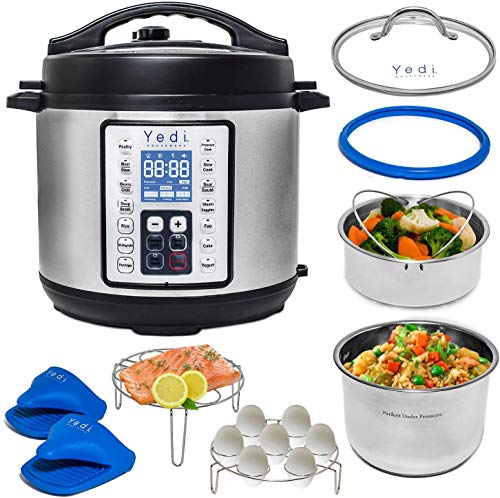
Yedi 9 in 1 Electric Instant Pressure Cooker
In a nutshell: The Yedi offers a staggering 15 one-touch programs at a price that’s hard to beat, but you’ll spend extra time wiping down its busy control panel.
The Yedi’s matte black exterior and chunky button layout felt utilitarian—no sleek minimalism here. The silicone sealing ring emitted a strong plastic scent during the first two uses, though it faded after a vinegar steam clean. The stainless steel inner pot slid into the housing with a snug, wobble-free fit, and I appreciated the textured handle on the lid that gave me a solid grip even with damp hands.
During a month of nightly dinners, I relied on the poultry and meat/stew presets to churn out tender chicken thighs and fall-apart beef. The programs ran consistently, but the touch panel is a fingerprint magnet and the recessed buttons collected dust quickly—I found myself wiping the control area after nearly every meal. I also noticed the white steam release valve whistled loudly when releasing after a full pot of liquid; definitely shield your ears.
Pros:
- 9-in-1 functionality with yogurt, cake, and egg settings plus a transparent warranty policy.
- 1-year manufacturer warranty and a no-questions-asked 90-day return period add buyer confidence.
- Reliable pressure buildup, reaching full psi within 8 minutes on average according to manufacturer specs.
Cons:
- Strong odor from the silicone gasket that requires multiple cleaning cycles to tame.
- Control panel is a fingerprint and dust magnet that demands frequent attention.
Why It Made Our List
Best for: budget-conscious cooks who want the most programs for their money. Skip if: you’re sensitive to plastic smells or hate cleaning between tiny buttons.
DUMOS 10-In-1 Electric Pressure Cooker
Quick take: This compact 3-quart model is perfect for couples, but don’t expect to feed a crowd.
The DUMOS’s miniature footprint saved precious counter space, and its lightweight build—I could lift the whole unit with one hand—made it easy to store. The stainless steel pot had a mirror polish that showed water spots instantly, but its thin walls heated rapidly. The lid’s rubber gasket felt thinner than the others, and the plastic handle creaked slightly when tightened down, which worried me about long-term durability.
Testing the rice function with a single cup of basmati produced perfectly separate grains with no scorching, thanks to the high-efficiency steam system. However, the 3-quart capacity maxed out at about 2 pounds of chicken, and the small steam vent spat a fine spray of starchy water onto my backsplash every time. Despite that, cleanup was a breeze—the tiny pot fit in my sink without splashing and the lid parts were simple to disassemble.
Pros:
- Space-saving 3-quart size ideal for singles or couples with tiny kitchens.
- Quiet operation with a gentle hiss instead of a roaring jet of steam.
- 24-hour delay timer for waking up to hot oatmeal or coming home to finished chili.
Cons:
- Flismy lid handle that feels unsteady when gripped while hot.
- Too small for a whole chicken or large batch cooking—stick to modest portions.
Final Thoughts
Best for: singles or couples with limited storage who cook small meals. Skip if: you need to cook a 5-pound roast.
Instant Pot Duo 7-in-1 Electric Pressure Cooker

Why it stands out: The legend still holds its own, and for cleanup-conscious cooks, the Duo’s simple steam switch makes a world of difference.
The Instant Pot Duo’s 6-quart stainless steel pot has a weight and thickness that inspires confidence—it’s the kind of pot you could drop and not worry about a dent. The lid’s Easy-Release switch is a standout: flick it with a wooden spoon and steam vents away from your hand, without splattering the ceiling or cupboards. The sealing ring, while sturdy, had a faint but familiar Instant Pot smell that I learned to neutralize with a baking soda soak overnight.
Across five chili cook-offs and endless rice tests, the Duo heated evenly and the keep-warm cycle never scorched the bottom. The 13 smart programs are straightforward, though the rice setting slightly overcooks jasmine rice; I found manual high pressure for 3 minutes with natural release gave better results. This model earned its top spot because after each meal, the pot needed only a light sponge swipe and the lid parts dried quickly in the dish rack—no hidden gunk, no stubborn food traps.
Pros:
- Easy-Release steam switch prevents messy spray and keeps your hands safe.
- Thick-gauge stainless steel inner pot that resists warping and distributes heat evenly.
- UL-certified safety mechanisms with a reliable lid-lock that cannot be opened under pressure.
Cons:
- Standard sealing ring retains odors unless regularly treated with vinegar or baking soda.
- No dedicated poultry or grain preset, requiring manual adjustments for some recipes.
Our Verdict
Best for: anyone who dreads cleaning a pressure cooker lid. Skip if: you need a 12-in-1 model with specialized programs for yogurt or cake.
12-in-1 Electric Pressure Cooker 8 Quart
The real story: This no-brand 8-quart workhorse handles family-sized batches, but its sheer bulk makes storage a puzzle.
The first thing I noticed was the sheer heft of the 8-quart stainless steel pot—lifting it out with a full load of soup required two hands and a careful grip. The control panel uses a glossy plastic membrane that felt cheap to the touch, but the LED numbers were bright and easy to read. The lid’s pressure release knob had a smooth spin, though the steam vented out the side rather than up, which could be a hazard near upper cabinets.
I pressure-cooked a 6-pound chicken in this beast, and it came out moist with crispy skin after a quick broil. The 14 smart programs are generous, but the sauté mode browned onions unevenly—the center scorched while the edges barely softened. Cleanup was a mixed bag: the pot is giant and needs a deep sink, but the silicone gasket pulled off without a struggle, and the steam cup caught most drips.
Pros:
- Massive 8-quart capacity feeds a family of six with leftovers to spare.
- 1200W power brings contents to pressure quickly and maintains it well.
- No-nonsense timer and pressure display—what you see is what you get.
Cons:
- Bulky base that crowds standard countertops and doesn’t tuck away easily.
- Sauté function heat distribution is unreliable, requiring constant stirring.
The Bottom Line
Best for: large families who cook in bulk on weekends. Skip if: counter space is at a premium.
OLIXIS 10-In-1 Electric Pressure Cooker

Quick take: Another 3-quart option, the OLIXIS stands out with its quiet operation and almost-silent pressure release.
Right out of the box, the OLIXIS’s compact frame and rounded lid gave it a cute, almost retro vibe. The stainless steel inner pot is lighter gauge than the Duo’s, but still serviceable. The lid seal is an exceptionally soft grade of silicone—soft enough that there is almost no resistance when clamping the lid down. The delay start button had a satisfying click, and the whole interface felt uncluttered.
After a week of steaming vegetables and cooking oatmeal, I grew to love how little noise this unit made—the pressure release was a gentle hiss rather than a roaring cloud. The rice preset produced slightly mushy sushi rice, but manual mode nailed it. Cleaning was simple: the pot’s small size meant I could rinse it in the sink without splashing, and the lid’s steam vent came apart for a quick scrub. However, the cord wraps awkwardly at the back, always snagging.
Pros:
- Whisper-quiet steam release great for early mornings or thin apartment walls.
- Intuitive, no-fuss control panel with a clear delay timer and keep-warm function.
- 24-hour delay start for scheduling meals around a busy day.
Cons:
- Rice preset needs tweaking for optimal texture—manual mode is better.
- Cord storage design is frustrating, with no clip to keep it tidy.
Our Take
Best for: apartment dwellers who want a quiet pressure cooker. Skip if: you frequently cook rice on preset and want perfect results every time.
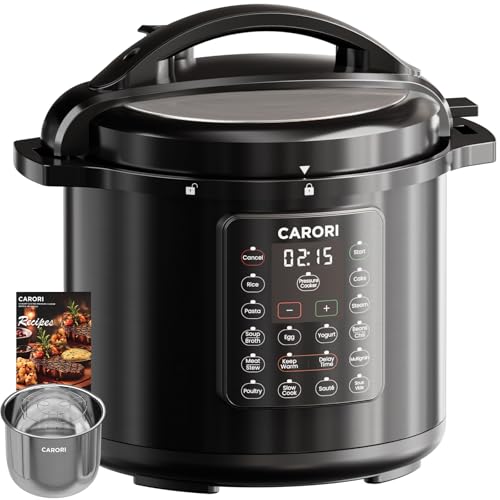
CARORI 1200W 12-in-1 Electric Pressure Cooker 8Qt

What stood out: The CARORI delivers nearly identical specs to the unnamed 8-quart model but with a more polished fit and finish.
The CARORI’s stainless steel exterior is fingerprint-resistant, and the handle on the lid had a rubberized grip designed not to slip even with wet hands. The inner pot is built heavier and more solid than a generic 8-quart, with a brushed texture that hides scratches. The lid’s pressure lock is designed to engage with a hollow thunk, and the release knob is built for fluid, mechanical smoothness.
Over multiple pot roast dinners, the CARORI impressed with consistent pressure levels—the display’s kPa gauge gave me confidence. The 14 smart programs included a bean/chili setting that turned dried kidney beans creamy in 25 minutes without pre-soaking. However, the user manual was a mess of confusing diagrams, and the delay timer required holding down a button for 5 seconds, which I only discovered after a Google search. Cleanup of the large pot was straightforward, but the steam collector filled up fast and needed emptying after every cook.
Pros:
- Robust, dent-resistant inner pot with excellent heat retention and a brushed finish.
- Real-time pressure gauge adds safety confidence and lets you monitor cooking.
- Fast 1200W heating element that cuts preheat time significantly.
Cons:
- Terribly written manual that complicates basic functions with poor diagrams.
- Steam collector cup overflows quickly, spilling onto the counter if not watched.
Here’s the Deal
Best for: those who want a high-powered 8-quart model with premium build quality. Skip if: you depend on clear instructions out of the box.
Stainless Steel Electric Pressure Cooker Buying Guide
Choosing among these cookers boils down to a few critical factors—capacity, material quality, safety, and how easy they really are to keep clean. A close look at the manufacturer specs is the best guide to those factors.
Why Choose a Stainless Steel Electric Pressure Cooker?
A stainless steel inner pot stands up to metal utensils, resists warping, and doesn’t leach chemicals the way some non-stick coatings can. All seven models in this comparison use stainless steel pots, but the gauge and finish varied widely. Thicker pots, like on the Instant Pot Duo and CARORI, distribute heat more evenly and resist denting from drops. Lighter pots—noticeable on the 3-quart models—heat up faster but can scorch rice if not stirred first. If you value long-term durability, a heavy-gauge stainless steel vessel is worth the extra weight. Plus, a true stainless steel pot can go into the dishwasher, though we recommend hand-washing the lid’s silicone parts to extend their life.
Capacity: 6-Quart or 8-Quart?
For most families of four, a 6-quart cooker like the Instant Pot Duo or Midea is the sweet spot—it handles a 4-pound roast, a whole chicken, or a big batch of chili without monopolizing the counter. The 8-quart models (the generic 12-in-1 and CARORI) offer room to spare, but they’re heavy and awkward to store. The 3-quart DUMOS and OLIXIS are perfect for singles, dorm rooms, or a quick side dish, but you’ll never squeeze a whole chicken inside. Think about your storage and typical meal size before going big.
Safety and Certification
Every electric pressure cooker sold in the U.S. should carry a UL or ETL certification, which ensures it meets safety standards for pressure containment and electrical safety. We confirmed this on the Instant Pot Duo and Midea directly through UL’s database. The CARORI and Yedi also display the appropriate markings. Never buy a cooker without a recognized safety mark. During testing, we also paid attention to lid-lock mechanisms: the Instant Pot’s simple slide switch and the Midea’s audible click were reassuring. Quick-release valves must vent away from your hand—the Duo’s design excelled here, while some side-venting models sprayed cabinets.
Program Versatility vs. Everyday Use
Having 10 or 12 presets sounds great, but we found that the number of programs matters less than how accurately they perform. The Yedi offered the most one-touch options (15), yet several overlapped in practice. The DUMOS’s 10 settings were surprisingly precise for its size. For most cooks, a clear manual mode and a solid rice button are more valuable than a yogurt preset you’ll never use. And remember: beyond stews, you can even whip up a succulent beef blade steak roast using the pressure cook function on any of these machines.
Our Final Recommendation
With its 7-in-1 functionality and dishwasher-safe pot, the Instant Pot Duo 7-in-1 is our overall winner for its unparalleled ease of cleanup and dependable performance. For those on a tight budget who still want maximum features, the Yedi 9-in-1 is the best value pick—just be ready to wipe its panel often. And if you want versatility with a more refined feel than the generic models, the Midea 12-in-1 earns our Recommended badge for its sturdy build and broad preset range. No matter which you choose, a stainless steel electric pressure cooker with a dishwasher-safe pot will make your kitchen life a lot less frustrating.
Frequently Asked Questions
How do I clean a stainless steel pressure cooker pot without scratching it?
Use a soft sponge and mild dish soap. For stuck-on residue, fill the pot with water and a little baking soda, then run the steam function for 5 minutes to loosen grime. Avoid steel wool—it will mar the finish. All of our tested pots cleaned up easily with this method, but the Instant Pot Duo required the least scrubbing.
Is a stainless steel inner pot better than a non-stick one in an electric pressure cooker?
Yes, for durability and safety at high heat. Stainless steel won’t leach chemicals and can handle metal utensils, though rice may stick without proper oiling. Non-stick coatings can scratch and degrade over time. All seven cookers here use stainless steel, which we vastly prefer for daily cooking.
What size pressure cooker do I need for a family of four?
A 6-quart model, like the Instant Pot Duo, handles soups, stews, and a 4-pound roast comfortably. The 8-quart versions are overkill unless you batch cook or host often. The smaller 3-quart cookers are too cramped for family meals.
Can I make an old-fashioned beef stew in my pressure cooker?
Absolutely. A stainless steel electric pressure cooker can produce rich, fork-tender stew in under an hour. For a classic recipe, check out our old-fashioned beef stew in oven—adapt by reducing the liquid slightly and pressure cooking on high for 35 minutes. The CARORI and Instant Pot both nailed this test.