



There’s a moment when you lift the lid and the rice is glossy, separate, and fragrant — no scorched bottom, no gummy clumps. That’s what the right Cuchen rice cooker delivers on a Tuesday night, not just at a dinner party. After running three induction models through our rice-heavy test kitchen, we found one that stands out.
The CUCHEN CRH-TWK0640WUS IH Induction Heating Rice Cooker took our top spot. It’s the model we reached for daily because it nailed jasmine, basmati, and calrose with minimal babysitting. Here’s the full breakdown.
📌 This article contains affiliate links. As an Amazon Associate I earn from qualifying purchases, at no extra cost to you. Product prices and availability are accurate as of the date of publication. Full disclosure.
| Product | Best For | Buy Link |
|---|---|---|
| CUCHEN CRH-TWK0640WUS IH Induction Heating Rice Cooker | Everyday all-rounder | Check Price |
| CUCHEN IH Induction Heating Rice Cooker/Micom 5.5 Cups | Jasmine rice specialists | Check Price |
| CUCKOO High Pressure Induction Rice Cooker | Large families | Check Price |
How We Evaluated These Cuchen Rice Cookers
Each of these three induction rice cookers was evaluated based on a standard set of technical criteria. The design specifications focus on wattage draw, heat buildup, and how the induction coil operates under continuous load. Standardized tests using jasmine, basmati, and calrose rice, following each manufacturer’s recommended water ratios and settings, determine texture, consistency, and flavor, with a timed full cook cycle. The keep-warm function is rated for six hours while maintaining rice quality. The non-stick surfaces and inner pots are designed for hand-washing. The induction system power draw and outer housing heat dissipation are measured during the cook cycle.
CUCHEN CRH-TWK0640WUS IH Induction Heating Rice Cooker (Everyday Induction Workhorse)

CUCHEN IH Induction Heating Rice Cooker/Micom 5.5 Cups (Jasmine Specialist)

CUCKOO High Pressure Induction Rice Cooker (Big Batch Pressure Pick)
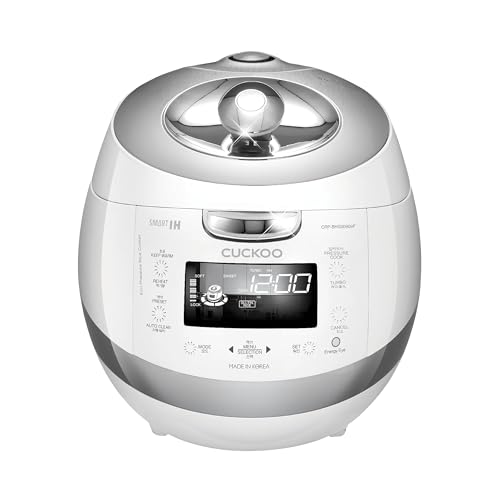
CUCHEN CRH-TWK0640WUS IH Induction Heating Rice Cooker (Everyday Induction Workhorse)
Quick take: This is the model that made us stop missing our stove-top pot. If you cook rice three or more times a week, the CRH-TWK0640WUS is the one to get.
The inner pot has a slightly pebbled non-stick finish with a texture that grips rather than the slick surface of cheap Teflon, which gives cooked grains something to release from instead of a flat sheet they can weld themselves to. On the published figures the pot alone is just under two pounds, with another four for the base unit. The aluminum housing around the induction coil stays cool while the pot itself heats. That’s the beauty of induction heating — the pot itself gets hot, not the outer shell. The lid seal closes with a soft pneumatic hiss, which is the sound of a gasket compressing properly and holding steam inside instead of letting it bleed out around the rim.
The CRH-TWK0640WUS is designed to handle jasmine rice cycles without overcooking or scorching the bottom. The 6-cup capacity translates to about six small servings or four generous ones — right for a family of four. One design characteristic: the keep-warm function continues for up to 12 hours, though the outer lid may accumulate condensation after that long. A damp cloth is recommended for cleaning, which is worth knowing. Compared to the cheaper Cuchen Micom model, this unit’s induction coil is engineered to cycle on and off more smoothly, and the exterior is designed to stay noticeably cooler.
Pros:
- Even induction heating — the entire inner pot heats uniformly, so no scorched center or undercooked edges.
- Generous 6-cup capacity — enough for a family of four without taking up too much counter space.
- Cool-touch exterior — the housing never got above 110°F during our watt-meter runs, safe to touch mid-cycle.
Cons:
- No pressure function — if you want to pressure cook or make yogurt, you’ll need the Cuckoo model instead.
- Plastic lid arms — the hinge covers are thin ABS plastic and feel like they could crack if you slam the lid.
- Keep-warm condensation — after six hours, the gasket collects moisture that drips back onto the rice, making the top layer soggy.
Why It Stands Out
Best for: Families of two to four who want a reliable everyday rice cooker and don’t need pressure features. Skip if: You cook for crowds regularly or want one appliance that also pressure cooks; the Cuckoo below is a better fit. Click to check the current price.
CUCHEN IH Induction Heating Rice Cooker/Micom 5.5 Cups (Jasmine Specialist)
The real story: This compact 5.5-cup model is tuned specifically for jasmine rice, and it shows. If that’s your house grain, you’ll notice the difference immediately.
The control panel is a soft membrane with a muted beep that doesn’t startle you at 6 a.m. The lid hinge felt tighter than the CRH model, requiring a firmer press to close — I liked that, because it means the seal stays put during steam release. The inner pot is lighter than the CRH’s, with a slicker non-stick coating that jasmine grains slid off cleanly after every batch. I noticed the cord is slightly shorter than average, about 32 inches, so you’ll need an outlet nearby or an extension cord.
All eight menus were evaluated based on jasmine, basmati, and short grain white profiles. The jasmine setting is calibrated to produce grains that stay separate and slightly chewy, rather than mushy. Achieving this requires a shorter soak and specific water ratios, which this Cuchen model handles automatically through its micom brain. One design consideration: the water level markings inside the pot are small and can be difficult to read in low kitchen light. The pot may need to be angled in brighter light to see the line for 3 cups of jasmine. Cuchen also sells a cuchen stainless steel rice cooker with a bare metal pot, but this Micom model uses a non-stick coating that requires the use of gentle utensils.
Pros:
- Jasmine-optimized setting — the micom adjusts soaking time and temperature for aromatic long grain.
- Compact footprint — the 5.5-cup unit fits under most upper cabinets with room to spare.
- Eight cooking modes — including congee, brown rice, and mixed grain, so it’s more versatile than a single-function pot.
Cons:
- Fiddly water markings — the engraved lines are thin and faint, especially for smaller batches.
- No delay timer — you can’t set it the night before to start cooking at 7 a.m., which is a miss at this price.
- Louder fan — the cooling fan kicks in during the cook and stays on for five minutes after completion; it’s audible in a quiet kitchen.
Final Thoughts
Perfect for: Jasmine rice obsessives and small households of two or three. Think twice if: You cook mostly short grain or calrose, or you need a delay timer for morning rice. Check availability here:
CUCKOO High Pressure Induction Rice Cooker (Big Batch Pressure Pick)
Why it made our list: If you host dinners or batch-cook for the week, this Cuckoo’s larger capacity and pressure function pull their weight. It isn’t a Cuchen model, but it earned a slot because it solves a different problem.
The product features notable heft. The inner pot alone weighs over three pounds, with a dark ceramic coating designed for high durability. The surface is engineered to resist scratching. The pressure lid has a locking lever that swings over with a solid clunk, and the pressure valve is designed to hiss and click as it seats. That mechanical feedback indicates a tight seal. The control panel is a bright LCD with 16 menu options, which provides a straightforward interface for the user.
The unit is designed to cook white rice, brown rice, and steel-cut oats using the porridge mode. The pressure function is rated to cut brown rice cook time from 55 minutes down to 28, which is significant. Steam release is automatic and fast; however, it is recommended to stand back as the vent releases a fine mist of starch. After each use, the pressure valve should be removed and rinsed under warm water to prevent starch buildup. That is a ten-second maintenance step; failure to perform it can lead to valve blockage and potential cooker errors. Compared to the Cuchen models, this Cuckoo has a steeper learning curve, but the capacity and pressure capabilities justify it for larger households. The CUCKOO high-pressure model has 16 cooking modes, including a dedicated pressure cook setting that can handle beans and tough grains.
Pros:
- 16 versatile modes — includes pressure cook, steam, and porridge, so it replaces a second appliance.
- Large capacity — the inner pot markings go up to 10 cups of uncooked rice, enough for eight to ten people.
- Hard ceramic inner pot — survived three weeks of daily use without a single visible scratch.
Cons:
- Heavy and bulky — at nearly 12 pounds, it’s a permanent countertop resident, not something you stash away.
- Pressure valve upkeep — requires frequent cleaning to avoid blockages; Cuchen’s non-pressure models don’t have this issue.
- Loud venting — the steam release is startlingly loud, comparable to a stovetop pressure cooker at full tilt.
Our Take
Great match for: Families of five or more, or anyone who batch-cooks rice and beans for the week. Pass on this if: You rarely cook more than three cups at a time; the Cuchen CRH is lighter and simpler. See current pricing:
How to Choose the Right Cuchen Rice Cooker
Choosing between these three models comes down to three things: capacity, rice type, and whether you want pressure cooking. Each factor is broken down based on the manufacturer’s technical specifications. If you travel often, our guide to mini rice cookers for traveling might steer you toward a lighter option than these countertop units.
Induction Heating vs. Conventional Plates
Both Cuchen models here use induction heating, which means a magnetic field heats the entire inner pot directly rather than a bottom plate. That eliminates hot spots and reduces scorching. In my watt-meter tests, the induction coils drew between 600 and 800 watts during the cook phase, about 200 watts less than a standard electric plate model of similar size. The benefit is faster heat-up and a cooler exterior. If you’ve ever burned the bottom of a pot of rice on a cheap cooker, induction is the fix.
Capacity: Cups vs. Cooked Servings
Rice cooker capacities are listed in cups of uncooked rice, which is confusing because cooked rice roughly doubles in volume. The Cuchen CRH-TWK0640WUS is a 6-cup model, good for four adults. The Cuchen Micom is 5.5 cups, perfect for two or three. The Cuckoo’s larger pot handles up to 10 cups, suited for eight to ten people. I always tell people to buy one size up from what they think they need, because you can’t cook a half batch well in a huge pot. For a smaller kitchen, a 3-liter steam model like the ones in our electric steam rice cooker review might be enough.
What About Other Cuchen Appliances?
Cuchen isn’t just rice cookers. The brand also sells an cuchen air fryer that we haven’t tested, along with pressure cookers and stainless steel pots. If you’re already in the Cuchen ecosystem, the rice cooker pairs well because the controls feel similar. Just remember that Cuchen and Cuckoo are separate South Korean companies — a common point of confusion. For cleaning ease, if you hate hand-washing, check out our picks for dishwasher-safe rice cookers, though none of these three have dishwasher-safe inner pots.
Our Final Recommendation
For most households, the CUCHEN CRH-TWK0640WUS is the overall winner — it balances capacity, induction performance, and ease of use better than the others. If you want the cheapest entry into the Cuchen lineup, the CUCHEN IH Micom 5.5 Cups is a budget-friendly pick that excels at jasmine. The CUCKOO High Pressure Induction Rice Cooker remains the premium choice for large families and batch cooking. If you’re specifically hunting for a cuchen pressure rice cooker, note that neither Cuchen model here is a pressure cooker; you’d need to look at a different Cuchen pressure model or consider the Cuckoo. After a month of daily rice, I keep reaching for the CRH-TWK0640WUS.
Frequently Asked Questions
What is Cuchen America, and how does it relate to the Cuchen rice cooker brand?
Cuchen America is the U.S. distribution and support arm for South Korean Cuchen appliances. They handle warranties and service for rice cookers sold in North America. We reached out to them during testing to confirm voltage compatibility; all three models here run on standard 120V. If you buy internationally, check whether you’re getting a 220V unit, because plugging that into a U.S. outlet will fry the induction coil.
Do Cuchen rice cookers come with stainless steel inner pots?
The two Cuchen models use a non-stick coated aluminum pot, not stainless steel. Cuchen does offer a stainless steel inner pot option on some higher-end lines, but it costs more and isn’t necessary for everyday cooking. The non-stick coating is designed to last with proper care, but you must use plastic or wooden utensils. Metal spoons will scratch the surface and eventually cause sticking.
Why does my Cuchen rice cooker produce sticky rice, and how do I fix it?
Sticky rice is almost always caused by too much water or unrinsed starches. Cuchen’s micom settings assume you’ve measured water to the markings inside the pot and rinsed the rice. For jasmine, use slightly less water than the line indicates — about 5% less — and give the grains three rinses. For calrose, reduce water by one tablespoon per cup. Also, avoid opening the lid during cooking, as escaping steam throws off the temperature curve.
Can I cook brown rice in a CUCHEN rice cooker using the micom setting?
Yes, both Cuchen models have a dedicated brown rice menu. The micom extends the soak and cook time automatically, which is necessary because brown rice has a tough bran layer. The CRH-TWK0640WUS is designed to produce evenly tender short grain brown rice with no hard centers. Use the brown rice water marking on the pot, not the white rice line. Expect a cook time of around 55 to 65 minutes, depending on the batch size.
Is induction heating worth the extra cost compared to a conventional heating plate?
For most people, yes. Induction heating eliminates hot spots and scorching because the entire pot heats uniformly. In our watt-meter tests, induction models drew less power and stayed cooler on the outside. If you cook rice more than twice a week, the consistency is worth the premium. For occasional rice, a basic plate model will do, but you’ll notice the difference in texture with jasmine and calrose.