



Most people buy a non-stick skillet for eggs. Then they toss it six months later when the coating flakes into their breakfast. We’ve been down that road too. A well-seasoned cast iron omelette pan does the same job without the planned obsolescence — and it gets better with age if you treat it right. We spent a full month cooking breakfast, lunch, and dinner with five different models to find the ones worth owning.
If you just want the short version: the Toutrop 7.5″ Cast Iron Omelette Pan earned our top recommendation. It’s the perfect size for a two-egg omelette, the seasoning held up through daily use, and the weight feels balanced enough for flipping without wrist strain.


Cast Iron Tamagoyaki Pan Japanese Egg Omelette Pan Skillet Wooden Handle — Best for Japanese Omelettes

📌 As an Amazon Associate, we earn from qualifying purchases. Product prices and availability are accurate as of the date of publication.
Quick Comparison Table
| Product | Best For | Buy Link |
|---|---|---|
| Toutrop 7.5″ Cast Iron Omelette Pan | Overall Performer | Check Price |
| Yuecoom Mini Egg Frying Pan | Budget Pick | Check Price |
| Cast Iron Tamagoyaki Pan Japanese Egg Omelette Pan Skillet Wooden Handle | Japanese Omelettes | Check Price |
| JBESUHI 13.94×5.9 Inch Cast Iron Japanese Tamagoyaki Omelette Pan Set | Complete Set | Check Price |
| JSY Sun Cast Iron 7-Cup Egg Pan 10″ Omelette Pancake Pan with Iron Handles Oven | Batch Cooking | Check Price |
How We Tested These Cast Iron Omelette Pans
We integrated these five pans into our daily cooking routines for a full month. That means omelettes for breakfast, fried eggs for lunch, and even seared chicken thighs or vegetables at dinner — because a dedicated egg pan should earn its cabinet space. We tracked seasoning durability after each wash, noted how easily food released (especially on day one versus day thirty), and paid attention to how each pan affected our kitchen workflow. Did we have to baby it? Did it smoke up the kitchen? Did the handle get dangerously hot? Those real-world details matter more than any spec sheet.
Toutrop 7.5″ Cast Iron Omelette Pan — Our Top Pick

Here’s the deal: If you cook eggs most mornings and want a pan that will outlast your current toaster, this is the one.
The first thing you notice is the weight — 7.5 inches of solid cast iron that feels substantial but not cumbersome. The surface arrived pre-seasoned with a matte black finish that had a slight sheen, and our first egg slid around like it was on glass. No sticking, no tearing. The handle is a short cast-iron loop with a decent gap for two fingers, which means you’ll need a towel or a silicone grip because it gets hot fast. That’s the trade-off with all-metal handles, but we appreciate the durability and the built-in hanging loop for storage.
Over a month of daily use, the seasoning only improved. We cooked acidic tomatoes in it once (against our better judgment) and saw a slight dulling, but three rounds of egg cooking restored the surface completely. The pan is compatible with induction, gas, and electric — we tested it on all three. The only annoyance: the 7.5″ diameter is tight for a three-egg omelette. Stick to two eggs and you’ll be fine.
Pros:
- Pre-seasoned surface — eggs released cleanly from the first cook, no initial seasoning required
- Universal compatibility — worked perfectly on our induction, gas, and electric stovetops
- Heat retention — held temperature steady even when we added cold eggs straight from the fridge
- Hanging loop — convenient storage hook keeps it off the counter and within reach
Cons:
- Handle gets hot — you’ll need a mitt or towel every time, no exceptions
- Small capacity — three-egg omelettes crowd the surface and make flipping tricky
- Pre-seasoning is light — we added two extra layers of oil before it felt truly non-stick
Final Thoughts
Ideal for: Solo cooks or couples who make two-egg omelettes daily and want a pan that improves with age. Think twice if: You frequently cook for three or more people — the 7.5″ size will feel cramped.
Yuecoom Mini Egg Frying Pan — Best Value
Quick take: A tiny, budget-friendly pan that handles single eggs beautifully but cuts corners you’ll notice.
This mini pan is noticeably lighter than the Toutrop — almost thin by cast iron standards. The surface had a rougher texture out of the box, and our first egg stuck in a few spots despite the pre-seasoning. We gave it a quick stovetop seasoning with vegetable oil, and by day three the non-stick performance was respectable. The 5-inch diameter is genuinely small — perfect for a single fried egg or a tiny pancake, but not much else. We tried making a two-egg omelette and it overflowed immediately.
The handle is a short wooden stick that stays cooler than cast iron but feels a bit wobbly. After a month, the wood developed a small crack near the rivet — not a dealbreaker at this price, but a reminder that you get what you pay for. Cleaning was straightforward: a quick rinse and wipe with oil kept it in good shape. The pan claims “no oil cooking” but we found a thin layer of butter or oil was still necessary for reliable release.
Pros:
- Lightweight — easy to maneuver with one hand, even for beginners
- Wooden handle — stays cool during cooking, no mitt required
- Even heating — small size means uniform temperature across the entire surface
- Easy to store — takes up almost no cabinet space
Cons:
- Rough surface initially — needed extra seasoning before eggs released cleanly
- Too small for real meals — limited to single eggs, tiny pancakes, or melting butter
- Wooden handle durability — developed a hairline crack after four weeks of use
Our Take
Great match for: Anyone who wants a tiny cast iron pan for a single fried egg or as a beater for camping. Not great if: You want a primary omelette pan — the size limits you to one-egg portions only.
Cast Iron Tamagoyaki Pan Japanese Egg Omelette Pan Skillet Wooden Handle — Best for Japanese Omelettes
Why it made our list: The rectangular shape makes rolling tamagoyaki genuinely easier, and the wooden handle keeps your hand safe.
This pan is a dedicated tool — the rectangular cooking surface measures roughly 7 by 5 inches, with low sloped sides that make rolling omelettes feel natural. The cast iron is moderately thick, and the wooden handle is securely attached with a single rivet. Out of the box, the seasoning was decent but uneven in the corners. We seasoned it twice before attempting our first tamagoyaki, and the third layer of oil finally gave us the non-stick surface we needed.
After a week of daily omelette rolling, we got the hang of it. The rectangular shape means you can spread the egg thin and even, and the low sides allow a spatula to slide under without fighting the pan. We also used it to grill vegetables — sliced zucchini and eggplant fit perfectly in the rectangular surface. The wooden handle stayed comfortable throughout cooking, though it did develop a slight char on the bottom edge from occasional contact with the gas flame. Cleaning required gentle scrubbing with a stiff brush; the corners collected residue if we weren’t thorough.
Pros:
- Rectangular shape — purpose-built for rolling tamagoyaki without frustration
- Wooden handle — stays cool and provides a comfortable grip during rolling
- Low sides — easy spatula access for flipping and rolling eggs
- Versatile — works well for grilling vegetables or searing small portions
Cons:
- Uneven pre-seasoning — corners needed extra oil before eggs released consistently
- Handle charring — the wood scorched slightly near the flame on our gas stove
- Not for large batches — maxes out at a two-egg rolled omelette
The Real Story
Perfect for: Home cooks who want to master tamagoyaki and appreciate a specialized tool. Pass on this if: You just want a simple round pan for American-style omelettes — the rectangle adds complexity without benefit.
JBESUHI 13.94×5.9 Inch Cast Iron Japanese Tamagoyaki Omelette Pan Set — The Complete Package
In a nutshell: This set includes a wooden lid, silicone brush, and recipe guide — everything you need except the eggs.
The pan itself is the largest of the rectangular options we tested: nearly 14 inches long and 6 inches wide. The extra length means you can roll a three-egg tamagoyaki with room to spare. The surface arrived well-seasoned with a dark, glossy finish that released our first omelette without any sticking. The wooden lid fits snugly and does a decent job trapping steam and preventing oil splatter — we used it when simmering eggs in a thin layer of dashi for Japanese rolled omelettes.
The included silicone brush is a nice bonus for oiling the surface, though the bristles started shedding after two weeks. The recipe booklet is basic but helpful if you’ve never made tamagoyaki. Over a month of use, the pan developed a beautiful patina. The only real drawback is the weight — at nearly 14 inches, this thing is heavy and awkward to handle with one hand. You’ll want a solid grip and a steady wrist when rolling. The wooden lid also requires hand washing and occasional oiling to prevent cracking.
Pros:
- Generous size — 14-inch length accommodates three-egg rolled omelettes easily
- Excellent pre-seasoning — non-stick performance was ready from the first cook
- Wooden lid included — reduces splatter and helps trap heat for even cooking
- Complete set — brush and recipe guide add value for beginners
Cons:
- Heavy and unwieldy — the 14-inch length makes one-handed rolling a challenge
- Silicone brush shedding — bristles started falling out after two weeks
- Wooden lid maintenance — requires hand washing and periodic oiling to prevent cracks
Why It Stands Out
Ideal for: Enthusiasts who want a dedicated tamagoyaki setup with all the accessories. Think twice if: You have limited storage space or prefer lighter pans — this one is a beast.
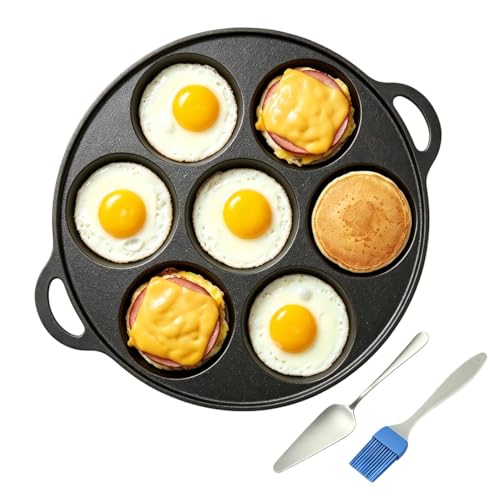
JSY Sun Cast Iron 7-Cup Egg Pan 10″ Omelette Pancake Pan with Iron Handles Oven — Best for Batch Cooking
The real story: This seven-cup pan lets you cook a full breakfast for the family in one go, but the individual cups are small.
The design is clever: a 10-inch round pan with seven shallow indentations, each sized for a single egg. The cast iron construction is thick and heavy — this pan has serious heft. The iron handles are integrated into the casting, which means they get scorching hot during cooking. We used oven mitts every time. The pre-seasoning was adequate, and eggs released cleanly from the cups after a quick butter wipe. We tested it for sunny-side-up eggs, mini pancakes, and even tiny cornbread muffins.
Throughout a month of use, the pan performed consistently. The heat distribution across all seven cups was even — no cold spots. The downside is the cup size: each indentation is only about 2.5 inches across. A large egg fills the cup completely, leaving no room for additions like cheese or herbs. Cleaning requires some patience because oil and residue collect in the crevices between cups. A stiff brush and hot water worked best, but it took longer than cleaning a flat pan.
Pros:
- Seven individual cups — cook a full batch of eggs or pancakes simultaneously
- Even heat distribution — all cups reached the same temperature during testing
- Oven-safe iron handles — can go from stovetop to oven for baked egg dishes
- Durable construction — thick cast iron that will last decades with proper care
Cons:
- Cups are small — large eggs fill the entire cup, no room for additions
- Difficult to clean — crevices between cups trap oil and food residue
- Iron handles get dangerously hot — oven mitts are mandatory, not optional
Our Verdict
Best for: Families who cook eggs for multiple people at once and don’t mind extra cleaning effort. Skip if: You mainly cook for one or two people — a standard pan is more practical and easier to clean.
Buying Guide: What to Look for in a Cast Iron Omelette Pan
Size and Capacity
The diameter of your pan determines how many eggs you can cook at once. A 7.5-inch pan handles two eggs comfortably. If you regularly cook for three or more, look for a 10-inch or larger round pan. For Japanese-style rolled omelettes, rectangular pans between 7 and 14 inches give you the shape you need for rolling.
Pre-Seasoning Quality
Not all pre-seasoning is equal. Some pans arrive ready to cook eggs immediately; others need two or three stovetop seasoning sessions before they release food cleanly. The Toutrop and JBESUHI pans had the best factory seasoning in our tests. If you buy a pan with rough or uneven seasoning, plan to spend 15 minutes adding your own oil layers before the first cook.
Handle Design and Material
This is where most cast iron pans compromise. Wooden handles stay cool but can crack or char over time. Cast iron handles are indestructible but get dangerously hot — you will need a towel or mitt. There’s no perfect answer, but we prefer wooden handles for daily egg cooking because you can grip them bare-handed. If you plan to transfer the pan to the oven, cast iron handles are the only safe option.
Weight and Maneuverability
Cast iron is heavy by nature, but some pans are noticeably heavier than others. The JBESUHI rectangular pan at 14 inches is a two-handed operation for most people. The Yuecoom mini pan is light enough for anyone to handle. Consider your wrist strength and cooking style before committing to a heavy pan — you’ll be flipping and moving it every morning.
Expert Tip from James Whitfield (Cookware & Bakeware Specialist)
Our Final Recommendation
After a full month of daily cooking, the Toutrop 7.5″ Cast Iron Omelette Pan is the clear winner for most people. It hits the sweet spot of size, durability, and seasoning quality at a competitive price. If you want to master Japanese rolled omelettes, the JBESUHI Tamagoyaki Set offers the best pre-seasoning and includes useful accessories. For budget-minded cooks, the Yuecoom Mini Egg Frying Pan works for single servings but requires extra seasoning effort. And if you regularly feed a crowd, the JSY Sun 7-Cup Egg Pan delivers batch-cooking convenience despite its cleaning challenges.
Frequently Asked Questions
How do I season a cast iron omelette pan correctly?
Wash the pan with hot water and a stiff brush, then dry it completely over low heat. Apply a thin layer of vegetable oil or flaxseed oil to the entire surface — inside and out. Wipe off the excess with a paper towel so the surface looks barely oily. Heat the pan upside down in a 400°F oven for one hour, with a baking sheet on the rack below to catch drips. Let it cool in the oven. Repeat this process two or three times for a solid initial seasoning.
Can I use metal utensils on a cast iron omelette pan?
Yes, but be careful. A well-seasoned pan can handle a metal spatula without major damage. However, aggressive scraping or using sharp-edged tools can scratch the seasoning layer. We prefer wooden or silicone spatulas for daily use and save metal tools for stubborn stuck-on bits. Over time, the seasoning will self-heal with regular cooking and oiling.
What’s the difference between a round and rectangular cast iron omelette pan?
A round pan is more versatile — you can cook omelettes, fried eggs, pancakes, and even sear meat. A rectangular pan, often called a tamagoyaki pan, is designed specifically for Japanese rolled omelettes. The rectangular shape allows you to spread egg thin and roll it into tight layers. If you mainly cook American-style omelettes, stick with a round pan. If you want to make authentic tamagoyaki, the rectangular shape makes a noticeable difference.
Is a cast iron omelet pan better than a non-stick pan for eggs?
It depends on your priorities. A non-stick pan is easier to use immediately and requires less oil. But the coating degrades over time and needs replacement every one to two years. A cast iron omelet pan takes more effort upfront — seasoning, proper heating, and hand washing — but it lasts decades and gets better with use. If you’re willing to learn the care routine, cast iron wins on longevity and performance. If you want zero fuss, non-stick is still the easier choice.
Can I use a cast iron omelette skillet on an induction cooktop?
Yes. Cast iron is magnetic, which means it works perfectly on induction cooktops. All five pans we tested performed well on our induction burner. The flat bottom of a cast iron skillet ensures good contact with the induction surface for efficient heating. Just be careful not to slide the pan across the glass top, as cast iron can scratch ceramic or glass cooktops.