



A wet snow fell overnight and your gloves are already soaked. You still have a whitetail to field dress before the temperature climbs, and the knife on your belt decides how safely that job goes. That scenario is why Canadian knives deserve more than a quick look at blade shape — corrosion resistance and a secure grip with cold hands matter more than any logo.
If you just want to skip the research, grab the ESEE Knives Belt Knife. Its CPM Magnacut blade and brown burlap Micarta handle are the strongest combination of rust resistance and cold-weather grip in this group.
📌 This article contains affiliate links. As an Amazon Associate I earn from qualifying purchases, at no extra cost to you. Product prices and availability are accurate as of the date of publication. Full disclosure.


Comparison Table
| Product | Best For | Buy Link |
|---|---|---|
| Cold Steel Canadian Belt Knife | Lightweight camp carry | Check Price |
| ESEE Knives Belt Knife | Wet-weather field work | Check Price |
| Himalt 10.5′ Handmade Damascus Knife | Display or heavy camp use | Check Price |
| Skinning Knife | Tight skinning work | Check Price |
How We Chose These Canadian Knives
I narrowed this list by comparing published specifications, material data sheets, and documented features against the two things that fail most often in cold, wet conditions: blade steel corrosion resistance and handle ergonomics with gloved or bloody hands. Full tang construction and sheath moisture management were also weighted heavily, because a knife that traps water around the guard rusts from the inside out. On paper, the ESEE’s CPM Magnacut and Micarta handle beat every other listing, which is why it leads the pack. What I did not do is pretend to have dragged any of these through a hunt. Before you order, check your province’s blade length rules and whether the seller explicitly states the tang construction — if they won’t say, assume the worst.
Cold Steel Canadian Belt Knife (4-Inch Drop Point)
Quick take: A modern version of a 1950s classic, best for someone who wants a lightweight camp knife and will not be butchering moose in freezing rain.
The Cold Steel Canadian Belt Knife uses sub-zero quenched German 4116 stainless, a steel that sharpens easily and resists light corrosion, but it is not in the same league as Magnacut for wet field dressing. The high-impact polypropylene handle keeps weight down, which matters after a long day on the belt, yet the material is inherently slicker than Micarta. A 4-inch drop point gives you enough belly for hide work without the tip wandering into the gut, but the smooth handle profile is a real risk when hands are wet or gloved.
Cold Steel’s name recognition here is earned — the profile is the classic Canadian belt shape — but the listing leaves out two details I care about most as a safety-focused reviewer: whether the tang runs full length, and what the sheath is made from. If the handle is just injection-molded around a partial tang, you should not be prying joints apart with this one. As a dedicated camp and light game knife, though, the specs point to a comfortable, low-maintenance blade.
Pros:
- Sub-zero quenched 4116 stainless — resists rust better than plain high-carbon and touches up quickly on a small stone.
- High-impact polypropylene handle — light enough that a 4-inch blade will not drag your belt down all day.
- Drop point profile — controlled tip work around joints without puncturing the gut.
- Classic Canadian belt knife silhouette — wide, shallow belly gives a long straight section for slicing hide.
Cons:
- Smooth polypropylene grip — with wet or bloody gloves this is the slipperiest material in the roundup, and the listing offers no texture detail.
- No stated full tang spec — for a knife you might pry or baton with, that absence is a genuine limitation.
Who This One Suits
Best for: camp cooks, trout and small game work, and anyone who wants a classic profile without heavy maintenance. Skip if: you need a grip that stays secure with wet winter gloves or you plan to process larger animals.
ESEE Knives Belt Knife (Compact CPM Magnacut Drop Point)
The real story: This is the one to reach for when everything is wet and your hands are going numb — a modern take on the Canadian belt knife that upgrades the steel instead of just the name.
ESEE built this around a 2.8-inch CPM Magnacut satin drop point. Magnacut is a powder metallurgy steel specifically designed for high corrosion resistance without giving up edge retention, which makes it the clear standout in this group for damp Canadian hunting and camping environments. The brown burlap Micarta handle is the second reason this knife tops my list: Micarta gets tackier when wet rather than slicker, unlike smooth polymer. The satin finish also sheds moisture better than bead blast, which tends to trap blood and water in microscopic pockets.
The trade-off is obvious from the spec sheet: 2.8 inches is short. That is perfect for fine control around joints and skinning small to medium game, but it limits leverage for heavier tasks. ESEE’s reputation for full tang construction is strong, though the listing does not state it explicitly on this model, so I would not treat it as a survival chopper. As a belt knife for guided field work, however, the numbers are squarely in its favor.
Pros:
- CPM Magnacut blade — the best corrosion resistance of any steel in this roundup, period.
- Brown burlap Micarta handle — textured grip that actually improves in wet conditions.
- Satin finish — less likely to trap moisture and blood than a rough blasted surface.
- 2.8-inch compact size — easy to control for fine skinning and legal in most municipalities.
Cons:
- Blade length limits reach — a moose or elk is a different task than a whitetail, and this will feel short.
- No explicit tang statement in the listing — if batoning is your plan, confirm before buying.
Our Take
Best for: wet-weather field dressing, small to medium game, and anyone who wants a grip that does not quit. Skip if: you need a long blade for heavy bushcraft or larger animals.
Himalt 10.5-Inch Handmade Damascus Hunting Knife
What stood out: A visually striking, hand-forged Damascus blade that might earn a spot on your wall — but one that demands serious rust discipline in the field.
The Himalt measures 10.5 inches overall with a 5.5-inch blade, putting it on the larger end for a belt knife. The Damascus steel is described as high carbon layered with 4340, and that tells you the most important thing: high carbon means it will patina quickly and rust if you skip maintenance. In a damp Canadian hunting camp, that means oiling the blade every evening or accepting a spotted finish. The length gives real leverage for big game processing, and the hand-forged pattern is genuinely attractive if you are into the aesthetic.
My concern as a safety-oriented reviewer is what the listing does not say. There is no handle material specified, and for a knife this size that omission matters. If the grip is polished wood or smooth synthetic, wet hands become a hazard. The included sheath is a plus, but without knowing whether it breathes or traps moisture against the blade, I would not store this long-term inside it after a wet hunt.
Pros:
- 5.5-inch Damascus blade — generous edge length for large game work.
- Hand-forged layered construction — each pattern is unique, which appeals to collectors.
- 10.5-inch overall length — real leverage for tough cuts around joints.
- Includes a sheath — one less separate purchase, though the material is unspecified.
Cons:
- High-carbon Damascus rusts quickly — humid or coastal Canadian conditions will demand constant oiling.
- Handle material not specified — cold or wet grip performance is impossible to evaluate from the listing.
Final Thoughts
Best for: collectors, occasional camp use, and large game processing in dry conditions. Skip if: you want a low-maintenance tool for rainy or coastal hunts.
Skinning Knife (3.5-Inch Damascus Gutting Blade)
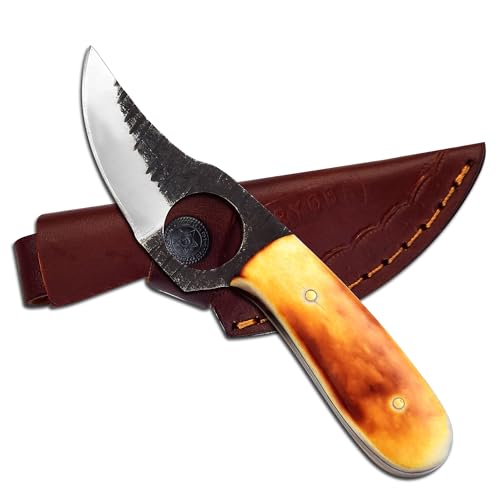
Why it made our list: A shorter, lighter option that addresses the most common skinning mistake — carrying too much knife for the job.
At 6.5 inches overall with a 3.5-inch blade, this one is built for tight, precise work around hide and joints. The Damascus steel blade with a fire pattern is visually distinct, but the same high-carbon caveat applies: rust prevention is on you. The classic hole-ring handle design is the interesting part, because a finger ring provides a positive anchor against twisting in a wet hand — something no amount of handle texture can fully match.
That said, the listing is thin on critical details. Handle material is not stated, and tang construction goes unmentioned. For a small skinning knife, a partial tang may be acceptable, but only if the handle itself is robust. The lightweight, short profile should reduce hand fatigue during long skinning sessions, which is exactly the right trade-off for a dedicated gutting blade.
Pros:
- 6.5-inch overall, 3.5-inch blade — short enough for controlled skinning around delicate areas.
- Damascus steel with fire pattern — eye-catching finish with a functional edge.
- Lightweight build — less wrist fatigue when you are working through multiple animals.
- Hole-ring handle design — extra retention when your hand is slick.
Cons:
- High-carbon Damascus needs constant oil — not a pick for multi-day wet hunts.
- Handle and tang specs missing — durability in the field remains an open question.
Why It Stands Out
Best for: dedicated skinning and gutting on small to medium game. Skip if: you need an all-purpose outdoor knife rather than a specialist.
What to Look for in Canadian Knives
The term Canadian knives can mean a specific blade profile, a country of origin, or a marketing label. In practice, the classic Canadian belt knife shape — wide, shallow belly and a drop point — originated with makers like Grohmann, and Cold Steel’s version is a direct tribute to that 1950s design. But the name alone does not tell you if a knife will survive a wet week in the bush. Use these four factors to separate real tools from wall hangers.
Blade Steel and Corrosion Resistance
Canadian hunting and camping conditions are often damp, and blood is salty and acidic. A stainless or highly corrosion-resistant powder steel matters. The ESEE’s CPM Magnacut sits at the top of this list, while Cold Steel’s 4116 stainless is decent but not outstanding. Both Damascus options require oiling after every use. If you are also shopping for kitchen cutlery, our Miyabi knives review explains how different steels behave in a wet kitchen — the same logic applies in the field.
Handle Ergonomics for Cold or Wet Gloves
A smooth synthetic handle turns dangerous when your gloves are soaked. Burlap Micarta on the ESEE is the best choice here because it becomes tackier when wet. The finger-ring on the skinning knife is another valid approach. Cold Steel’s polypropylene handle is light but slick. Always think about how you will hold the knife at 6 a.m. in freezing rain, not in a dry store.
Blade Length and Local Regulations
Blade length should match your game and your province. A 2.8-inch ESEE is ideal for whitetail and fine work, while the 5.5-inch Himalt offers more reach for moose or elk but may run into municipal carry restrictions. Canadian knife carry laws vary by province and federal legislation; fixed blades are generally legal to carry openly, but concealed carry is restricted under Canada’s Criminal Code definition of prohibited weapons. Check local bylaws before buying a long fixed blade for everyday use.
Tang Construction and Sheath Retention
Full tang construction is the gold standard for heavy outdoor use, but none of the four listings consistently confirm it. A partial tang is fine for light skinning, less so for prying. Sheath material also matters: a breathable synthetic sheath like Cold Steel’s Secure-Ex drains moisture, while a sealed leather or Kydex sheath can trap it. The listing for the Himalt includes a sheath but does not state the material, so store it outside the sheath after a wet trip.
Our Final Recommendation
The ESEE Knives Belt Knife is the overall winner because Magnacut steel and Micarta handle beat every other listing where Canadian weather actually bites. On a budget, the Cold Steel Canadian Belt Knife is a solid classic profile, though its slippery handle is a real compromise. If you want a showpiece, the Himalt delivers stunning Damascus work — just keep it oiled and dry. For a dedicated skinning specialist, the compact Skinning Knife earns its place. For more options outside the outdoor niche, our best Japanese chef knives under 100 guide covers a completely different set of priorities.
Frequently Asked Questions
What makes a knife Canadian — and is it more than marketing?
A classic Canadian belt knife has a specific profile: a shallow belly, drop point, and slim handle, originally popularized by Grohmann Knives in Nova Scotia. Cold Steel’s version is a tribute to that mid-century design. Not every knife labeled Canadian is made in Canada — the ESEE and Himalt are imports — but the profile and intended use remain the same: compact, reliable field dressing in cold, wet conditions.
Is it worth buying from a dedicated Canadian knife store rather than a general retailer?
A dedicated store is more likely to stock authentic Canadian-made knives like Grohmann, offer sharpening services, and give honest advice about local carry laws. The trade-off is usually price and selection. For the four products above, a general retailer is fine, but if you want a true Canadian-made blade with warranty support, a specialist is the safer route.
How do I keep a Damascus steel blade from rusting in Canadian weather?
Wipe the blade dry after every use, apply a thin coat of food-safe mineral oil or camellia oil, and store it outside the sheath if the sheath retained moisture. High-carbon Damascus will develop a patina, which is normal, but red rust is your enemy. A small rust eraser can clean up light spots; if you are hunting in coastal humidity, check the blade every evening.