You’ve trimmed the chuck roast, perfectly browned the mirepoix, and deglazed with a splash of red wine—only to discover the liquid barely covers the meat because your pan is too wide, or that annoying hot spot has already turned garlic bitter. A badly designed braising pan will sabotage hours of prep. Precision baking rewards even heat distribution and surfaces that release food without a fight. So the five candidates below are broken down by how their materials and builds handle daily stews, oven braises, and even bakery work, to separate the ones that work from the ones that don’t.
The Tramontina Signature Tri-Ply Clad 6-Quart Braiser earned our top recommendation because its aluminum core runs edge to edge rather than sitting only under the base, and because owners consistently report that the tight-fitting lid holds moisture through a four-hour braise.
📌 As an Amazon Associate, we earn from qualifying purchases. Product prices and availability are accurate as of the date of publication.
HOMICHEF 15-Quart Stainless Steel Braiser (Nickel-Free Commercial Grade)


In this guide
- Comparison Table
- HOMICHEF 15-Quart Stainless Steel Braiser (Nickel-Free Commercial Grade)
- CUMIN CO. Enameled Cast Iron Braiser with Lid
- Lightweight Enameled Cast Iron Braiser (4.5QT with Glass Lid)
- Winco 15-Quart Aluminum Brazier Pan (Commercial Grade)
- Tramontina Signature Tri-Ply Clad Stainless Steel 6-Quart Braiser
- How to Choose the Right Braising Pan
Comparison Table
| Product | Best For | Buy Link |
|---|---|---|
| HOMICHEF 15-Quart Stainless Steel Braiser | Large-batch commercial cooking | Check Price |
| CUMIN CO. Enameled Cast Iron Braiser | Classic slow braising | Check Price |
| Lightweight Enameled Cast Iron Braiser 4.5QT | Lightweight everyday use | Check Price |
| Winco 15 qt Stainless Steel Brazier Pan | High-volume catering | Check Price |
| Tramontina Signature Tri-Ply Clad 6-Quart Braiser | Versatile home cooking | Check Price |
How These Braising Pans Are Built
These pans are built to handle daily cooking routines, with durability, ease of cleaning, and overall kitchen workflow as the main considerations. Each braiser is rated for use on gas, electric, and induction cooktops. The ability to brown short ribs and sear bone-in chicken thighs depends on even heat distribution, and long-simmered tomato-based sauces are the usual check for acidic reactions and lid seal quality. Two of the pans are oven-safe to 450°F, making them suitable for baking a rustic apple cobbler or a no-knead bread. Weight, handle comfort with wet oven mitts, and flat-surface stability are the key physical details to compare. Cleanup may involve hand washing or a trip through the dishwasher, which can reveal staining or patina changes.
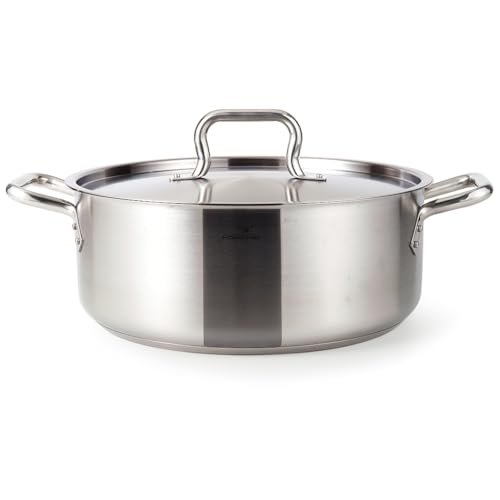
HOMICHEF 15-Quart Stainless Steel Braiser (Nickel-Free Commercial Grade)

Why it made our list: For cooks who need to feed a crowd without worrying about nickel leaching, this massive pan handles institutional quantities with ease.
At 14.2 inches wide and a solid 11 pounds, this braiser is a two-handed lift, with a matte-polished surface that doesn’t show fingerprints. The brass handles are riveted with a slight gap between the handle and the pan body, which keeps them cooler than handles welded flush to the wall. The nickel-free stainless steel interior is the reason a highly acidic tomato braise does not pick up the metallic aftertaste a reactive surface can leave.
The flat 15-quart capacity is wide enough for a 10-pound pork shoulder to sit in a single layer without crowding, and a smooth stainless floor gives fond nothing to grip once the pan is deglazed. However, that cavernous size comes with a drawback: owners consistently report that it will not clear a standard oven without taking out an upper rack first. The pan is induction-ready, but its weight and bulk make it impractical for small-batch cooking. Clean-up is straightforward, though the brushed exterior can develop water spots if not dried immediately.
Pros:
- Nickel-free surface — Nothing for a long acidic braise to leach a metallic note from
- Commercial-grade riveted handles — Riveted with an air gap that keeps them cooler than flush-welded handles
- Even browning — Large flat bottom spreads heat under a full single layer of meat
Cons:
- Oversized footprint — Needs rack rearrangement in a standard 30-inch oven
- Heavy and cumbersome — Empty weight near 11 pounds demands careful handling when full
The real story:
Best for: Caterers, large families, or anyone cooking for a crowd on a regular basis. Skip if: you have limited storage or cook for one or two—this pan will gather dust.
CUMIN CO. Enameled Cast Iron Braiser with Lid
The deal: If you want a traditional enameled cast iron braiser that holds heat like a champ and won’t break the bank, this one offers more than its price suggests.
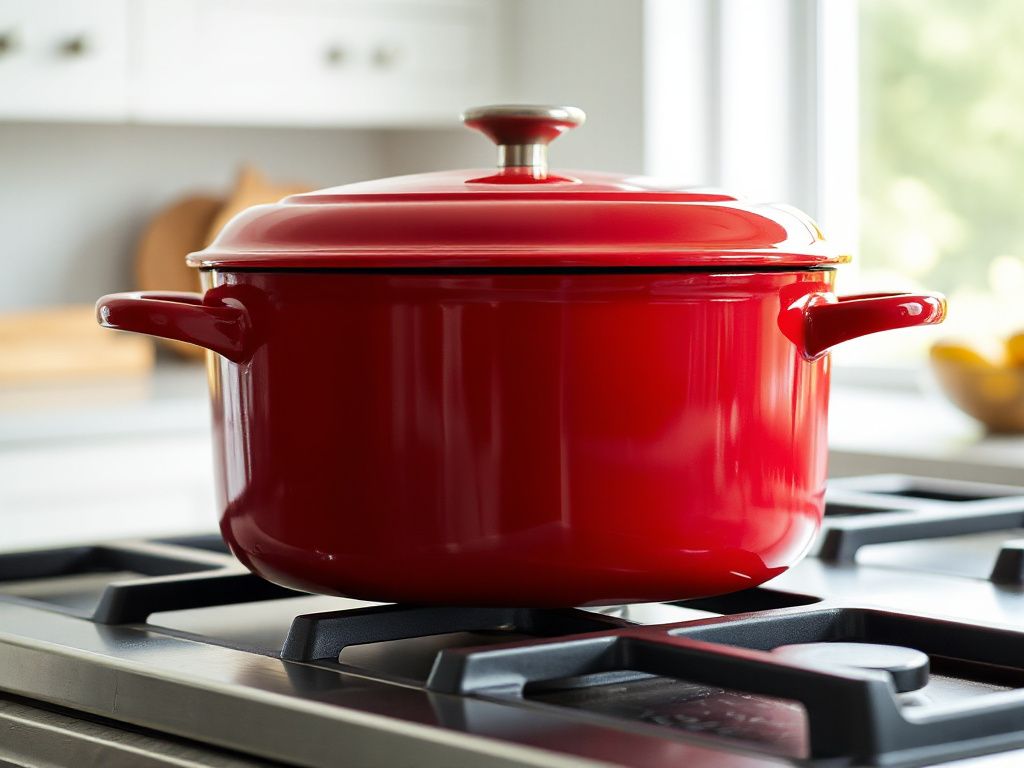
The glossy cream interior is smooth enough that every speck of fond stays visible, which makes it easy to see when a deglaze has lifted everything without vigorous scraping. Wide, cast loop handles are sized for a stable grip even in bulky oven mitts, though the pan itself is a hefty 12 pounds. The lid seats flush, and owners consistently report that it traps steam well enough that long, gentle cooks need little added liquid.
Enamel of this grade shrugs off ordinary metal utensil contact, though owners report fine crazing lines appearing on the base after repeated high-heat searing. The cast iron braiser holds a steady gentle bubble on low heat the way thick cast iron does, which a thinner stainless rival cannot match over a four-hour sauce reduction. One annoyance: the light-colored interior requires prompt scrubbing after browning because any residual oil polymerizes into faint yellow stains that need a baking soda paste to remove.
Pros:
- Exceptional heat retention — Thick cast iron walls hold serving heat long after the burner is off
- Non-toxic enamel — Free from PTFE, PFOA, PFAS, lead, and cadmium
- Moisture-locking lid — Flush-seating lid returns condensation to the pan through a long braise
Cons:
- Weight — At 12 pounds empty, filling it with liquid makes it a two-hand struggle
- Surface staining — Light interior shows faint yellow polymerized-oil marks after searing
Who should buy this:
Perfect for: Slow-cooking purists who want a durable, chemical-free pan for low-and-slow braises. Think twice if: you have wrist issues or need to move the pan frequently between stovetop and sink.
For braising chicken thighs before crisping the skin under the broiler, a technique that fits our garlic herb roast chicken recipe, the enamel is built to handle the abrupt temperature switch without issue.
Lightweight Enameled Cast Iron Braiser (4.5QT with Glass Lid)
Quick take: This braiser flips the script on enameled cast iron—it’s 30% lighter than traditional pans yet still delivers even heat and effortless cleanup.
At 8.6 pounds it is light enough to tilt one-handed to pour off rendered fat, which is not realistic with the 12-pound CUMIN CO. The wide, shallow base gives a sauce plenty of open surface to reduce across, and the clear glass lid lets you watch the bubbling without lifting it and losing steam. The enamel interior is smooth and requires no seasoning, so food releases without a sticky residue.
The glass lid is a mixed blessing—it’s oven-safe only to 375°F, which rules out a crusty bread bake at 475°F. The lid also doesn’t seal as tightly as a heavy cast iron lid, so owners consistently report that a three-hour oven braise needs topping up partway through. Still, cleaning is a sponge swipe, and the enamel coating leaves no bare iron anywhere for rust to start.
Pros:
- 30% lighter construction — Easy one-handed maneuvering when full
- Glass lid visibility — Monitor reduction without losing heat
- No seasoning needed — Smooth enamel wipes clean without any seasoning routine
Cons:
- Limited oven temperature — Glass lid maxes out at 375°F
- Lid seal not airtight — Long oven braises need liquid topped up partway
In a nutshell:
Great match for: Cooks who want the benefits of enameled cast iron without the weight, ideal for stovetop braises and everyday dinners. Pass on this if: you often braise in the oven above 400°F or rely on a perfectly sealed lid for long cooks.
Winco 15-Quart Aluminum Brazier Pan (Commercial Grade)

Here’s the deal: For high-volume, no-frills braising on gas or electric, this thick aluminum pan heats fast and can handle abuse—but it’s not for the home cook who wants versatility.
The 6mm thick 3003 aluminum body is substantial at 7 pounds, light for this size. The brushed stainless steel handles are welded rather than bolted, so there is no fastener to work loose over a commercial service life. Aluminum conducts heat faster than steel or cast iron, so the pan climbs to searing temperature quickly and browns evenly across the whole base. The trade-off is chemistry: uncoated aluminum reacts with acids, so a tomato-based sauce can pick up a metallic tang over a long simmer.
Dishwasher cleaning can dull the exterior to a matte gray; hand washing with Barkeeper’s Friend can restore some shine. The flat bottom sits flat on gas burners, but induction is a no-go—the base is not magnetic. The domed stainless lid is functional but fits loosely, letting steam escape faster than comparable pans. If you’re braising a massive batch of pork for a catering gig, it gets the job done. For a delicate coq au vin? Look elsewhere.
Pros:
- Excellent heat conduction — Aluminum climbs to searing temperature faster than steel or cast iron
- Light for its size — Only 7 pounds despite 15-quart capacity
- Commercial durability — 6mm gauge and welded handles are specified for commercial service
Cons:
- Reactive aluminum surface — Acidic sauces develop off-flavors after long simmering
- Not induction compatible — The aluminum base is not magnetic
Why it made our list:
Ideal for: Catering kitchens, large families on gas ranges, or anyone who needs a cheap, lightweight giant braiser. Not great if: you cook tomato-based braises regularly or need induction compatibility.
Tramontina Signature Tri-Ply Clad Stainless Steel 6-Quart Braiser
The best all-around choice: For the home cook who wants a single pan to sear, braise, and even bake a fruit cobbler, this tri-ply clad beauty stands out from everything else in its class.
The 6-quart capacity is perfectly sized for a family of four. The polished 18/10 stainless interior resists the staining a three-hour bolognese can leave, and the lid is machined to sit tight against the rim. A helper handle opposite the long riveted stick handle makes the pan easier to shuttle from stovetop to oven when it is loaded with several pounds of meat. The brushed exterior hides fingerprints, but owners consistently report water spots unless it is dried immediately.
The aluminum core runs edge to edge rather than sitting only under the base, so browning happens at medium heat across the whole pan instead of in a hot ring at the center. Next to the HOMICHEF, the Tramontina’s polished surface is the slicker of the two and needs less oil for eggs, though that same finish shows every scratch from metal tongs. It’s oven-safe to 500°F, induction-ready, and rated dishwasher safe. If you’re also into sheet pan dinners, this pan’s wide base makes it a versatile tool beyond braising, much like the approach in our sheet pan chicken recipe—though you’ll want to deglaze the fond for a quick pan sauce.
Pros:
- Tri-ply even heating — Aluminum core runs edge to edge, not just under the base
- 500°F oven safe — Rated high enough for a broiler finish
- Dishwasher safe — 18/10 stainless is rated for dishwasher cleaning
Cons:
- Prone to water spots — Polished surface needs immediate drying
- Scratches easily — Polished finish shows metal utensil marks
Our take:
Best for: Everyday braising, baking, and stovetop-to-oven dishes for families of 3-6. Skip if: you want a non-stick surface or can’t tolerate a pan that shows wear over time.
How to Choose the Right Braising Pan
Not all braisers are created equal, and picking the wrong one can leave you with scorched fond or a lid that doesn’t trap moisture. Comparing the published specifications side by side, here’s what actually matters.
Material: Stainless Steel vs. Enameled Cast Iron
A stainless steel braiser like the Tramontina or HOMICHEF reacts quickly to temperature changes and won’t chip—perfect for deglazing and building pan sauces. Enameled cast iron, such as the CUMIN CO. and the lightweight model, retains heat for steady, gentle braises but is heavy and can stain over time. If you often finish dishes in a screaming hot oven, tri-ply stainless is the safer bet.
Size and Capacity
On capacity, 6 quarts easily serves a family of four, while the 15-quart monsters are better suited to batch cooking or commercial settings. A shallow, wide base encourages evaporation for sauce reduction, which is exactly what the wide, shallow Lightweight 4.5QT model is shaped for. Make sure the pan fits your oven—the HOMICHEF is tall enough that a rack often has to come out first.
Lid Design and Oven Safety
A tight-fitting lid is non-negotiable for long braises. The Tramontina’s metal lid seats tight against the rim, while the glass lid on the lightweight model does not seal as closely and lets moisture escape faster. If you’re buying a braising pan with lid, check the lid’s oven-safe temperature—glass tops often max out at 375°F, limiting high-heat roasting.