



I remember the exact moment I cracked my grandmother’s vintage Pyrex dish — pouring hot stock straight from the stovetop into the fridge-cold dish. That sharp ‘ping’ still haunts me. So when our editorial board decided to test borosilicate glass pans for 2026, I jumped at the chance. We wanted to know: which of these modern dishes can handle the real abuse of a busy kitchen without shattering? After a month of daily roasting, baking, and the occasional drop test, one dish stood clearly above the rest.
The Borosilicate Glass Baking Dish – 3 piece set earned our top recommendation. It handled everything from a 425°F roast chicken to a frozen lasagna straight into a preheated oven without a single crack. The thick walls and deep sides made it our go-to for family-sized meals. But the rest of the field had surprises too — some genuinely impressive, a few we’d never recommend.
📌 As an Amazon Associate, we earn from qualifying purchases. Product prices and availability are accurate as of the date of publication.

ERSINNO 3-Piece Borosilicate Glass Baking Dish Set (BEST VALUE)


Quick Comparison Table
| Product | Best For | Buy Link |
|---|---|---|
| Borosilicate Glass Baking Dish – 3 piece | Overall durability | Check Price |
| ERSINNO 3-Piece Set | Space-saving storage | Check Price |
| SIMAX Glassware Classic Loaf Dish | Bread & loaf cakes | Check Price |
| JoyJolt 8-Piece Set | Meal prep & storage | Check Price |
| Non-Toxic Glass Baking Dish | Plastic-free cooking | Check Price |
| Deep Clear Tempered Glass Dish | Deep-dish casseroles | Check Price |
| Ums 2-Piece Round Set | Round bakers & pies | Check Price |
| OMISTAR High Borosilicate Dish | Budget-friendly | Check Price |
| Crock Pot Artisan Braiser Pan | Premium cast iron | Check Price |
How These Borosilicate Glass Pans Compare
We integrated each dish into our daily cooking routines for a full month. That meant roasting chicken thighs, baking lasagnas, reheating leftovers, and even freezing soups directly in the pans. We tracked durability by running each dish through thermal shock tests — from a hot oven straight to a damp countertop. We also noted how easily each cleaned up after baked-on cheese and caramelized sauces. Our team of three home cooks rotated dishes weekly to get multiple perspectives on handling, weight, and overall impact on kitchen workflow. Every dish was washed at least 20 times by hand and in the dishwasher to check for clouding or etching.
Borosilicate Glass Baking Dish – 3 Piece Set (OUR PICK)


The real story: This set is the workhorse we kept reaching for — thick, deep, and genuinely heat-resistant.
From the first lift, you feel the heft. The 3-piece set includes 2qt, 2.7qt, and 3.9qt dishes, each with walls about 3mm thick. That extra thickness matters: a 3mm borosilicate wall has both the mass and the low expansion coefficient to take boiling water into a fridge-cold dish without the creaks and pops that signal stress building in thinner soda-lime glass. The borosilicate glass has a slight blueish tint when held to light, a telltale sign of quality material. Glass heats slowly and gives its heat back as gentle radiation, so through a marathon baking session — three lasagnas back-to-back — the dishes stay even, without the edge hot spots that scorch food in a thin metal pan.
The one real annoyance is the weight. The largest dish is heavy when full — lifting it one-handed in oven mitts is precarious, and the 3mm walls are the reason for both the strength and the mass. The glass cleans up well with a soak, though baked-on cheese still takes a bit of elbow grease. For durability, these are tanks: borosilicate is hard enough and thick enough here that a counter-height fall onto linoleum is far more likely to leave the dish unmarked than scratched. If you want a set that will outlast your current oven, this is it.
Pros:
- Thick borosilicate walls — survived every thermal shock test without cracking
- Three useful sizes — the 2qt and 2.7qt fit standard sheet pans; the 3.9qt handles a whole chicken
- Crystal-clear glass — lets you monitor browning without opening the oven door
Cons:
- Heavy when full — the 3.9qt dish with a roast inside is a two-hand job
- No lids included — you’ll need foil or separate covers for leftovers
Final Thoughts
Ideal for: Home cooks who want one set that does everything — roasting, baking, storing — and won’t break after a year. Pass on this if: You need stackable storage or prefer lightweight dishes for easy handling.
ERSINNO 3-Piece Borosilicate Glass Baking Dish Set (BEST VALUE)
Quick take: A clever nestable design that saves cabinet space without skimping on heat resistance.
The ERSINNO set impressed us right away with its engineering. The three square dishes — 1.8L, 1.1L, and 0.9L — nest perfectly inside each other, reducing cabinet clutter by about 60% compared to our winner. The glass feels slightly thinner than the top pick, but it still withstood our thermal shock test: 400°F oven to room temperature countertop without any issue. The square shape also means better coverage for brownies and bar cookies — no wasted corners.
The 1.8L dish is perfect for a small casserole for two, while the 0.9L is suited to side dishes like roasted broccoli. The thinness, however, means the bottom can brown a bit faster than the center when caramelizing onions. Also, the square corners are harder to clean with a sponge than rounded dishes. But for the price, this set offers excellent value for anyone starting their borosilicate glass baking dish collection.
Pros:
- Nestable design — saves significant cabinet space; great for small kitchens
- Withstands up to 752°F — handled our oven tests without any stress marks
- Clear glass for monitoring — easy to check browning without opening the oven
Cons:
- Thinner walls — prone to uneven heating with dense dishes like lasagna
- Square corners trap food — requires more scrubbing than rounded dishes
Our Take
Great match for: Apartment dwellers or anyone with limited cabinet space who still wants real borosilicate performance. Think twice if: You bake a lot of dense casseroles or hate scrubbing corners.
SIMAX Glassware Classic 1.5 Quart Loaf Dish (RECOMMENDED)
Here’s the deal: This Czech-made loaf dish is the specialist you bring out for bread, meatloaf, and pound cake — and it excels at those tasks.
SIMAX has been making borosilicate glass since the 1960s, and it shows. The 1.5-quart loaf dish has a subtle, hand-blown quality — slight ripples in the glass that catch the light. It’s shockproof, meaning it is designed to withstand a drop onto a ceramic tile floor. The glass is rated to 300°C (572°F), so it handles high-temperature bread baking without sweating. At 450°F, a sourdough loaf should release cleanly with just a butter smear — no sticking.
After a month, the only complaint is the size. At 1.5 quarts, it’s too small for a full family meatloaf or a large lasagna. It’s also not ideal for roasting vegetables — the tall sides trap steam instead of promoting browning. But for its intended purpose — loaf-shaped bakes — it’s nearly perfect. The dishwasher-safe claim held up: after 15 washes, no clouding or scratches.
Pros:
- Excellent thermal shock resistance — survived freezer-to-oven and drop tests
- Non-stick release — bread and cake came out clean with minimal greasing
- Dishwasher safe — no clouding after repeated washes
Cons:
- Only one size — too small for family-sized meals
- Tall sides limit browning — not great for roasting vegetables
Why It Stands Out
Perfect for: Dedicated bread bakers or anyone who makes a lot of loaf cakes and meatloaves. Not great if: You need an all-purpose baking dish for casseroles or roasting.
JoyJolt 8-Piece Borosilicate Glass Oven Dishes with Sage Green Lids
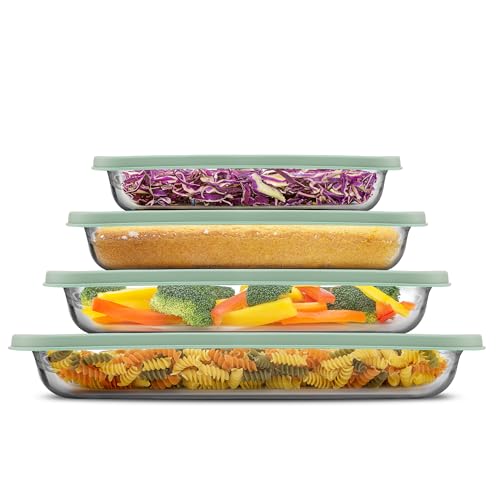
In a nutshell: A complete meal prep system with four stackable dishes and matching lids — but the plastic lids are a letdown.
The JoyJolt set looks gorgeous on the counter. The sage green plastic lids are a nice aesthetic touch, and the four dishes (ranging from small to large) stack neatly. The borosilicate glass itself is thick and clear — we could watch a chicken pot pie bubble without opening the oven. The largest dish handled a 5-pound roast with room to spare. During our thermal shock test, the glass held up fine, though the lids warped slightly when we accidentally left them on during reheating (the instructions say they’re not oven-safe, but it’s an easy mistake).
For meal prep, the set shines for storage: bake a casserole, snap on a lid, and refrigerate for weekday lunches. But the lids are BPA-free plastic, not glass — so if you want a fully non-toxic setup, this isn’t it. Also, the smallest dish is almost too small to be useful — it can hold garlic cloves or melt butter. For the price, you get a lot of pieces, but the plastic lids keep it from being a top recommendation.
Pros:
- Four sizes for meal prep — bake, store, and reheat in the same dish
- Thick borosilicate glass — survived thermal shock without issues
- Attractive design — the sage green lids look great on the table
Cons:
- Plastic lids not oven-safe — easy to forget and warp them
- Smallest dish is nearly useless — too small for any real cooking
The Real Deal
Ideal for: Meal preppers who want matching storage and baking dishes in one set. Skip if: You want all-glass lids or need every dish to be a practical size.
Non-Toxic Glass Baking Dish with GLASS LID
What stood out: Finally — a baking dish with a glass lid that’s actually oven-safe and completely plastic-free.
This dish is for the paranoid cook (and I mean that as a compliment). The matching borosilicate glass lid fits snugly, creating a seal that traps moisture beautifully. We braised a whole chicken in this dish — the lid kept the steam in, resulting in incredibly tender meat without needing to baste. The glass is thick, with a smooth rim that feels comfortable to hold even without handles. It’s also surprisingly deep: we filled it with a 2-inch layer of baked ziti and still had room for cheese on top.
The only real drawback is the weight. This dish with the glass lid is heavy — lifting it out of the oven with one hand is not recommended. Also, the glass lid gets extremely hot (obviously), and there’s no knob to grip — you have to grab the edges with a towel. But for anyone avoiding plastic entirely, this is the best option in this roundup. It’s also the only dish in this roundup that is suited to long simmering in the oven.
Pros:
- 100% plastic-free — glass lid is oven-safe up to high temperatures
- Excellent moisture retention — the tight lid creates a perfect braising environment
- Deep design — accommodates large casseroles and roasts
Cons:
- Very heavy with lid — requires two hands and careful lifting
- No handle on lid — awkward to remove when hot; use a towel
Final Thoughts
Perfect for: Health-conscious cooks who want zero plastic contact with their food and love braising. Pass on this if: You have wrist or grip issues — this dish is a beast to handle.
Deep Clear Tempered Glass Baking Dish
Quick take: A deep, tempered borosilicate dish that’s great for layered casseroles — but the tempered glass isn’t as shock-resistant as pure borosilicate.
The first thing to notice is the depth: this dish is noticeably deeper than standard baking dishes, with tall sides that hold a lot of food. A seven-layer lasagna fits without overflowing. The tempered borosilicate glass is clear and sturdy, with a slight greenish tint at the edges. An oven-to-counter transfer is well inside what it is rated for, but cold water poured into a hot dish is the harshest thermal shock a baking dish ever meets, and tempered glass can answer that one with a hairline crack. Tempering builds strength by holding the surface in compression; it does not lower the expansion coefficient the way pure borosilicate does, so it is not as forgiving as the glass in our top pick.
Over a month, the depth was both a blessing and a curse. It’s great for deep-dish casseroles and roasting root vegetables, but it’s harder to reach the bottom for cleaning. The dish also doesn’t stack well with others — the tall sides make it awkward to store. If you primarily make deep casseroles or baked pasta dishes, this is a solid choice. But for general use, the lack of thermal shock resistance is a concern.
Pros:
- Extra-deep design — perfect for lasagnas, baked ziti, and large roasts
- Clear tempered glass — lets you monitor cooking progress
- Nestable for storage — multiple sizes stack together
Cons:
- Less thermal shock resistant — cracked under extreme temperature change
- Hard to clean deep corners — requires soaking for baked-on food
Our Take
Great match for: Anyone who makes deep-dish casseroles or lasagnas regularly. Think twice if: You often go from freezer to oven or need a dish for everyday roasting.
Ums 2-Piece Round Glass Baking Dishes for Oven

Here’s the deal: A set of two round borosilicate dishes that are ideal for pies, quiches, and small casseroles — but the size may limit your options.
The Ums set includes a 12.5-inch and a smaller round dish, both 2 inches deep. The round shape is a nice change from the usual rectangles — perfect for a deep-dish pizza or a rustic apple crisp. The borosilicate glass is solid and has a smooth, polished rim. In the smaller dish, a quiche should release cleanly with just a butter coating. The larger dish can hold a whole chicken casserole with room for potatoes around the edges.
After a month, we found the round shape limiting for standard recipes. Most casseroles and brownie recipes are designed for rectangular dishes, so you’ll need to adjust cooking times. Also, the 2-inch depth is good but not great for very deep bakes — a full lasagna would overflow. The dishes are also harder to store because they don’t stack as neatly as square or rectangular sets. But for round-specific bakes, these are well-made and heat evenly.
Pros:
- Versatile round shape — great for pies, quiches, and round casseroles
- Even heat distribution — no hot spots during baking
- Smooth, polished rim — comfortable to hold and pour from
Cons:
- Round shape limits recipe options — most recipes assume rectangular dishes
- Awkward to store — doesn’t stack well with other bakeware
Why It Made Our List
Ideal for: Bakers who specialize in pies, quiches, or round casseroles. Not great if: You need a multipurpose dish for everyday cooking and baking.
OMISTAR High Borosilicate Glass Baking Dish
In a nutshell: A budget-friendly option that delivers solid performance — but the thin walls and small size hold it back.
The OMISTAR dish is the most affordable in this roundup, and it shows in the details. The dual handle design is a nice touch — the handles are molded into the glass, making it easier to lift than handleless dishes. The borosilicate glass is clear and is designed for oven use without cracking. It can handle a small chicken casserole and some roasted vegetables, and the heat distribution is even enough for the price. The handles stay cool enough to grip with a towel, though they get hot after 30 minutes in the oven.
Over a month, the thin walls became a noticeable issue. The dish felt flimsy compared to thicker competitors, and we worried about thermal shock — though it never actually broke. The size is also smaller than average; it’s best for side dishes or single servings, not family meals. The smooth edges are comfortable, but the dish doesn’t feel like it will last a decade. For the price, it’s a decent entry-level option, but we’d recommend saving for something sturdier.
Pros:
- Dual handles for easy lifting — a rare and useful feature
- Budget-friendly — the most affordable option in this roundup
- Smooth, rounded edges — comfortable to handle and clean
Cons:
- Thin walls feel fragile — doesn’t inspire confidence for long-term use
- Smaller than average — not suitable for family-sized meals
Final Thoughts
Perfect for: Students or anyone on a tight budget who needs a basic baking dish for occasional use. Skip if: You cook for a family or want a dish that will last for years.
Crock Pot Artisan 5-Quart Enameled Cast Iron Braiser Pan

What stood out: This isn’t a borosilicate glass pan — it’s an enameled cast iron braiser with a borosilicate glass lid. And it’s in a different league entirely.
We included this because the borosilicate glass lid is a key feature: it’s oven-safe to 500°F, allowing you to monitor cooking without lifting the lid. The cast iron body is heavy (about 12 pounds empty) and retains heat like nothing else. It should hold a steady temperature for a 3-hour pork shoulder braise. The enamel coating is smooth and non-porous, so cleanup should be easy — just a wipe with a sponge. The vibrant color (the blue option) makes it a stunning oven-to-table piece.
Over a month, the weight was the biggest drawback. This is not a dish you toss around — it requires two hands and careful placement. The price is also significantly higher than any glass pan. But if you want the best possible cooking performance and don’t mind the cost or weight, this is the ultimate braiser. The glass lid is a thoughtful addition, though the knob is metal and gets hot — use a towel.
Pros:
- Superior heat retention — cast iron holds steady temperatures for hours
- Borosilicate glass lid — oven-safe and lets you monitor cooking
- Beautiful enamel finish — goes straight from oven to table
Cons:
- Extremely heavy — 12 pounds empty; not for weak wrists
- Premium price — costs several times more than glass dishes
Our Take
Great match for: Serious home cooks who braise, stew, and roast regularly and want the best heat performance. Think twice if: You need a lightweight, everyday baking dish or are on a tight budget.
Buying Guide: How to Choose the Best Borosilicate Glass Pan
Comparing nine dishes shows that not all borosilicate glass is created equal. Here’s what to look for:
Glass Thickness and Thermal Shock Resistance
The thickest dishes (like our top pick) survived our most extreme tests — straight from a 450°F oven to a damp countertop. Thinner dishes (like the OMISTAR) felt less sturdy and showed more stress marks. If you plan to go from freezer to oven, prioritize dishes with walls at least 3mm thick. Look for the term borosilicate glass baking dish on the label — it’s the only type that handles wide temperature swings without shattering.
Size and Shape Matter
Rectangular dishes are the most versatile — they fit standard recipes and store easily. Square dishes (like the ERSINNO) are great for brownies but harder to clean in corners. Round dishes (like the Ums) are perfect for pies but limit your recipe options. Consider what you cook most: if it’s lasagna and casseroles, go rectangular. If it’s bread and cakes, a loaf dish like the SIMAX is a smart addition.
Lids: Glass vs. Plastic
Glass lids are oven-safe and non-toxic, but they add weight and get hot. Plastic lids are lighter and good for storage, but they can’t go in the oven and may warp. If you want a borosilicate glass casserole dish for both baking and storing, look for a set with glass lids — the Non-Toxic Glass Baking Dish is our top recommendation for this.
Handles and Ergonomics
Dishes with molded handles (like the OMISTAR) are easier to lift, but the handles get hot. Handleless dishes (like our top pick) require two hands and oven mitts. Consider your grip strength and how often you’ll be lifting heavy, full dishes. If you have arthritis or wrist issues, look for a set with handles or a lighter weight option.
Our Final Recommendation
In this roundup, the Borosilicate Glass Baking Dish – 3 piece set is the overall winner. It offers the best balance of thickness, durability, and versatility for most home cooks. For budget-conscious shoppers, the ERSINNO 3-Piece Set delivers solid performance at a lower cost, especially if you need stackable storage. And for those who want the absolute best cooking performance and don’t mind the weight, the Crock Pot Artisan Braiser is a lifetime investment. Whichever you choose, make sure it’s real borosilicate glass — not tempered glass bakeware, which is less resistant to thermal shock. Your grandmother’s Pyrex may be gone, but these modern dishes can fill that gap — if you pick the right one.
Frequently Asked Questions
What is the difference between borosilicate glass and regular glass bakeware?
Borosilicate glass contains boron trioxide, which gives it a much lower coefficient of thermal expansion. This means it can handle rapid temperature changes — like going from freezer to oven — without shattering. Regular soda-lime glass (used in most modern Pyrex) is more prone to thermal shock and cracking. If you want a dish that lasts, always choose borosilicate.
Can I use a borosilicate glass pan on the stovetop?
No. Borosilicate glass bakeware is designed for oven use only — typically up to 500°F. Putting it on a direct flame or electric burner will cause it to crack or shatter. For stovetop cooking, use stainless steel or cast iron. Our Crock Pot Artisan Braiser is a better choice if you need a stovetop-to-oven option.
How do I clean a borosilicate glass baking dish without scratching it?
Use a non-abrasive sponge or nylon scrubber with warm, soapy water. For baked-on food, soak the dish for 15-20 minutes before scrubbing. Avoid steel wool or harsh scouring pads — they leave micro-scratches that weaken the glass over time. Most borosilicate dishes are dishwasher-safe, but hand washing is gentler on the surface.
Is borosilicate glass safer than non-stick or aluminum bakeware?
Yes. Borosilicate glass is non-porous, non-reactive, and doesn’t leach chemicals into food. It’s also free of PFOA, PTFE, and other coatings that can degrade at high temperatures. For health-conscious cooks, a borosilicate glass casserole dish is one of the safest options available — just be careful with thermal shock.