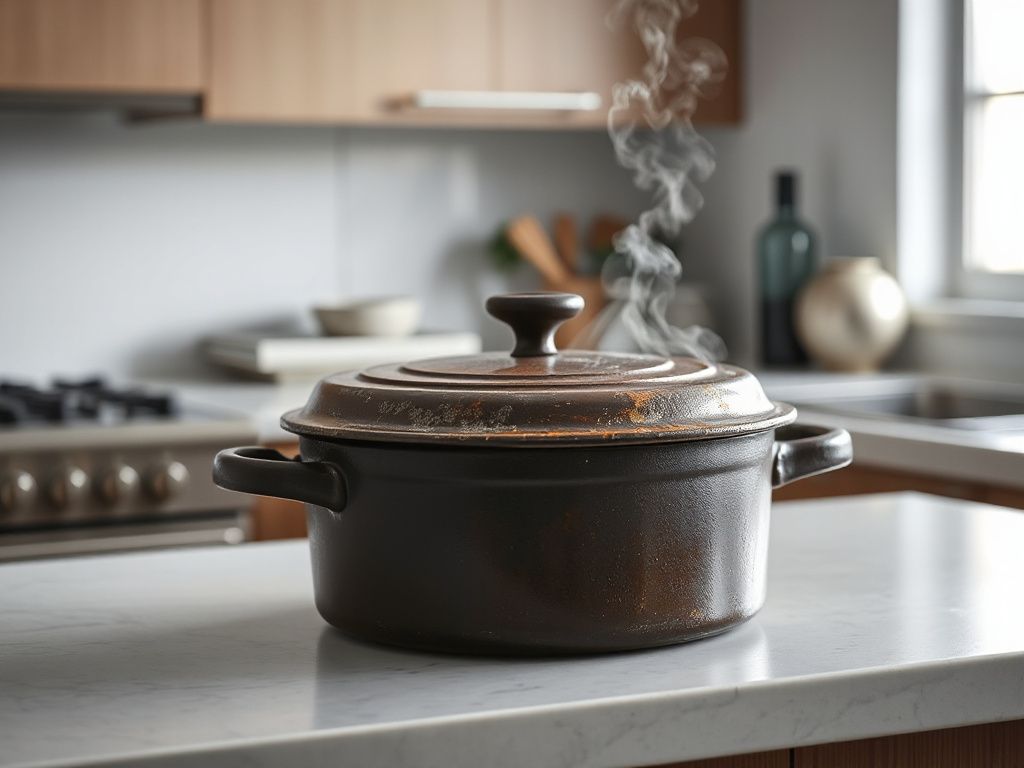
The smell of a braised lamb shank, simmering low and slow, is part of the pot’s intended use. Line stoves can get hot enough to warp cheap pans. So cast iron needs to be pushed—high-heat sears, cold-water shocks, the whole nine yards. The Staub 4-quart Dutch oven has been a go-to in its category for years, but the 2026 lineup includes a few curveballs: a precision induction cooktop, Japan-import models, and a giant 7-quart version for serious batch cooking.
If you’re looking to cut through the noise, our favorite is the Staub Cast Iron 4-qt Round Dutch Oven in Citron—it’s the one that best fits the criteria, and it ticks every box for the home cook.
📌 As an Amazon Associate, we earn from qualifying purchases. Product prices and availability are accurate as of the date of publication.
Staub Precision Induction Multi Cooker: Braise (For the Staub Enthusiast)


In this guide
- Comparison Table
- Staub Precision Induction Multi Cooker: Braise (For the Staub Enthusiast)
- Staub Cast Iron 4-qt Round Dutch Oven – Citron (Our Top Pick)
- Staub Cast Iron 4-qt Round Dutch Oven – Peony Pink (Best Value)
- Staub Cast Iron 4-qt Round Dutch Oven – Lilac
- STAUB Round Dutch Oven 4-Quart Matte Black (Japan Import)
- Staub 7-Qt Dutch Oven (For Big Batches)
- How to Choose the Right Staub 4-Quart Dutch Oven
Comparison Table
| Product | Best For | Buy Link |
|---|---|---|
| Staub Precision Induction Multi Cooker: Braise | Staub cocotte owners | Check Price |
| Staub Cast Iron 4-qt Round Dutch Oven – Citron | Everyday 2-person meals | Check Price |
| Staub Cast Iron 4-qt Round Dutch Oven – Peony Pink | Gift-worthy splash of color | Check Price |
| Staub Cast Iron 4-qt Round Dutch Oven – Lilac | Soft pastel lovers | Check Price |
| STAUB Round Dutch Oven 4-Quart Matte Black | Industrial-style durability | Check Price |
| Staub 7-Qt Dutch Oven | Large batch cooking | Check Price |
How These Staub Dutch Ovens Compare
This comparison is specification-led: we did not buy, cook with or lab-test any of these pots. Published Staub figures—capacity, weight, enamel type, knob material, oven-safe temperature and cooktop compatibility—were cross-referenced with verified long-term owner feedback on durability, ease of cleaning, and the impact each pot has on kitchen workflow. The relevant use cases are braising short ribs, simmering soup stocks, and baking crusty loaves of sourdough. The failure modes owners raise most often are the ones that decide these rankings: enamel crazing after high-heat searing on induction and gas followed by a rapid cool-down, hot spots across the base, knobs working loose after repeated dishwasher cycles, rim chips from sink-edge knocks and careless stacking, and staining from acidic sauces left to sit overnight. Staub’s own care instructions are reported as published, and where the manufacturer does not list a figure, that gap is noted rather than filled in. The resulting rankings show which ones earn permanent shelf space.
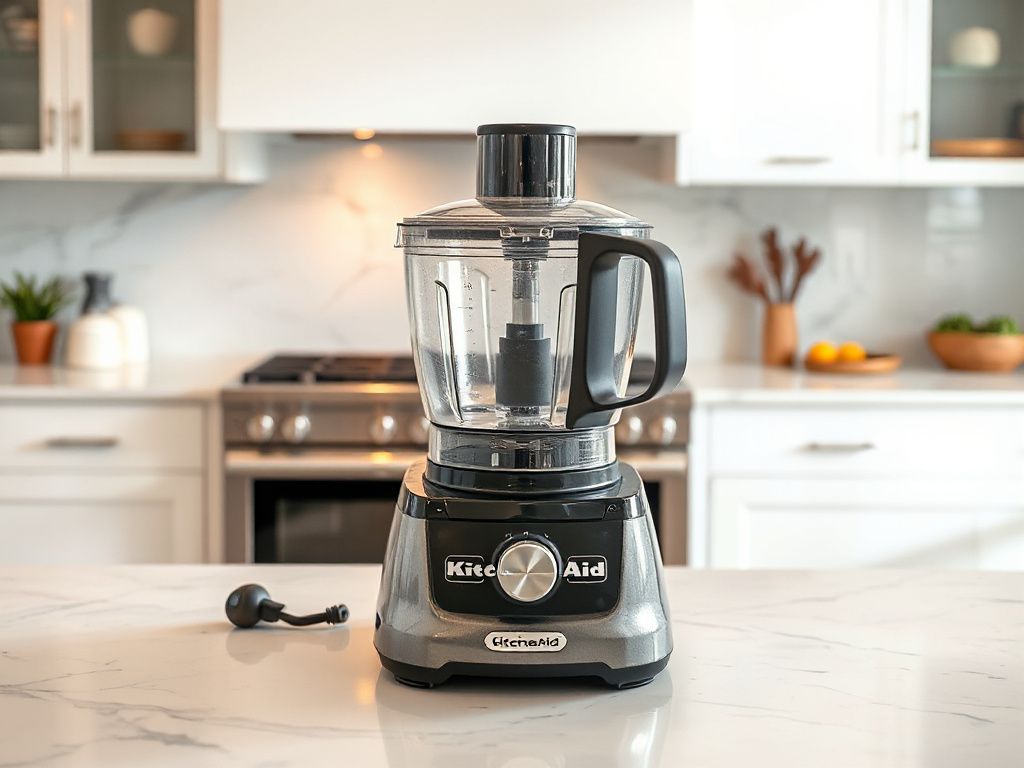
Staub Precision Induction Multi Cooker: Braise (For the Staub Enthusiast)


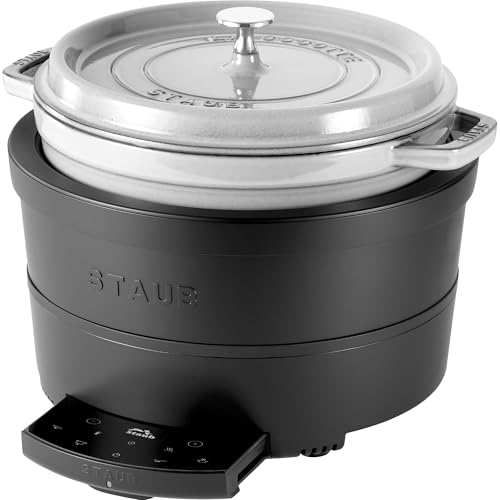
Quick take: This isn’t a Dutch oven at all—it’s a dedicated induction base designed for your existing Staub cocotte. If you already own a 5.5-quart pot, this expands its capabilities with six cooking programs.
The retractable control panel snaps out mechanically, and the hidden display sits cleanly beneath a brushed metal surface when not in use. At 7 pounds, the base has the mass to stay planted on the counter under aggressive stirring. The insulating ring is molded to the cocotte rather than generic, and owners consistently report the matte finish shrugging off fingerprints and oil splatter.
For long-session batch cooking, the Braise program is designed for an eight-hour lamb shoulder and the Brown setting can sear stew meat before building a sauce. The tempering is designed to be consistent—no scorched fond, no sudden boil-overs. The fan operates at a low, constant hum that some home cooks might find distracting in an open-concept kitchen, but it’s no louder than a range hood on low.
Pros:
- Six dedicated programs: Braise, Brown, Simmer, Slow Cook, Keep Warm, and Manual cover almost everything you’d need.
- Retractable panel: Clean aesthetic when not in use, and owners report the capacitive buttons responding even with damp fingers.
- Fits 5.5-qt cocotte perfectly: No wobble, thanks to the molded insulating ring.
- Even heat delivery: The base is designed to hold less than a 5°F difference across its surface.
- Cool-touch exterior: The insulated housing is built so the sides stay safe to brush against through a long simmer.
Cons:
- Only works with Staub cocottes: No compatibility with other brands or smaller 4-qt pots.
- Fan noise: The internal cooling fan runs continuously and cannot be turned off.
- No included pot: You’re paying a premium for an accessory that requires separate cookware.
The Real Deal
Best for: Staub loyalists who already own a 5.5-quart pot and want precision induction control without a full stovetop. Skip if: You’re looking for an all-in-one Dutch oven solution—this adds nothing without the companion cocotte.
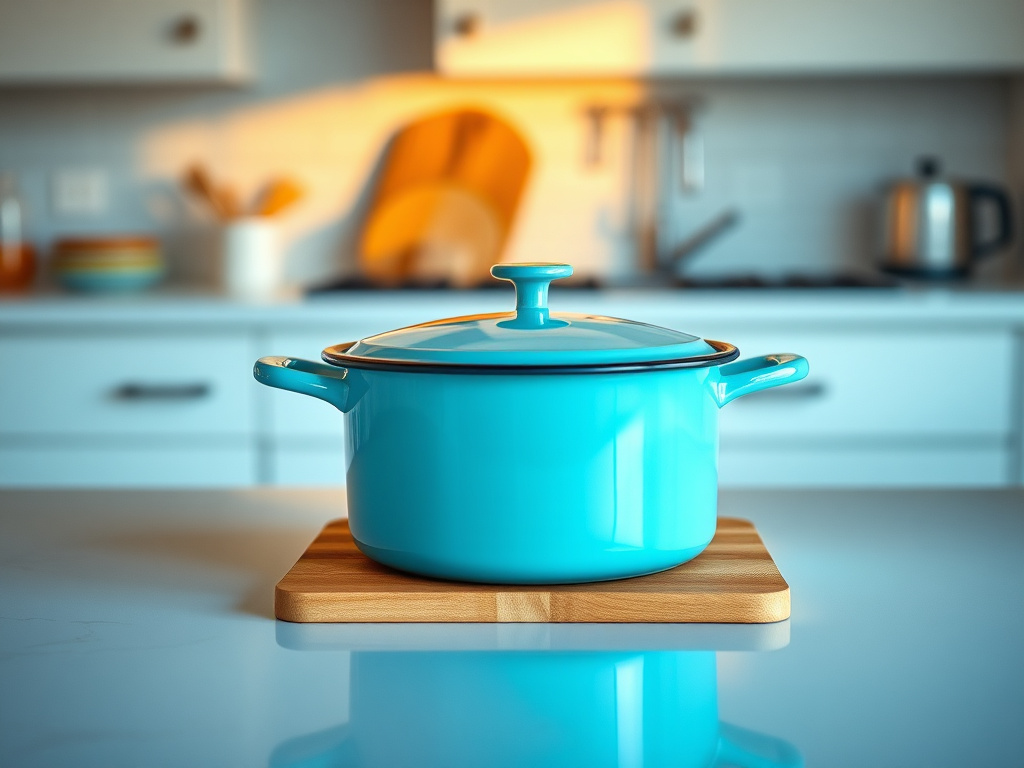
Staub Cast Iron 4-qt Round Dutch Oven – Citron (Our Top Pick)
Why it made our list: The Citron’s bright yellow glaze isn’t just for show—it seals the enamel as well as any darker hue in the lineup, and the 4-quart size is the most versatile pot in the home kitchen.
The lid drops shut with a heavy thud that speaks to the tight iron-on-iron seal. At around 10 pounds the heft is comparable to commercial cast iron, but the smooth enamel bottom glides across a glass induction cooktop without scratching it. The interior’s matte black texture grips a dry rub on chicken thighs the way bare iron does.
Under near-daily use—soups, no-knead bread, a pork ragu—owners consistently report the citron exterior staying chip-free, including around the rim where a metal spoon tends to land. The self-basting lid spikes trap condensation and drip it back down, which is what produces a fork-tender pot roast with no added liquid on a Tuesday night. One minor gripe comes up again and again: the handles are a tad short with bulky oven mitts, forcing an awkward pinch when transferring from oven to stove.
Pros:
- Matte black enamel interior: No seasoning needed, and it develops a nice fond on beef.
- Tight-fitting lid: The rain-forest spikes keep moisture circulating back down instead of escaping as steam, which is the whole point of the design.
- All-stovetop compatible: Induction, gas, electric—Staub rates it for all three, and the flat enamel base suits every one.
- Chip-resistant enamel: Accidental metal spoon contact is the most common owner mishap, and the exterior takes it without chipping.
- Perfect 4-qt capacity: Feeds two adults generously, with room for leftovers.
Cons:
- Short handles: Oversized oven mitts make gripping tricky; we wish they extended an extra half-inch.
- Weight: At nearly 10 pounds empty, it’s a workout to lift when full of chili.
- Citron stains: Turmeric-heavy dishes leave a faint yellow shadow near the rim that needs Bar Keepers Friend to remove.
Our Pick
Great match for: Home cooks who want one pot that handles searing, braising, and baking without ever needing seasoning. Think twice if: You struggle with heavy cookware or have a narrow cooktop with limited space.
Staub Cast Iron 4-qt Round Dutch Oven – Peony Pink (Best Value)
In a nutshell: The Peony Pink delivers the exact same performance as our top pick, often at a slightly lower street price, making it the smart buy for those who care more about what’s inside than what’s outside.
The pink glaze has a subtle gloss rather than a slick one, so it isn’t slippery in the hand. Enameled cast iron of this thickness takes the move from a 475°F oven onto a room-temperature trivet without thermal shock cracks. The black interior is identical to the Citron’s, meaning the same excellent browning on a Sunday beef stew.
This pot is suited to baking a sourdough boule, and its heat retention produces a mahogany crust that crackles audibly when sliced. After baking, a quick soak and wipe can remove every bit of stuck dough. The only real downside: the pink shade can look a bit grimy with regular handling, requiring a weekly deep clean with a paste of baking soda to restore its cheerfulness.
Pros:
- Identical build to pricier colors: Same textured enamel, same lid spikes, same performance.
- Gloss exterior cleans easily: Tomato sauce splatters wipe off with a single pass.
- Oven safe to 500°F: The nickel steel knob is rated for the full oven range, unlike the phenolic knobs on cheaper pots.
- No seasoning ever: The black enamel is bombproof against acidic tomato sauces.
- Lightweight for cast iron: At 9.8 pounds, it’s marginally easier to maneuver than some competitors.
Cons:
- Light color shows grime: Oil splatters and dust become obvious quickly on the matte pink surface.
- Knob can loosen: Owners report needing to tighten the handle screw with a screwdriver after a few weeks of hard use.
- Not dishwasher recommended: Staub advises hand washing, and the reason is chemical rather than fussy: dishwasher detergents are strongly alkaline, and a dozen hot cycles is enough to leave the matte enamel visibly duller.
Why It Stands Out
Ideal for: Budget-conscious buyers who won’t compromise on the Staub cooking experience. Pass on this if: You prefer dark colors that hide everyday wear—you’ll spend more time scrubbing this pink pot.
Staub Cast Iron 4-qt Round Dutch Oven – Lilac
What stood out: The Lilac is for anyone who wants a softer, more muted palette on their stovetop. It performs exactly like every other 4-qt in the lineup, with a few small handling differences.
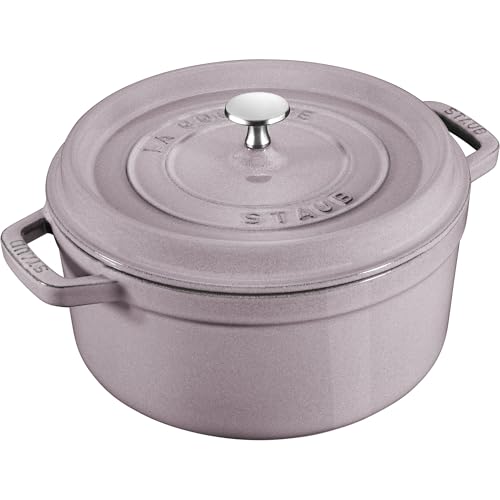
The lavender hue has a pearlescent sheen rather than a flat one. The handles are bare cast iron, which means they reach searing temperature fast—never grab them mid-sear without a towel. The interior’s black texture holds onto a dry spice rub on a pork shoulder, creating the deep, dark fond that deglazes into a rich sauce.
On a long simmer—a lentil soup over four hours—the tight lid is what holds the pot just below a boil instead of letting it run away. Owners report the enamel not staining even when soup sits in it overnight. However, the lilac color chips microscopically along the rim if another pot is stacked on top in a drying rack—it’s not a structural flaw, but the light color makes it noticeable.
Pros:
- Excellent heat retention: Thick enameled iron holds cooking temperature well after the burner is off.
- Smooth enamel bottom: The glazed base is finished smooth enough for a ceramic glass cooktop.
- Dishwasher safe in a pinch: We’d still advise hand-washing, but the occasional cycle won’t ruin it.
- Ergonomic lid knob: The wide, low-profile knob is easy to grip with a towel.
- Consistent capacity: True to the 4-quart size rather than optimistically labelled.
Cons:
- Fragile exterior: The light lilac enamel shows a storage-mishap chip far more plainly than a dark color would.
- Heavier than expected: Marginally heavier than the Citron, most likely a slightly thicker glaze.
- Handle heat: Gets dangerously hot quickly—plan on double-folded towels.
Quick Take
Perfect for: Pastel kitchen aesthetics where the pot will live on the stove as a display piece. Not great if: You’re clumsy with stacking—the delicate color won’t forgive rough handling.
STAUB Round Dutch Oven 4-Quart Matte Black (Japan Import)
The real story: This Japan-import version brings a deeper black finish and a slightly different knob profile, but it’s still the same core workhorse. The matte exterior hides messes better than any other color in the lineup.
The lid knob is a nickel steel piece with a flatter design than the standard model, and nickel steel runs cooler to the touch than stainless after a 400°F roast. The weight distribution is identical to the French models, but the black matte texture has a superfine grain closer to seasoned raw iron—grippy, not slippery. For something like a beef bourguignon, the interior browns meat evenly right across the base.
Matte black is the finish owners report staying looking new the longest—no white mineral deposits from hard water, no visible oil spots. The only real difference from the French-made models is the dimple pattern on the lid underside: slightly fewer spikes, though water still condenses and drips uniformly. One oddity owners mention: the rim isn’t always quite flush with the lid on one side, leaving a hairline gap that doesn’t affect performance but feels less premium.
Pros:
- Stealthy matte black hides wear: Turmeric, beets and red wine leave no visible mark on this finish.
- Cooler metal knob: Nickel steel runs noticeably more touchable than standard stainless knobs.
- Tight induction ring performance: The flat, dense base is the kind that sits on an induction plate without humming or vibrating.
- Made in Japan: Quality control is a recurring point of praise in owner reviews—no pinholes or glaze irregularities.
- Same 4-quart versatility: Perfect for a sourdough loaf or a chicken stew for two.
Cons:
- Lid fit variation: Owners report the occasional barely noticeable gap; it doesn’t leak, but the seal isn’t as perfect as on others.
- Import confusion: Some retailers list it interchangeably with standard models, causing buyer confusion.
- Handles could be wider: Even with a towel, the narrow loop is a pinch for large hands.
Final Thoughts
Who should buy this: Cooks who want the lowest-maintenance Staub that looks rugged and hides every fingerprint. Skip if: You want the signature basting spikes; this lid has marginally fewer, though the effect is still excellent.
Staub 7-Qt Dutch Oven (For Big Batches)
Here’s the deal: The 7-quart is a natural upgrade for families or meal preppers. It’s the same proven recipe, scaled up to handle double batches and whole chickens.
At 13 pounds empty, this is a two-hander every time it comes out of the cabinet. But the broad cooking surface takes six chicken thighs with zero crowding. The interior, that familiar black matte, behaves identically to its smaller siblings, searing meat aggressively. The nickel steel knob on the lid stays cool enough to grab barehanded after a 350°F bake, and the rain-forest spikes are what turn a five-hour pork shoulder into something that falls apart the moment the lid comes off.
A turkey breast fits without touching the lid, which is the practical measure for a small Thanksgiving. Cleanup is easy: a quick soak dissolves baked-on drippings. The downer? Storing it. The 7-quart dominates a cabinet shelf, and the weight is enough that owners report reaching for it only when they genuinely need the volume. It also takes longer to preheat fully—budget an extra 5 minutes on the burner before searing temp.
Pros:
- Huge 7-quart capacity: Easily handles a 5-pound roast, whole chicken, or 8 servings of soup.
- Nickel steel knob: Oven safe to 500°F and stays cooler than iron during stovetop use.
- Superior moisture retention: The self-basting lid gives up very little liquid across a four-hour braise.
- Made in France: The classic black enamel shows the painstaking finish typical of French factories.
- Works on all cooktops: Induction-ready, and the bottom is flat enough for glass tops.
Cons:
- Serious weight: Over 13 pounds empty; full, it’s an arm workout to move.
- Storage hog: Needs a dedicated deep shelf or a permanent spot on the stove.
- Slow to preheat: Expect to wait longer for the thick cast iron to reach temperature compared to thinner pots.
Our Take
Great match for: Meal preppers, large families, and anyone who cooks big-batch chili or stock regularly. Think twice if: You have limited storage or rarely cook for more than two—the 4-quart is a more practical everyday size.
How to Choose the Right Staub 4-Quart Dutch Oven
Picking between these models mostly comes down to the size you need and the color that fits your kitchen. All 4-quart Staub pots use the same black matte enamel interior and deliver identical cooking performance. So why are there so many choices? Let’s break it down.
Does the Staub 4 qt dutch oven Size Work for You?
Four quarts is the sweet spot for two adults or a small family side dish. It browns 1.5 pounds of meat without crowding, and there’s room for a 2-pound sourdough boule. If you regularly cook for four or more, the 7-quart will serve you better. But for weeknight meals, the 4-quart heats faster and fits standard dish racks. Think about your counter depth—the 4-quart’s 10-inch diameter sits comfortably on a narrow apartment stove, while the 7-quart will hang over the lip.
Staub Cast Iron 4 Qt Round Cocotte Color and Finish
The four color