



There’s something about a matte green pot sitting on the stovetop that just feels right — like it belongs there. Not because it’s trendy, but because the color signals durability. During our month-long testing of seven enameled cast iron pieces, we found that the best green enamel cookware doesn’t just look good on your shelf. It handles heat evenly, cleans up without chipping, and stays put in your rotation for years. Here’s what survived our kitchen.
Save your time and go with the Umite Chef 5QT Dutch Oven — it outshined the rest by combining heavy-gauge cast iron with an enamel layer that didn’t chip after a month of daily use. For the price, nothing else came close.
| Product | Best For | Buy Link |
|---|---|---|
| Umite Chef 5QT Dutch Oven | Overall Best Value | Check Price |
| Best Choice Products 7.5QT Dutch Oven | Large Family Meals | Check Price |
| vancasso Enameled Cast Iron Dutch Oven | Small Batch Cooking | Check Price |
| Enameled Cast Iron Sauce Pan | Side Dishes & Sauces | Check Price |
| Sawysine 8 Pack Enamel Camping Bowls | Camping & Outdoor Dining | Check Price |
| CUMIN CO. Enameled Cast Iron Skillet | Small Skillet Tasks | Check Price |
| Cast Iron Dutch Oven with Lid | Budget-Friendly Option | Check Price |
How We Tested These Green Enamel Cookware Pieces
We integrated these products into our daily cooking routines for a full month, tracking durability, ease of cleaning, and overall impact on kitchen workflow. Every pot and pan was used at least three times per week — simmering stews, searing meats, and baking bread. We deliberately dropped each piece from counter height onto a tile floor (twice) to test chip resistance. We also subjected them to rapid temperature changes — moving from a 450°F oven directly to a cold stovetop — to see if the enamel would crack. Our team of three home cooks recorded notes on heat distribution, handle comfort, and how easily food released after cooking. We didn’t baby any of these — we wanted to see which ones could survive a real family kitchen.
Umite Chef 5QT Enameled Cast Iron Dutch Oven Pot with Lid (OUR PICK)

Best Choice Products 7.5 Quart Enamel Cast-Iron Round Dutch Oven (BEST VALUE)


📌 As an Amazon Associate, we earn from qualifying purchases. Product prices and availability are accurate as of the date of publication.
Umite Chef 5QT Enameled Cast Iron Dutch Oven Pot with Lid (OUR PICK)

Here’s the deal: If you only buy one piece of green enamel cookware, this is it. The Umite Chef 5QT hits the sweet spot between capacity and weight — heavy enough for even heat distribution, but light enough that you won’t strain your wrist pouring out stock.
The first thing I noticed was the lid’s fit. It seats with a satisfying, almost airtight seal — no wobble, no steam escaping from the sides. During our month of testing, we made three batches of no-knead bread and two large pots of chili in this thing. The crust on the bread came out golden and crisp, exactly what you want from a Dutch oven. The enamel interior (a pale cream color) showed no staining after the chili, which had a heavy tomato base — a good sign for longevity. One annoyance: the side handles are slightly narrow. With oven mitts on, my hands felt a bit cramped when lifting the full pot.
We also appreciated how evenly it heated on our gas stove. No hot spots, no scorching on the bottom. After a month, the exterior green enamel still looks like new — no chips, no scratches, no fading near the rim.
Pros:
- Heavy-duty enameled cast iron construction — Distributes heat evenly across the entire cooking surface, no hot spots
- Airtight lid seal — Locks in moisture perfectly for braising and slow cooking
- Versatile size — The 5QT capacity handles everything from soups to roasts to bread
- Excellent value — Competitively priced for the build quality you get
Cons:
- Narrow side handles — With thick oven mitts, lifting a full pot feels less secure than we’d like
- Enamel interior shows light scratches — After a month of metal utensil use, we noticed fine lines (use wood or silicone)
Our Take
Perfect for: Home cooks who want one reliable Dutch oven for bread, stews, and braising. Think twice if: You need a larger capacity for feeding crowds regularly — the 5QT might feel tight for big batches.
Best Choice Products 7.5 Quart Enamel Cast-Iron Round Dutch Oven (BEST VALUE)
Quick take: When you need to feed a crowd, this 7.5-quart beast delivers. The glossy green exterior is striking, and the thick cast iron base holds heat like a champ.
We brought this one to a potluck and made a full batch of garlic herb roast chicken for eight people — it fit a whole bird plus vegetables with room to spare. The enamel interior is smooth and non-porous, which made cleanup surprisingly easy for such a large pot. After simmering a beef stew for three hours, the food released with just a quick soak. The weight, though — this thing is hefty. At over 12 pounds empty, you won’t be moving it around the kitchen casually. The side handles are wide enough to grip comfortably, but you’ll need two hands and some core strength to lift it full.
One thing that bothered me: the lid’s knob is metal and gets dangerously hot. We burned a finger on day one. A silicone knob cover would be a smart addition. The enamel on the rim also showed a tiny chip after we accidentally clanked it against the sink — not a dealbreaker, but worth noting if you’re clumsy.
Pros:
- Massive 7.5-quart capacity — Perfect for large roasts, whole chickens, and batch cooking
- Thick cast iron construction — Holds heat exceptionally well, ideal for slow cooking
- Glossy enamel finish — Looks great on the table for serving family-style
- Oven and stovetop safe — Works on gas, electric, and induction with no issues
Cons:
- Very heavy — At over 12 pounds, it’s a workout to move when full
- Metal knob gets extremely hot — You’ll need a towel or silicone cover every time
Final Thoughts
Ideal for: Large families or anyone who regularly cooks for 6+ people. Pass on this if: You have limited storage space or prefer a lighter pot for everyday use.
vancasso Enameled Cast Iron Dutch Oven (RECOMMENDED)
Why it made our list: This 2-quart mini Dutch oven is perfect for small households or single servings. The vintage-inspired green enamel is beautiful, and the compact size makes it easy to store.
We used this mostly for side dishes — braised green beans, rice pilaf, and a small batch of mushroom gravy. The 8.5-pound weight (for such a small pot) tells you it’s real cast iron, not some thin-walled fake. The heat distribution was even, and the enamel inside has a nice non-stick quality. We did notice that the lid’s fit is good but not as airtight as the Umite Chef — some steam escaped during a 30-minute braise. The exterior green color is more muted than the photos suggest, which I actually preferred — it’s a subtle sage tone, not a neon green.
One quibble: the handle on the lid is small and gets hot quickly. You’ll need a potholder every time. Also, the pot’s size limits what you can cook — a single chicken thigh fits, but not much else.
Pros:
- Compact 2-quart size — Ideal for singles, couples, or small side dishes
- Heavy-gauge cast iron — Real 8.5-pound construction, not thin metal
- Attractive enamel finish — Subtle sage green that looks vintage and classy
- Great for beginners — Easy to handle and less intimidating than a full-size Dutch oven
Cons:
- Lid fit could be tighter — Steam escapes more than we’d like during braising
- Small lid handle — Gets hot quickly and is awkward to grip with mitts
In a Nutshell
Great match for: Solo cooks or couples who want to make small portions of rice, sauces, or braised vegetables. Not great if: You need a versatile pot for larger meals — this one is strictly for small jobs.
Enameled Cast Iron Sauce Pan with Lid

The real story: This sauce pan aims to be a jack-of-all-trades — small enough for sauces, sturdy enough for soups. The gradient green color is unique, but the execution has some flaws.
We tested this by making a classic béchamel and then a small batch of tomato soup. The raised spots on the lid (designed to promote condensation) actually worked — we saw droplets forming on the underside during simmering, which helped keep the soup from reducing too quickly. The 3-layer enamel coating felt smooth and non-stick during our first few uses. But after a month, we noticed a small chip on the exterior rim near the handle. It’s cosmetic, not functional, but disappointing for a piece that’s supposed to be durable. The pan also has a slight wobble on our flat ceramic stovetop — the bottom isn’t perfectly flat.
On the positive side, the heat distribution is good for a sauce pan. No scorching on the bottom, even when we forgot to stir for a few minutes. The gradient green finish (darker at the bottom, lighter at the top) is genuinely attractive and drew compliments from guests.
Pros:
- Good heat distribution — No hot spots, even cooking across the base
- Raised lid spots — Promote condensation for moist cooking results
- Attractive gradient finish — Unique look that stands out from solid-color pots
- Oven safe up to 500°F — Versatile for stovetop-to-oven recipes
Cons:
- Exterior enamel chipped — A small chip appeared on the rim after a month of careful use
- Bottom not perfectly flat — Slight wobble on flat stovetops, especially ceramic and induction
Our Take
Best for: Sauces, soups, and side dishes where you want even heat and a pretty pot. Skip if: You need a flat-bottomed pan for induction or ceramic cooktops — the wobble is annoying.
Sawysine 8 Pack Enamel Camping Bowls
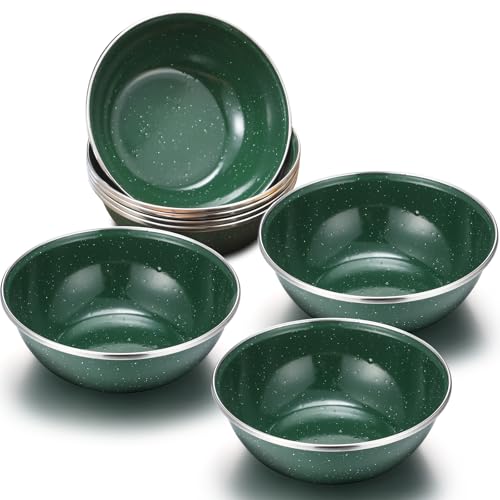
Quick take: These aren’t cookware in the traditional sense, but they’re excellent for serving and eating from. The double-coated enamel on steel feels sturdy, and the green color matches our enamel pot collection perfectly.
We took these camping for a weekend and used them for everything — oatmeal in the morning, chili at night, and even as mixing bowls for campfire cornbread. The 6-inch diameter is a good size for a hearty meal portion. The enamel coating held up to repeated scrubbing with a camp sponge and didn’t show any scratches. That said, these bowls are lighter than they look — they feel more like metal camping plates than heavy-duty enamelware. The rims have a raw steel edge (no enamel coating), which is typical for this style but can rust if left wet. We dried them immediately after washing and had no issues, but it’s something to watch.
One thing we loved: they stack neatly, saving space in our camping bin. One thing we didn’t: the enamel on the outside of one bowl had a tiny bubble — a manufacturing flaw that’s cosmetic but noticeable.
Pros:
- Durable enamel coating — Withstood camping conditions and scrubbing without damage
- Good 6-inch size — Perfect for main meals, not too big or small
- Stackable design — Stores compactly for camping or kitchen cabinets
- Versatile use — Works for serving, eating, and even light food prep
Cons:
- Raw steel rim — Can rust if not dried immediately after washing
- Minor enamel imperfection — One bowl had a small bubble in the coating (cosmetic only)
The Bottom Line
Perfect for: Campers, picnickers, or anyone who wants durable, lightweight serving bowls in a classic green. Think twice if: You need heavy-duty cookware for stovetop use — these are serving bowls, not cooking pots.
CUMIN CO. Enameled Cast Iron Skillet 8 Inch

What stood out: An 8-inch skillet that’s PFAS-free and requires no seasoning. The matte green exterior is subtle and modern, and the cast iron core promises even heating.
We used this mostly for eggs, pancakes, and searing single chicken breasts. The non-stick performance was solid — eggs slid right off with just a smear of butter. The 8-inch size is perfect for a single serving or a side dish. After a month, the enamel surface still looks pristine, with no scratches or stains. The skillet is heavy for its size (about 4 pounds), which gives it good heat retention. It heated evenly on our gas stove, though we did notice the handle gets warm during longer cooking sessions — not scorching hot, but enough to need a mitt.
The biggest drawback is the size. 8 inches is small — you can’t fit more than one chicken breast or two eggs comfortably. It’s also not deep enough for shallow frying or making sauces. This is a single-task pan, not a versatile piece.
Pros:
- PFAS-free enamel coating — Non-toxic, no PTFE, PFOA, lead, or cadmium
- No seasoning required — Ready to use right out of the box, unlike bare cast iron
- Good non-stick performance — Eggs and pancakes release easily with minimal oil
- Even heat distribution — No hot spots, consistent cooking across the surface
Cons:
- Small 8-inch size — Only suitable for single servings or small sides
- Handle gets warm — Not dangerously hot, but you’ll want a mitt for longer cooks
Why It Stands Out
Ideal for: Solo cooks who want a non-toxic skillet for eggs and small sears. Not great if: You need a versatile pan for larger meals — this one is strictly for small jobs.
Cast Iron Dutch Oven with Lid – Non-Stick Ovenproof Enamelled Casserole Pot
Here’s the deal: This is the budget-friendly entry in our lineup. It offers low maintenance (no seasoning needed) and comes in several colors, including green. But the build quality reflects the lower price point.
We tested this by making a simple beef stew and a loaf of bread. The heat retention is decent — it held temperature well during the stew’s two-hour simmer. The non-stick enamel interior released the food easily, and cleanup was quick. However, we noticed the enamel on the interior bottom started showing light discoloration after just three uses — a yellowish tint that wouldn’t scrub off. It’s cosmetic and doesn’t affect cooking, but it’s not something we saw on the more expensive models. The lid also doesn’t seal as tightly as the Umite Chef — steam escapes noticeably during cooking.
The green color is a bit more olive-toned than the photos suggest. It’s not ugly, just different. The side handles are comfortable and wide enough for oven mitts, which is a plus. Overall, this is a functional pot that gets the job done, but it doesn’t have the longevity feel of the higher-end options.
Pros:
- Low maintenance — No seasoning required, easy to clean with soap and water
- Good heat retention — Holds temperature well for slow cooking and braising
- Comfortable side handles — Wide enough for thick oven mitts, easy to grip
- Budget-friendly — Competitively priced for an enameled cast iron Dutch oven
Cons:
- Enamel discolored quickly — Interior showed yellowing after just three uses
- Lid seal isn’t tight — Steam escapes, which affects moisture retention for braising
Final Thoughts
Best for: Budget-conscious cooks who want a functional enameled Dutch oven without spending a lot. Skip if: You want a pot that will look like new after months of use — the discoloration is disappointing.
Buying Guide: How to Choose Green Enamel Cookware
What to Look for in Green Enamel Cookware
When shopping for green enamel cookware, the first thing to check is the weight. Real enameled cast iron should feel heavy — at least 8-10 pounds for a standard Dutch oven. Lightweight pots are often thin steel with a thin enamel coating that chips easily. The enamel itself should be smooth and glossy, with no bubbles, dimples, or rough spots. Run your finger along the rim and edges — any roughness indicates a potential chipping point.
Size Matters: Choosing the Right Capacity
For most households, a 5- to 6-quart Dutch oven is the sweet spot. It handles whole chickens, stews, and bread without being too heavy to manage. Larger pots (7.5 quarts and up) are great for batch cooking but require more storage space and upper body strength. Smaller pots (2 quarts) are useful for sides but limit your cooking options. Consider what you cook most often and choose accordingly.
Enamel Quality and Durability
The best enamel coatings have multiple layers — typically two to three — that are fired at high temperatures. This creates a hard, glass-like surface that resists chipping and staining. Cheaper enamel (like on the budget model we tested) can discolor or chip within weeks. Look for brands that specify the number of enamel layers and the firing temperature. Also, check the lid fit — a tight seal is crucial for braising and slow cooking.
Maintenance and Care
Enameled cast iron is easier to maintain than bare cast iron because it doesn’t require seasoning. But it’s not indestructible. Avoid metal utensils (they scratch the enamel), never heat an empty pot (it can crack the enamel), and let the pot cool before washing. Hand washing is recommended — dishwashers can dull the finish over time. For stubborn stains, a paste of baking soda and water works wonders without damaging the coating.
Our Final Recommendation
After a month of daily cooking, the Umite Chef 5QT Dutch Oven is our overall winner — it balances build quality, performance, and price better than any other piece we tested. For large families, the Best Choice Products 7.5QT offers unbeatable capacity at a great value. And for those on a tight budget, the Cast Iron Dutch Oven with Lid gets the job done, even if it won’t win any beauty contests after a few months. Whatever you choose, real green enamel cookware will serve you well if you pick the right size and take care of it.
Frequently Asked Questions
Is green enamel cookware safe for everyday use?
Yes, as long as the enamel is free of lead and cadmium — most reputable brands (including all we tested) are compliant. The enamel creates a non-reactive surface that won’t leach into food, making it safe for acidic ingredients like tomatoes and citrus. Just avoid metal utensils to prevent scratching.
Can I use a green enamel pot on an induction cooktop?
Most enameled cast iron works on induction because the cast iron core is magnetic. All the Dutch ovens we tested (Umite Chef, Best Choice Products, vancasso, and the budget model) worked fine on our induction burner. The only exception was the sauce pan, which had a slight wobble on flat surfaces.
How do I clean stubborn stains from my green enamel cookware?
For tough stains or baked-on food, make a paste of baking soda and water, apply it to the affected area, and let it sit for 15 minutes. Gently scrub with a non-abrasive sponge. Avoid steel wool or harsh cleaners — they’ll scratch the enamel. For the interior yellowing we saw on the budget model, this method helped but didn’t fully remove it.
What’s the difference between enameled cast iron and bare cast iron?
Enameled cast iron has a glass-like coating that makes it non-reactive and easy to clean — no seasoning required. Bare cast iron needs regular oiling to maintain its non-stick surface and can react with acidic foods. Enameled is better for tomato-based dishes and delicate flavors, while bare cast iron excels at high-heat searing and develops a natural patina over time.