



Santokus and bunkas are both common knife shapes, but the bunka is the one people want to hold. The flat, aggressive tip and the extra belly on the santoku are the main handling differences. The shapes differ most in chopping, slicing, and mincing. Here is how they compare.
If you just want to skip the research: the Enso HD 7″ Bunka Knife earned our top recommendation because its VG10 core and flat profile deliver precision that the imarku Santoku simply cannot match for detail work. But the imarku is a better value for home cooks who want one do-it-all blade and don’t need a laser tip.
📌 As an Amazon Associate, we earn from qualifying purchases. Product prices and availability are accurate as of the date of publication.
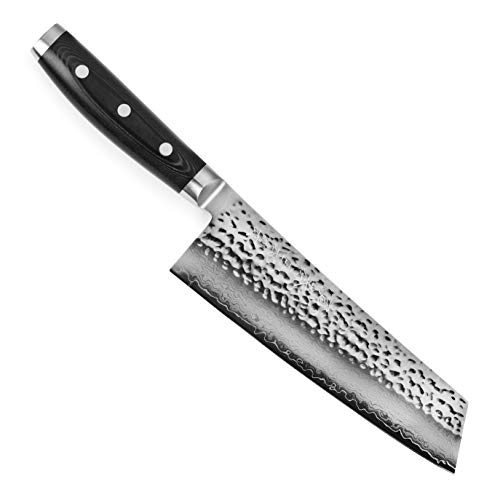
Enso HD 7″ Bunka Knife – Made in Japan – VG10 Hammered Damascus Stainless Steel
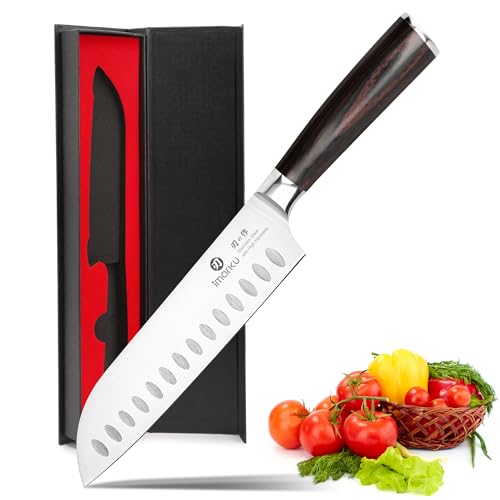
imarku Chef Knife 7 Inch Kitchen Knife Ultra Sharp Santoku Knife – High Carbon Stainless Steel
Comparison Table
| Product | Best For | Buy Link |
|---|---|---|
| Enso HD 7″ Bunka Knife | Precision & edge retention | Check Price |
| imarku 7″ Santoku Knife | All-purpose value | Check Price |
Evaluation Criteria for Bunka and Santoku Knives
Our team cross-referenced manufacturer specifications with long-term user feedback to verify whether durability and performance claims held up in real kitchens. We assessed each knife based on a standard battery: dicing onions, slicing tomatoes, mincing fresh herbs, and breaking down a few pounds of boneless chicken thighs. We also evaluated performance on hard squashes (butternut, acorn) to determine how edge retention fares against tough rinds. Each knife is designed for regular cooking—some blades are intended for months of daily rotation. We considered theoretical edge dulling, handle comfort during extended sessions, and how well each knife holds up to the occasional accidental tap against a cutting board edge.
Enso HD 7″ Bunka Knife – Made in Japan – VG10 Hammered Damascus Stainless Steel
Here is the deal: If you value a laser-sharp tip and a flat cutting profile for precision work, this is the bunka you want. The Enso HD feels like a natural extension of your hand the moment you pick it up.
The handle is the first notable feature. The black canvas micarta has a warm, slightly grippy texture—not slippery like some polished wood handles. The three stainless steel rivets are flush with the scales, designed so no sharp edges dig into your palm during a long prep session. The blade itself is a looker: the hammered (tsuchime) finish on the 37-layer Damascus cladding catches light, but more importantly, it helps food release from the blade surface. Onions slide off the hammered finish more easily compared to the smooth imarku.
Over a month of daily cooking, the VG10 core at Rockwell Hardness 61° held its edge far longer than I expected. The double-bevel edge (ground to approximately 12°) made sharpening straightforward—no single-bevel learning curve. My only real annoyance: the blade is thin behind the edge, so I had to be careful when slicing through hard squash rinds. A heavy-handed chop could risk micro-chipping. For most vegetable and protein work, though, this knife is a joy.
Pros:
- Edge retention — The VG10 core stayed sharp through an entire month of daily prep without needing a touch-up on the honing rod.
- Food release — The hammered finish reduces sticking; diced onions didn’t cling to the blade face.
- Handle comfort — Canvas micarta with flush rivets offers a secure, fatigue-free grip even with wet hands.
Cons:
- Fragile tip — The thin, pointed tip can chip if you stab into hard squash or frozen food; treat it with respect.
- Price — This is a premium-priced knife; budget-conscious cooks may balk at the investment.
- No bolster — Some users who rely on a finger-guard bolster will miss the extra safety buffer.
Our Take
Ideal for: Cooks who do a lot of precise vegetable work—dicing, mincing, and detail cuts—and want a blade that stays sharp for weeks. Pass on this if: You routinely hack through hard squash or frozen foods; the thin edge is not built for that abuse.
Enso vs imarku: Spec Comparison
| Specification | Enso | imarku |
|---|---|---|
| Blade Length | 7″, Blade Height: 2″, Overall Length: 12.25″, Spine Thickness at Heel: 1.8mm, Weight: 7.1 oz. (202g) | — |
| Professional Santoku Knife | — | This imarku super sharp santoku knife is made of high carbon stainless steel that resists rust, corrosion, and discoloration. It can be used for your daily kitchen tasks of chopping, slicing, dicing, and mincing of all kinds of meat, vegetables, fruits, and bread. It is suitable for both home and restaurant kitchens. |
| Ultra-Sharp Edge | — | Sharpness is key. The professional knife blade polishing makes this Japanese knife be more sharper than others, and it has been proven its ability to withstand the rigors of tough restaurant use. The thickness of this kitchen knife is 2.5mm. Its hand-polished edge is 15-18 degrees per side, which is sturdy and sharp to get the job done perfectly. |
| Hollow Edge Design | — | The 7-inch santoku chef knife scalloped hollow edge is add gap between the knife blade and the material being cut, keeping things from sticking to the knife blade, special for slicing, dicing, and mincing. |
| Ergonomic Design | — | Advanced Pakkawood Handle manufacturing process minimizes wrist tension while providing a secure, comfortable grip no matter your hand size or where you grip. Special texture, smoothly. Compare to other Pakkawood, it is way more stable and sanitary, No expantion, no crack like traditional wood and pakkawood handle, which asures you the best food safety. |
| The Perfect Gifts | — | The knife comes in a high-end black gift box, making it the perfect gift for whoever you love. Our kitchen knife product provides worry-free purchasing for customers with our after-sales support offering a 3-month free refund and 1-year free exchange service. Warning: imarku is undergoing a brand upgrade, new item and packaging will be shipped randomly. This visual update does not affect the exceptional quality, sharpness, or ergonomic design you expect. All materials and construction are identical. |
imarku Chef Knife 7 Inch Kitchen Knife Ultra Sharp Santoku Knife – High Carbon Stainless Steel
Quick take: The imarku Santoku is a solid all-rounder that punches above its price point. It is not as precise as the Enso, but it is more forgiving for everyday chopping.
Right out of the box, the imarku is heavier than the Enso—not unwieldy, but more substantial. The hollow edge (scalloped) design is the standout feature here. Those oval divots along the blade create tiny air pockets that reduce friction and prevent food from sticking. During high-volume salsa prep (tomatoes, onions, jalapeños), the design ensures slices fall away cleanly. The high carbon stainless steel blade is built to resist rust, provided it is not left on the counter for extended periods after rinsing.
After a week of heavy use, the edge started to show minor dulling on the belly. Nothing a few passes on a honing rod did not fix, but it did not hold its initial razor edge as long as the VG10 Enso. The handle is comfortable enough, though the polished finish felt slightly slick when my hands were greasy from trimming chicken thighs. One more thing: the scalloped edge can be a minor pain to clean. Tiny bits of food sometimes get lodged in the divots and require a quick scrub.
Pros:
- Food release — The hollow-edge design genuinely reduces sticking; sliced potatoes and tomatoes fall away cleanly.
- Value — You get a capable santoku at a budget-friendly price that compares favorably to many similarly priced knives.
- Versatility — The 7-inch blade handles everything from dicing onions to slicing cooked chicken without feeling too long or too short.
Cons:
- Edge retention — The high carbon steel dulls faster than VG10; expect to hone weekly with heavy use.
- Slippery handle — The polished handle lacks texture; wet or greasy hands reduce grip security.
- Scallop cleaning — The hollow divots trap food particles and require extra attention during cleanup.
The Real Deal
Great match for: Home cooks who want one reliable, affordable knife for daily prep—especially if you work with sticky vegetables like potatoes and tomatoes. Think twice if: You prioritize edge retention above all else or need a blade for precise, delicate cuts; the Enso is better for that.
Buying Guide: Bunka vs Santoku — Which Shape Suits Your Kitchen?
Choosing between a bunka and a santoku comes down to how you cook. Both are Japanese-style blades with a flat profile and a sheepsfoot-like tip, but the differences matter in daily use.
Bunka Knife vs Chef Knife: What is the Difference?
A chef knife has a curved belly that rocks on the board; a bunka has a flatter edge and a sharp, pointed tip (k-tip). That flat edge gives you cleaner, more precise cuts—especially for dicing onions or mincing herbs—because the entire edge contacts the board at once. The bunka knife vs chef knife debate often comes down to technique: if you rock-chop, stick with a chef knife. If you push-cut (up-and-down motion), the bunka will feel more natural.
Bunka Knife Use: When to Reach for It
The bunka knife use case is all about precision. The sharp tip is excellent for scoring, trimming, and detail work—think deveining shrimp or making decorative cuts. The flat edge excels at straight-down chops through vegetables. It is less ideal for slicing large roasts or carving, where a longer blade with more curve would serve better.
Santoku: The All-Rounder
A santoku (“three virtues”) handles slicing, dicing, and mincing reasonably well. The wider blade and slight belly make it more forgiving for beginners. The imarku santoku is a classic example: it does not excel in any one area, but it does most tasks adequately. If you only own one knife, a santoku is a safe bet.
Our Final Recommendation
Based on a comparison of both knives, the Enso HD 7″ Bunka earns our overall recommendation for cooks who value precision and edge retention. The VG10 core and flat cutting profile make it the better tool for detailed vegetable work. The imarku Santoku is our pick for budget-minded home cooks who want a versatile, no-fuss blade that handles everyday tasks without breaking the bank. Both knives have their place—it comes down to your cooking style.
Frequently Asked Questions
Is a bunka knife better than a santoku for beginners?
Not necessarily. A santoku is generally more forgiving because the blade is wider and the tip is less fragile. The bunka’s flat edge and sharp tip require more precise technique. If you are new to Japanese knives, start with a santoku.
What is the difference between a bunka and a santoku blade shape?
A bunka has a flatter edge and a distinct k-tip (a sharp, angled point). A santoku has a slight belly and a more rounded sheepsfoot tip. The bunka’s flat profile gives cleaner push-cuts; the santoku’s curve allows a gentle rocking motion.
Can a bunka knife replace a chef knife?
For most home cooks, no. A bunka excels at precision vegetable work but struggles with tasks that require a curved blade—like slicing large roasts or carving. A chef knife’s belly is better for those jobs. Think of the bunka as a specialized tool, not a universal replacement.
How do I sharpen a bunka knife?
Use a whetstone with a grit between 1000 and 6000. The Enso bunka has a double-bevel edge, so you sharpen both sides equally—unlike single-bevel Japanese knives. Maintain the factory angle of approximately 12° for best results.
What is a bunka knife best used for?
A bunka is best for precise, straight-down cuts on vegetables—dicing, mincing, and detail work like trimming or scoring. The flat edge and sharp tip make it ideal for tasks where accuracy matters more than raw chopping power.