



A japanese fish knife should match the fish and the cut, not merely carry Japanese branding. The Kimura Fillet Knife is my overall pick because its 6.1-inch format is the most naturally suited to controlled filleting, while the imarku belongs in a different class for bone work.
Short answer: choose the Kimura Fillet Knife for everyday filleting, the HOSHANHO 7 Inch for a longer budget-friendly fillet blade, and the imarku 7-inch Deba Knife for controlled work around fish bones. A flexible fillet knife and a Japanese deba knife are not interchangeable tools.
easycookingways.com is funded by affiliate commission. Our picks come from comparing published specifications and documented features against what matters in the category — no brand pays for a place on this page. If you buy through a link here we may earn a commission at no extra cost to you, and it pays for the research behind the next guide. Full disclosure.
As an Amazon Associate we earn from qualifying purchases. This does not affect the price you pay.
The short answer
- Best overall: Kimura Fillet Knife — Compact 6.1-inch format for controlled filleting
- Best value: HOSHANHO Fillet Knife 7 Inch — Longer blade with a listed 0.66-pound weight
- Best for bone work: imarku 7-inch Deba Knife — Thick, single-bevel design for fish processing
How These Japanese Fish Knife Picks Were Selected
These picks come from comparing published specifications, listed materials, and documented features against what matters in fish preparation. Blade geometry received the most weight: flexible length matters for clean filleting and skinning, while spine thickness, edge angle, and stiffness matter around joints and fish bones. Steel type and construction also matter because edge retention and corrosion resistance affect ongoing ownership. Handle security and balance are important whenever the knife and fish are wet, but the available listings do not provide enough construction detail to rank those qualities confidently. The main failure is choosing a thin flexible fillet blade for bone-chopping, or treating a single-bevel deba like a conventional double-bevel knife. Before ordering, check the seller’s current listing for the exact blade geometry, sharpening instructions, handle material, and whether any dishwasher guidance is explicitly stated. Our shortlist reflects the published information, not physical testing, and that distinction matters.
Kimura Fillet Knife (Compact Made-in-Japan Fillet Blade)

- BrandKimura
- Size / capacity6.1"
- ColourHigh Carbon Molybdenum Stainless Steel
Quick take: The Kimura is the strongest all-round choice for buyers who want a manageable fillet knife rather than a fish cleaver.
The listing gives the Kimura a 6.1-inch size and describes its blade as high-carbon chrome molybdenum stainless steel. The manufacturer also says the knife is made in Japan, manufactured in Seki, and fitted with a POM resin ergonomic handle described as non-slip. Weight, full dimensions, warranty, and a more precise blade profile are not listed, so the 6.1-inch figure is the clearest guide to its intended scale. A shorter blade can make controlled skin removal and pin-bone work less awkward on smaller fish.
High-carbon molybdenum stainless steel is a sensible material claim for a fish knife because stainless construction is intended to resist staining better than ordinary high-carbon steel, but stainless does not mean maintenance-free. Fish moisture, salt, and acids can still promote staining or corrosion. Compared with the 7-inch HOSHANHO, the Kimura gives up reach while offering a more compact format; compared with the imarku, it is the better fit for delicate filleting because the listing presents it as a fillet knife rather than a thick deba. The missing spine and flexibility measurements are a real limitation for buyers handling larger fish.
Pros:
- 6.1-inch format — A compact length suits controlled filleting and skinning on smaller fish.
- High-carbon chrome molybdenum stainless steel — The listed blade material is aimed at edge performance with better rust resistance than plain carbon steel.
- POM resin handle — The manufacturer describes the ergonomic handle as non-slip and easy to grip.
- Made in Japan claim — The listing identifies manufacture in Seki, Japan, which gives buyers a specific origin claim to verify.
Cons:
- Blade geometry is not fully listed — Flexibility, spine thickness, and edge angle are not provided, so suitability for demanding fish cannot be confirmed from the listing.
- Limited published ownership details — Weight, dimensions beyond the 6.1-inch size, and warranty information are not listed.
Why It Stands Out
Ideal for: Home cooks who primarily fillet salmon, trout, and other soft-fleshed fish and want a compact Japanese fillet knife. Pass on this if: You need to chop through hard fish heads or backbones; a thin fillet blade should not be forced through bone, and this listing does not document a bone-working design.
HOSHANHO Fillet Knife 7 Inch (Longer Flexible-Fillet Option)

- BrandHOSHANHO
- Model7 inch Fillet Knife
- Weight0.66 pounds
- Size / capacity7"
- ColourSilver
In a nutshell: HOSHANHO makes the most sense for buyers who want extra reach from a conventional fillet knife and can accept incomplete construction details.
The HOSHANHO has a 7-inch size, a listed 0.66-pound weight, and a silver finish. Its seller describes the blade as Japanese stainless steel 10Cr15 and says the thin blade is intended for slicing, boning, trimming, and skinning. The listing describes an ergonomic handle designed to reduce hand fatigue, but it does not list the handle material, full dimensions, warranty, or a measured flexibility rating. That missing flexibility figure matters more here than a decorative finish because filleting performance depends on how the blade tracks beneath skin and along bones.
The extra length over the 6.1-inch Kimura can provide more reach on larger fillets, while a shorter blade is generally easier to control on small fish and close pin-bone work. HOSHANHO is still a fillet knife, not a deba or fish cleaver; the thin-blade description points toward soft-flesh preparation rather than chopping through hard bones. Its published weight is lighter than the imarku’s 1.19 pounds, but weight alone cannot establish balance or wet-grip security. The main compromise is uncertainty: the listing names 10Cr15 and a thin 7-inch blade, yet leaves the exact edge geometry and flexibility undocumented.
Pros:
- 7-inch blade length — The longer format offers useful reach for larger fillets and longer skinning cuts.
- 0.66-pound listed weight — It is substantially less weight-focused than the 1.19-pound imarku, which suits buyers seeking a fillet-style tool.
- Thin-blade description — The documented design purpose covers slicing, boning, trimming, and skinning rather than general chopping.
- Ergonomic handle design — The manufacturer says the handle is shaped for comfort and reduced fatigue.
Cons:
- Material details are seller claims — Japanese stainless steel 10Cr15 is stated in the marketing copy, but the listing does not provide fuller construction information.
- No flexibility rating — Buyers cannot verify whether the thin blade is supple enough for delicate skinning or stiff enough for their preferred filleting style.
The Real Deal
Great match for: Buyers who want a longer 7-inch fillet knife for salmon-sized portions and general trimming. Think twice if: You expect one knife to scale fish, cut joints, and split backbones; the documented thin fillet design is not a substitute for a deba or fish cleaver.
imarku 7-inch Deba Knife (Heavy Single-Bevel Fish Processor)
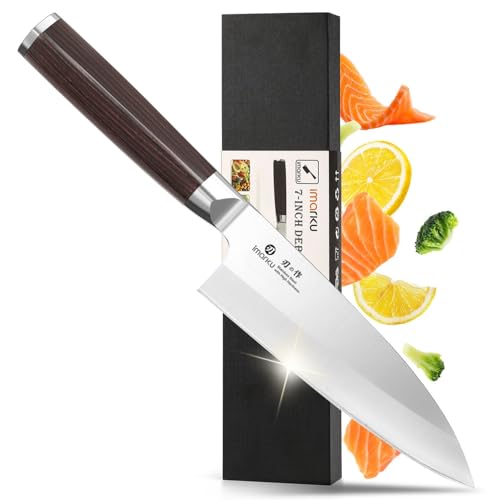
- Brandimarku
- Modeldeba knife
- Dimensions12.0 inches x 2.0 inches x 0.21 inches
- Weight1.19 pounds
- Size / capacity7"
- ColourSliver
What sets it apart: The imarku is the specialist pick for fish processing, with a deba profile that prioritizes stiffness and bone work over delicate fillet flexibility.
The imarku measures 12.0 inches x 2.0 inches x 0.21 inches, weighs 1.19 pounds, and has a listed 7-inch size. The manufacturer describes a thick Japanese deba knife made from Japanese high-carbon stainless steel, with a hand-sharpened single-bevel blade. Material details beyond that marketing description and warranty information are not listed. A deba’s thick spine and low bevel edge are central to its role, and the listing’s emphasis on a thick, comprehensive blade separates this knife from both flexible fillet options.
Deba knives are designed for controlled work through hard fish bones such as heads and backbones, but that does not make the imarku a general-purpose cleaver. Its 1.19-pound weight and single-bevel geometry suggest a more deliberate tool than the 0.66-pound HOSHANHO. The trade-off is technique: a Japanese single-bevel edge requires different sharpening and handling from a conventional double-bevel knife. Sharpening both sides as if this were a standard fillet knife can alter the cutting geometry, while beginners may find the blade less forgiving for ordinary filleting.
Pros:
- 7-inch deba format — The listed size sits within the commonly advised 150–180 mm range for people starting with a deba.
- 1.19-pound weight — The heavier specification fits a bone-working fish knife more closely than the two fillet designs.
- Single-bevel edge — The documented Japanese edge gives the knife a specialized geometry for controlled fish processing.
- 12.0 x 2.0 x 0.21-inch dimensions — The full listed dimensions help buyers distinguish this substantial knife from a thin fillet blade.
Cons:
- Not a beginner-friendly replacement for a fillet knife — Single-bevel sharpening and handling differ from conventional double-bevel filleting.
- Heavier, more specialized design — At 1.19 pounds, the imarku is a poor fit for buyers who only need light skinning and delicate fillet work.
Who Should Buy This
Perfect for: Cooks who specifically need a Japanese deba knife for controlled work around fish heads, backbones, joints, and harder bones. Not great if: You want a forgiving salmon fillet knife or plan to sharpen it like a double-bevel blade.
Japanese Fish Knife Comparison
| Product | Best for | Blade size | Weight or geometry |
|---|---|---|---|
| Kimura Fillet Knife | Controlled filleting | 6.1 inches | High-carbon chrome molybdenum stainless steel |
| HOSHANHO Fillet Knife 7 Inch | Longer fillet cuts | 7 inches | 0.66 pounds; thin blade |
| imarku 7-inch Deba Knife | Fish bone work | 7 inches | 1.19 pounds; single bevel |
How to Choose the Right Japanese Fish Knife
Match flexibility and length to the fish
A fillet knife needs enough flexibility to follow the shape of a fish and separate flesh from skin without wasting meat. Shorter blades improve control on small fish, while longer blades can cover more of a larger fillet in one pass. That makes the 6.1-inch Kimura a sensible control-first choice and the 7-inch HOSHANHO the better reach-first option, although neither listing provides a flexibility measurement. For salmon, trout, and other soft-fleshed fish, I would choose one of those fillet knives rather than the deba.
japanese fish knife geometry matters more than the label
A Japanese fish knife can mean a flexible fillet knife or a stiff deba, and those geometries perform different jobs. A thin flexible blade is useful for skinning and clean filleting but should not be driven through hard bone. A deba has a thick spine and low bevel edge, and deba knives are designed for hard bones such as fish heads and backbones. The imarku’s listing supports that role, but it should still be used with controlled cuts on a suitable surface rather than treated as a general fish cleaver.
Understand the single-bevel maintenance burden
The imarku’s Japanese single-bevel edge needs a sharpening approach that preserves its existing geometry. A conventional double-bevel sharpening routine can remove material from the wrong side and change how the edge meets the fish. The Kimura and HOSHANHO are easier choices for buyers who want ordinary filleting, although their listings do not specify sharpening angles.
Steel, handles, and wet preparation
High-carbon molybdenum stainless steel can resist rust and staining better than less corrosion-resistant steel, but fish moisture, salt, and acids still deserve respect. Hand-wash every knife, dry the blade promptly, and store it safely unless the manufacturer explicitly states otherwise; none of these listings confirms dishwasher suitability. For general food-contact safety information, the U.S. Food and Drug Administration provides the relevant public guidance, but that does not certify any of these knives. Handle security matters because a wet fish and wet blade reduce control, so check the exact handle material and grip design before ordering. The Kimura’s POM resin handle and HOSHANHO’s ergonomic-handle claim are useful published details, but neither replaces careful handling or a cut-resistant glove where appropriate.
If you’re comparing broader steel and edge philosophies, our guide to Japanese and German kitchen knives puts the differences in a wider context. Buyers who want a general kitchen knife rather than a fish specialist can also compare the options in our Japanese chef knives under 100 guide.
Our Final Recommendation
The Kimura Fillet Knife is my overall winner because the 6.1-inch format, stated high-carbon chrome molybdenum stainless steel, and POM resin handle align best with everyday filleting. The HOSHANHO 7 Inch is the best value choice for buyers who want a longer thin blade and a listed 0.66-pound weight. For a premium-style specialist role, the imarku 7-inch Deba Knife is the pick for cooks who genuinely need single-bevel bone-working geometry. I would buy the Kimura for soft-fleshed fish, not a deba; versatility here means choosing the correct tool, not forcing one knife to do every job.
Frequently Asked Questions
Does the Kimura or HOSHANHO suit salmon and trout better than the imarku?
Yes. Salmon and trout generally call for the control and flexibility associated with a fillet knife, so the Kimura’s 6.1-inch format or HOSHANHO’s 7-inch thin-blade design is more appropriate than the imarku deba. The Kimura favors close control, while HOSHANHO offers more reach. Neither listing provides a flexibility rating, so inspect the current product details before ordering.
How should I maintain these Japanese fish knives after cutting fish?
Hand-wash the blade, dry it promptly, and store it safely. Fish moisture, salt, and acids can promote staining or corrosion even on stainless steel. Dishwasher suitability is not stated for any of the three products, so dishwasher use should not be assumed. The imarku also needs sharpening that respects its single-bevel geometry; treating it like a double-bevel fillet knife can change the edge.
Can the imarku deba replace a fish cleaver or a flexible fillet knife?
No. The imarku’s 7-inch, 1.19-pound single-bevel deba design is the specialist option for controlled work around fish heads, backbones, and harder bones. It is not the natural choice for delicate skinning, pin-bone removal, or long flexible cuts. A thin fillet blade should not be forced through hard bones, while a deba still requires controlled technique and a suitable cutting surface.