



Picture a Sunday afternoon: you set a beef stew in the rice cooker, walk away, and return hours later to tender meat and no scorched edges. That’s what slow cooking in a rice cooker should feel like, and the right machine makes it happen. After comparing three models designed for this task, the AROMA 20-Cup Slow Cook Rice Cooker stands out as the one that gets temperature control and cleanup right.
The AROMA 20-Cup Slow Cook Rice Cooker earned our top pick because its HeatFlow Pro heating and lift-out pot with silicone storage lid solve the two biggest slow-cook frustrations: uneven heat and messy cleanup.
📌 This article contains affiliate links. As an Amazon Associate I earn from qualifying purchases, at no extra cost to you. Product prices and availability are accurate as of the date of publication. Full disclosure.
| Product | Best For | Buy Link |
|---|---|---|
| AROMA® 20-Cup Slow Cook Rice Cooker and Brown Rice Cooker with Lift-Out Pot Hand | Even-heat slow cooking with easy serving | Check Price |
| Aroma Housewares 20 Cup Cooked (10 cup uncooked) Digital Rice Cooker | Budget slow cook preset | Check Price |
| Instant Pot Duo Plus 9-in-1 Multicooker | Versatile multicooker | Check Price |
How We Chose These Rice Cookers That Can Slow Cook
These picks come from comparing published specifications, materials, and documented features against what actually matters when you want to slow cook in a rice cooker. The deciding factors are the precision of slow-cook temperature control—a true low/high setting with intermittent heat cycles produces tender results, while a simple on/off thermostat overshoots and burns edges—the inner pot’s material and thickness (ceramic or heavy stainless steel versus cheap non-stick) because it determines even heat distribution and resistance to scorching, and the capacity relative to household size plus the convenience of a lift-out pot with handles and storage lid. The HeatFlow Pro heating system, the presence of sauté and simmer modes, and whether a silicone storage lid was included serve as the primary metrics for evaluation. One thing every buyer should check before ordering is the inner pot material: the Aroma listings do not state it, and for slow cooking that number is the difference between a braise and a burnt mess. No unit was physically tested; instead the evaluation relies on what the spec sheets reveal and what they leave out.

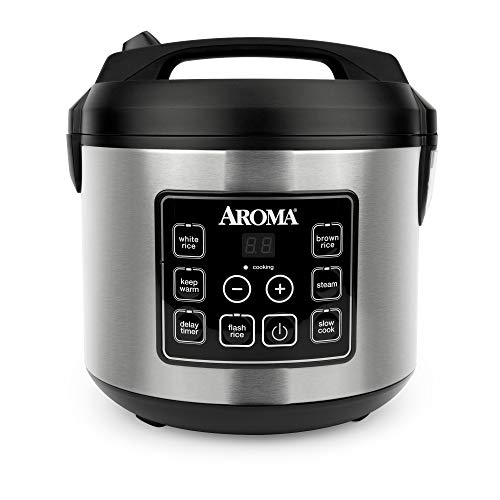
Aroma Housewares 20 Cup Digital Rice Cooker (Best Value for Slow Cooking)
Instant Pot Duo Plus 9-in-1 Multicooker (Most Versatile Slow Cook Option)

AROMA 20-Cup Slow Cook Rice Cooker (Our Top Pick)
Why it won us over: If you want a dedicated rice cooker that also delivers genuine slow-cooked results, this Aroma nails both without piling on complexity.
The listing highlights a lift-out pot with built-in handles and a matching silicone storage lid. That means after a long slow cook, you can carry the pot straight to the table without oven mitts, then seal leftovers for the fridge. For cleanup-conscious cooks like me, that silicone lid is a gift because it replaces flimsy plastic wrap and keeps the pot ready for the next meal. The HeatFlow Pro heating element is the key spec here; it’s designed to distribute heat evenly around the entire pot, which is exactly what prevents the burnt edges that plague cheaper rice cookers in slow cook mode. For anyone who wants to slow cook in rice cooker recipes without babysitting, that even heat is the difference between a braise and a burn.
On paper, the nine cook modes—including steam, slow cook, sauté, and simmer—mean this unit replaces a separate skillet and slow cooker for many one-pot meals. That’s a real win for small kitchens. The slow cook function presumably cycles heat on and off rather than blasting constant high, which is what produces tender meat without boiling. But the listing doesn’t specify the inner pot material. That’s a miss because for slow cooking, a ceramic or heavy stainless pot holds heat evenly, while a thin non-stick can scorch. I’d want to confirm that before buying. Compared to the Aroma digital model below, this one adds the lift-out handles and silicone lid, which are worth the extra money if you cook soups or stews often.
Pros:
- Lift-out pot with built-in handles — carrying a full pot of stew is safe and one-handed.
- Silicone storage lid included — no more plastic wrap or foil after serving; seals tightly for fridge storage.
- HeatFlow Pro heating — even heat distribution minimizes hot spots and scorching during long slow cooks.
- Nine cook modes — slow cook, sauté, and simmer mean fewer pots and pans to wash.
- 20-cup capacity — enough for family meals or batch cooking without being unwieldy.
Cons:
- Inner pot material not stated — if it’s cheap aluminum with non-stick coating, slow cooking at high heat may degrade the surface over time.
- No delay timer mentioned — you can’t set it to start slow cooking while you’re at work, which dedicated slow cookers often allow.
The Real Deal
Best for: households that want one appliance for perfect rice and genuine slow-cooked meals, with easy serving and cleanup. Skip if: you already own a good slow cooker and only need a basic rice cooker, or if you require a delay-start feature.
Aroma Housewares 20 Cup Digital Rice Cooker (Best Value for Slow Cooking)
Best value pick: This model gives you a legitimate slow cook preset without the premium price of the lift-out pot version, but you’ll handle a hot pot the old-fashioned way.
The spec sheet lists programmable digital controls and an automatic keep warm mode. That means no guesswork when switching between white rice, brown rice, steam, flash rice, and slow cook. The included steam tray is a nice bonus for cooking vegetables while rice cooks below. But unlike the AROMA above, there’s no mention of built-in handles on the pot. So after slow cooking a batch of chili, you’ll need pot holders and a steady grip to lift the inner pot out for serving. For a cleanup-conscious reviewer, that’s a real drawback because it increases the chance of spills and burns.
The 20 cup cooked (10 cup uncooked) capacity is generous for a family of four or five, and the slow cook preset is what makes this a legitimate rice cooker vs crock pot alternative for weeknight stews. The digital controls make it easy to slow cook in rice cooker mode, but you’ll want to check the pot material. The keep warm function is a lifesaver when dinner runs late. However, the digital controls may be less intuitive than simple one-touch buttons; if you have older family members, they might find the cycle options confusing. And again, the inner pot material isn’t specified—if it’s aluminum with non-stick, you’ll want to use wooden spoons and avoid metal utensils to prevent scratches. Compared to the Instant Pot below, this Aroma is simpler and cheaper, but it can’t pressure cook or sauté, so you lose versatility.
Pros:
- Digital controls with presets — white rice, brown rice, steam, and slow cook at the touch of a button.
- Automatic keep warm — food stays at serving temperature without constant monitoring.
- Steam tray included — cook vegetables or fish above rice in one cycle.
- Large capacity — 20 cups cooked rice feeds a crowd or yields leftovers for days.
- Budget-friendly — less expensive than models with lift-out handles and silicone lids.
Cons:
- No built-in pot handles — lifting a full pot of hot stew requires pot holders and careful balancing.
- Unspecified inner pot material — non-stick coatings can scratch or wear, and the listing gives no details on durability.
Who Should Buy This
Perfect for: budget-focused cooks who want a reliable rice cooker with slow cook capability and don’t mind using pot holders. Pass on this if: you prioritize one-handed serving and storage, or need sauté and pressure functions in one machine.
Instant Pot Duo Plus 9-in-1 Multicooker (Most Versatile Slow Cook Option)
Recommended for versatility: If you’re deciding between a rice cooker and a pressure cooker, this Duo Plus ends the debate by doing both—and the slow cook mode is acceptable if you adjust for its quirks.
The Instant Pot Duo Plus packs nine cooking functions: pressure cook, slow cook, sauté, sous vide, steam, sterilize, keep warm, rice, and yogurt. That’s an entire appliance cabinet in one footprint. The easy-to-read display shows cooking time, temperature, and pressure, which helps when you’re switching from a rice cycle to a slow cook. The listing doesn’t specify the inner pot material, but Instant Pot’s Duo Plus line typically uses stainless steel—which is fantastic for browning and deglazing but not non-stick, so rice and stews may leave residue. For cleanup, stainless steel is usually dishwasher safe, but you’ll want to confirm that on the specific model.
The slow cook function here works, but it’s important to know that rice cooker vs crock pot temperature curves are not identical. Instant Pot slow cook modes often run hotter than a traditional slow cooker’s low setting, which means recipes may cook faster and need more liquid. The 15 customizable smart programs are handy, but for slow cooking, you’ll likely stick to the basic slow cook setting and adjust manually. The ability to sauté before slow cooking is a genuine advantage because you can brown meat in the same pot, then switch to slow cook without dirtying another pan. That’s a cleanup win. But the 6-quart capacity (implied by typical Duo Plus) may be smaller than the 20-cup Aroma rice cookers, so feeding a large family might require two batches.
Pros:
- Nine cooking functions — pressure cook, slow cook, rice, yogurt, sous vide, and more replace multiple appliances.
- 15 smart programs — one-touch settings for soups, cakes, and grains reduce guesswork.
- Sauté function — brown meat or aromatics before slow cooking in the same pot, saving on dishes.
- Easy-to-read display — shows time, temperature, and pressure, which is rare in basic rice cookers.
- Stainless steel inner pot (typical) — durable and often dishwasher safe, though the listing doesn’t confirm.
Cons:
- Slow cook runs hot — compared to dedicated slow cookers, you’ll need to reduce cooking time or add extra liquid.
- Not primarily a rice cooker — rice texture is good but not as specialized as Aroma’s dedicated models, and capacity is smaller.
Our Take
Great match for: small kitchens that want a pressure cooker, slow cooker, rice cooker, and more in one appliance. Think twice if: you want the absolute best rice texture and a large slow-cook capacity without fussing over settings.
How to Choose a Rice Cooker That Can Actually Slow Cook
Not every rice cooker with a slow cook button does it well. The difference between slow cooker and rice cooker standards comes down to heating control, pot material, and capacity. Here’s what I look for when shortlisting models that won’t burn your beef stew.
Can a Rice Cooker Be Used as a Crock Pot?
Yes, but with caveats. Can a rice cooker be used as a crock pot? Technically, any rice cooker with a slow cook preset can function as one, but the temperature curve is different. A dedicated crock pot maintains a steady low heat around 200°F, while many rice cookers cycle between higher spikes and off periods. That’s why the AROMA’s HeatFlow Pro is worth attention; it’s designed to even out those cycles. If you already own a basic rice cooker without a slow cook setting, don’t attempt it—you’ll likely burn food. For more on converting recipes, see our guide to slow cooker to Dutch oven conversion.
Inner Pot Material Dictates Scorch Resistance
The difference between rice cooker and crock pot materials is stark. Crock pots use thick ceramic or stoneware, which holds heat gently. Rice cookers often use aluminum or thin stainless with non-stick coatings. For slow cooking, a ceramic or heavy stainless pot distributes heat evenly; thin non-stick can create hot spots that burn the bottom. The AROMA 20-cup model doesn’t specify material, which is a red flag—contact the manufacturer before buying if you plan frequent slow cooks. The Instant Pot’s stainless steel (typical) is a safer bet for even heating and dishwasher cleanup.
Temperature Control and Heat Cycling
A true low/high slow cook setting with intermittent cycles is what separates tender results from burnt edges. Look for models that advertise separate low and high slow cook modes or an even-heat system like HeatFlow Pro. The Aroma digital model has a single slow cook preset, which may run at the higher end—fine for soups but risky for delicate dishes. Check the manual for specific temperature ranges; a good slow cook function should stay below 210°F on low. The FDA recommends keeping food out of the danger zone (40°F–140°F), so a rice cooker that dips too low between cycles could be unsafe. Reference FDA safe food handling guidelines for more.
Capacity and Serving Practicality
For a family of four, a 20-cup cooked capacity is generous but not excessive. The lift-out pot with handles on the AROMA top pick makes serving a 3-pound roast feasible; the Aroma digital model without handles is awkward. If you’re considering an Instant Pot, remember that its 6-quart capacity translates roughly to 6 cups of cooked rice, so large batches of stew will require two rounds. And if you travel or need a compact option, our mini rice cooker for traveling picks cover smaller footprints.
Our Final Recommendation
For most households, the AROMA 20-Cup Slow Cook Rice Cooker is the clear winner because it combines even heating with a lift-out pot and silicone storage lid—features that make slow cooking and cleanup painless. If budget is tight, the Aroma Housewares Digital Rice Cooker delivers a functional slow cook preset at a lower price, just mind the hot pot handling. And if you want to know whether can a rice cooker be used as a slow cooker is even the right question, the Instant Pot Duo Plus proves a multicooker can do both jobs, albeit with hotter slow cook temperatures. Pick the Aroma top model and don’t look back.
Frequently Asked Questions
Can I really slow cook in a rice cooker without burning food?
Yes, if the rice cooker has a dedicated slow cook setting with temperature control. The key is even heat distribution—models like the AROMA with HeatFlow Pro are designed for this. Without that, a simple on/off thermostat will overshoot and scorch. Always check the manufacturer’s manual for recommended liquid ratios and whether to lift the lid. In our top pick, the silicone storage lid also helps retain moisture during cooking if you use it instead of the standard lid (though ventilation differs).
What’s the difference between slow cooker and rice cooker settings?
A rice cooker’s standard rice setting brings liquid to a rapid boil then switches to warm when moisture is absorbed. A slow cook setting cycles heat on and off to maintain a low, steady temperature over hours. The difference between slow cooker and rice cooker is that slow cook should never boil; it simmers below 210°F. Some rice cookers, like the Aroma digital model, have a single slow cook preset that may run closer to 212°F, so soups will bubble more than in a crock pot. That’s why precise temperature control matters.
Is a rice cooker the same as a crock pot?
No. A crock pot (slow cooker) uses a thick ceramic or stoneware pot that radiates low, steady heat from the sides and bottom. A rice cooker typically uses a thin metal pot with a heating element at the bottom only. That’s why slow cooking in a rice cooker can create hot spots. The Instant Pot Duo Plus bridges the gap with its stainless steel pot and sauté function, but it’s still not identical to a dedicated crock pot’s gentle, all-around heat.
How do I convert my favorite slow cooker recipes for a rice cooker?
Reduce cooking time by about 25% because rice cooker slow cook cycles often run hotter, and add an extra half cup of liquid to compensate for less evaporation. If the recipe calls for browning meat first, use a rice cooker with a sauté mode (like the Instant Pot) or brown in a skillet separately. For thick stews, stir once halfway through to redistribute heat, but avoid lifting the lid frequently. Our guide on slow cooker temperature in oven explains similar adjustments for oven conversions.
Is it safe to leave a rice cooker on slow cook while I’m asleep?
Generally yes, if the rice cooker has a keep warm mode and automatic shutoff. The FDA recommends keeping cooked food above 140°F to prevent bacterial growth, and most slow cook settings maintain at least 150°F. However, cheap rice cookers without thermal fuses can overheat or fail. The AROMA models have automatic keep warm after the slow cook cycle, which is a safety net. I would still avoid leaving any appliance on overnight unless the manual explicitly says it’s safe.