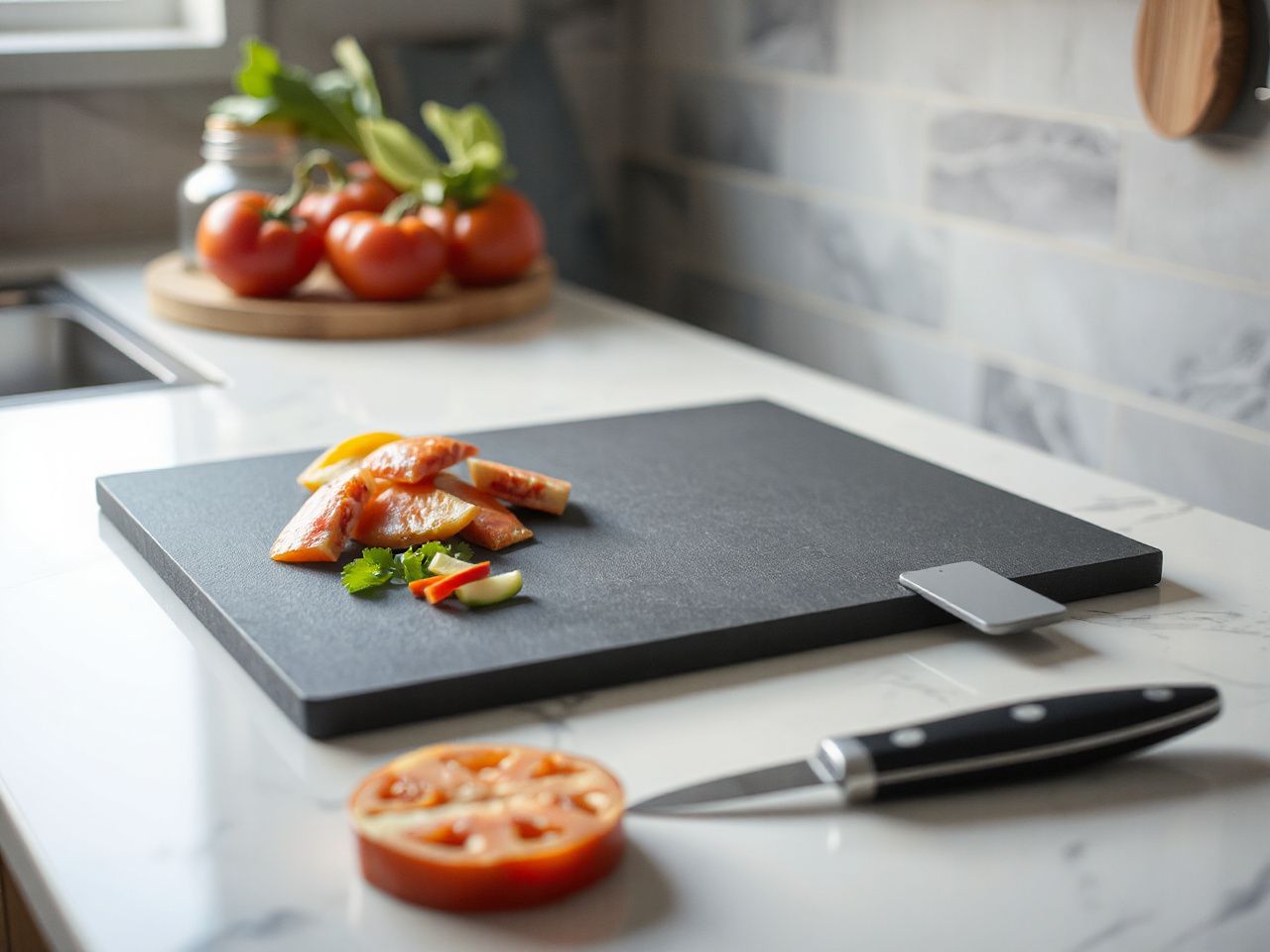
A board that looks nearly maintenance-free can still warp, scorch, crack, or develop hard-to-clean grooves if its material and care instructions are misunderstood. The key distinction is that an Epicurean board behaves like a dense, resin-bound paper composite: it is more moisture- and dishwasher-tolerant than many wood boards, but it is not immune to heat distortion, deep gouging, or surface wear. A useful guide should separate manufacturer-specific care claims from general food-safety practice, especially because dishwasher labeling, thickness, and board construction can vary across Epicurean models.
That distinction matters more than the familiar question of whether a board is simply wood or plastic. An Epicurean cutting board is made from layers of wood-fiber paper consolidated with a thermosetting resin. The result is a hard, thin-sheet composite that behaves differently from solid wood, bamboo, and high-density polyethylene plastic. I judge tools by the work they remove from a kitchen, and this material makes sense for cooks who want one board that can cover prep and serving without demanding the full routine of a traditional butcher block.
Key Takeaways
- Epicurean boards are paper composites, not solid wood or ordinary paper, so heat and deep cuts remain important concerns.
- Follow the exact model’s dishwasher instructions, wash promptly after raw foods, and use only permitted conditioning products.
- Knife marks are normal wear; cracks, delamination, burns, deep fissures, and severe warping are replacement concerns.
In this guide
- What an Epicurean Cutting Board Actually Is
- Choosing Size and Thickness for Real Kitchen Work
- Knives, Marks, and Surface Wear
- Dishwasher Use, Heat, and Daily Cleaning
- Stains, Odors, Mineral Oil, and Conditioning
- Useful Life, Replacement, and Ongoing Cost
- Practical Care Routine by Skill Level
- Frequently Asked Questions
What an Epicurean Cutting Board Actually Is
Wood-fiber paper bound with thermosetting resin
The phrase paper composite can sound flimsy, but it describes the reinforcement layer rather than a disposable sheet. Wood-fiber paper is arranged in layers and consolidated with resin under heat and pressure. The thermosetting resin cures into a fixed matrix, so the finished board is a dense composite rather than a stack of loose paper.
Epicurean boards should not be described as solid wood, laminated hardwood, or ordinary paper. The wood content is processed into fiber paper before the resin binds the layers. That construction explains why the surface can be relatively thin and firm while resisting the routine moisture exposure that causes trouble for many untreated wood boards.
Richlite is a useful point of comparison because it is also known for dense paper-composite construction, but a material family does not make every board identical. Thickness, edge treatment, surface finish, and care labeling still belong to the specific model. The listing is the authority for those details.
An Epicurean cutting board is a wood-fiber paper composite consolidated with thermosetting resin, not a solid wood slab. That sentence should guide every care decision that follows.
How the composite differs from wood and plastic
Solid wood has a fibrous structure that can be sanded, resurfaced, and conditioned. End-grain wood presents more end fibers to the knife and is often chosen for a thick work surface, while edge-grain boards arrange the grain differently. The comparison is useful, but an Epicurean board is not a thin version of either construction.
Bamboo is also a plant-based cutting-board material, yet bamboo boards are made from bonded bamboo strips rather than wood-fiber paper. High-density polyethylene plastic is a separate class again: it is a molded polymer, not a resin-bound paper composite. A plastic board may be easier to replace when heavily scarred, while a wood board may offer more scope for sanding. The composite occupies its own middle ground.
That middle ground is why I prefer a careful specification check to a broad claim that one material is hygienic or durable by nature. A board’s surface condition, cleaning routine, heat exposure, and intended tasks matter alongside the material name.
Why the material suits everyday prep
A dense composite can support chopping, slicing, and serving without the wet, absorbent feel associated with some wood boards. Its low-maintenance appeal is real in principle, but low maintenance does not mean no maintenance. Knives still create marks, food still leaves residue, and heat can still damage a resin-bound surface.
The board’s usefulness rises when it replaces several single-task items. It can serve as a prep surface, a landing place for sliced food, and a presentation board if the surface is clean and free from deep damage. I would rather have one properly cared-for board doing several jobs than a crowded drawer of specialty surfaces that are rarely washed correctly.
For a different material comparison, the discussion in End Grain vs Edge Grain: Our Top Cutting Board Picks explains why wood grain direction matters, while an Epicurean board follows composite construction instead.
Choosing Size and Thickness for Real Kitchen Work
Match the surface to the task
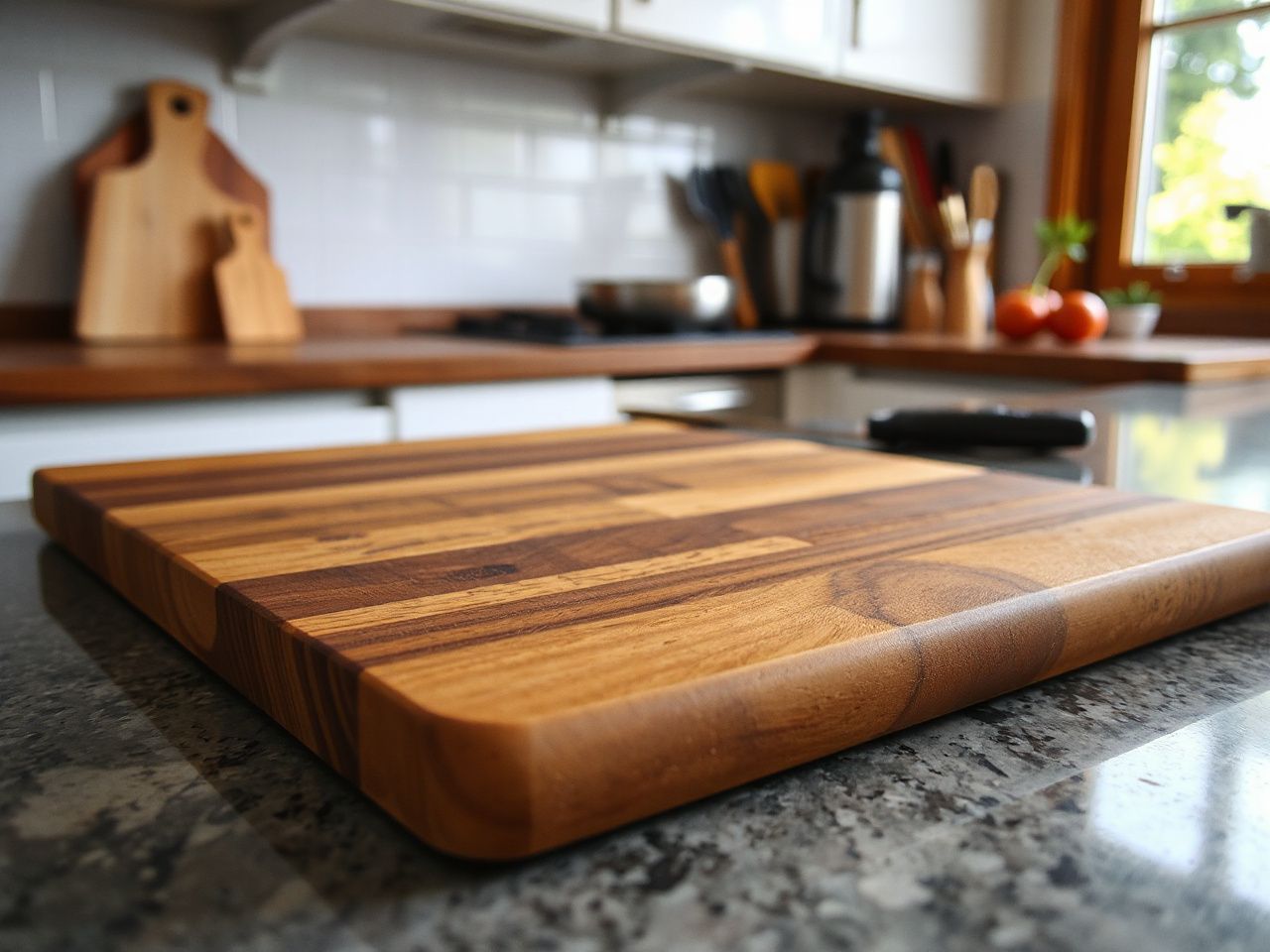
The right size is the one that leaves enough room for the food, the knife, and the hand guiding the ingredients. A small board can work for a lemon, a clove of garlic, or a quick garnish. It becomes frustrating when diced food has nowhere to collect and begins sliding toward the counter.
A larger surface makes sense for whole vegetables, herbs, sandwiches, and general meal preparation. It also reduces the need to reposition ingredients mid-task. The manufacturer does not provide one universal size or thickness for every Epicurean model, so the exact listing should decide whether a particular board fits the available counter and storage space.
A cutting board should leave clear working space around the food so chopped ingredients do not collect at the knife edge. That is a practical sizing rule, not a sales claim.
Thickness affects handling and stability
Thickness changes more than appearance. A thinner board is easier to lift, store, and use as a serving surface. A thicker board generally gives the work surface more mass and can feel more planted, but it also takes more room in a cabinet and may be less convenient to carry to the sink.
Do not assume the thickest model is automatically the better tool. If the board will move from counter to table, weight and grip matter. If it will remain in one prep area for repeated chopping, stability becomes more important. The available specification should state the board’s thickness; if it does not, the omission is worth treating as a gap rather than filling it with an estimate.
Feet, edges, and the serving question
Verified product information states that some Epicurean boards use grippy feet positioned on both sides to help keep the board steady. Feet on both sides can also allow the board to be turned over, but the usable surface and care directions still need checking for the exact model.
Raised feet are helpful for stability, though they can make a board less comfortable to slide into a sink or use as a serving platter. A flat board is easier to move across a counter and may give more flexibility for presentation. Neither approach is universally right. The useful question is whether the board’s design matches the jobs it must perform.
Knives, Marks, and Surface Wear
How the composite affects a knife edge
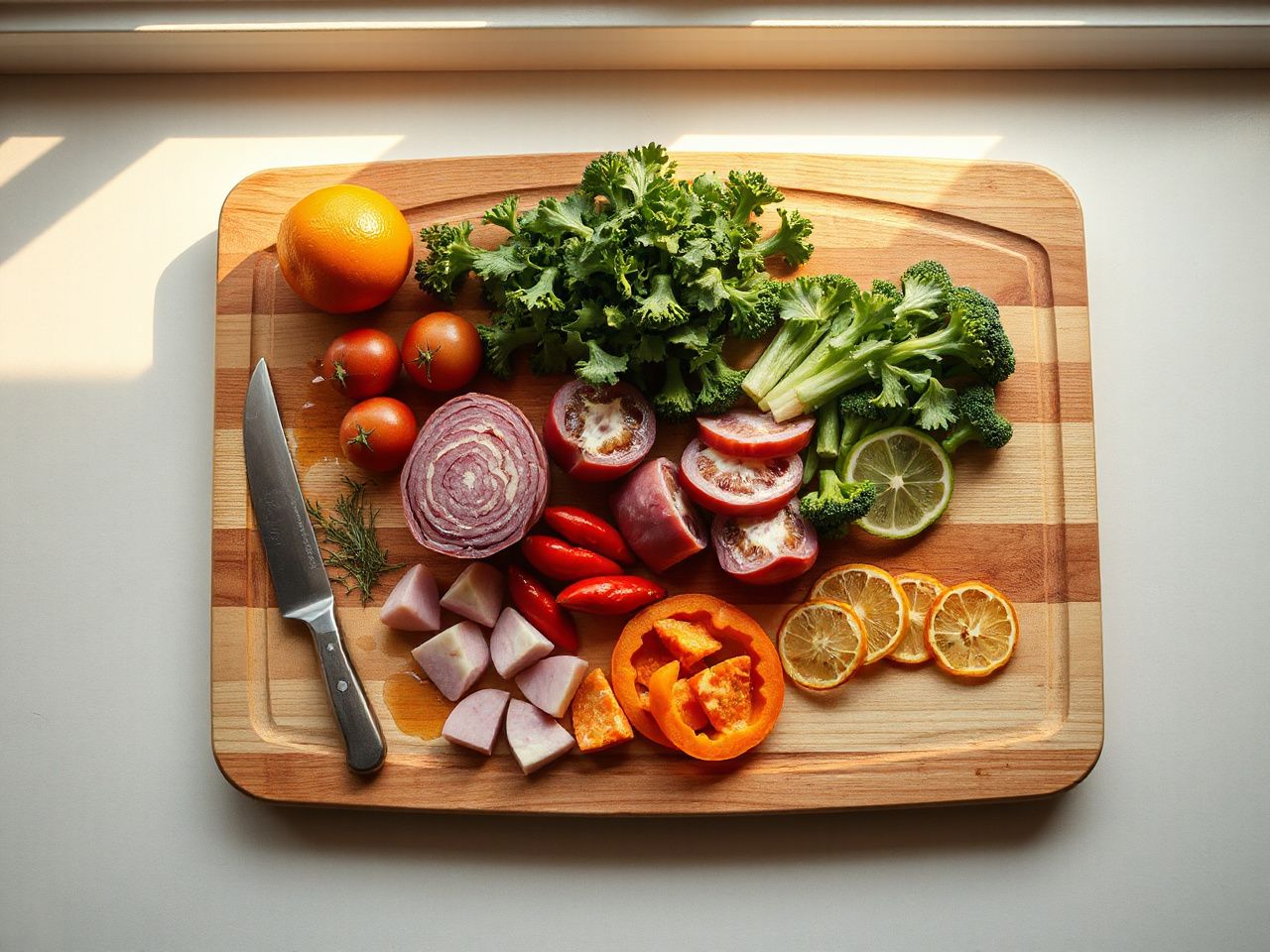
No cutting board is neutral to a knife. Every stroke places pressure on the edge, and a hard surface can make poor technique more costly. An Epicurean composite is firm, so it should be treated as a cutting surface rather than a chopping block for cleavers, bones, or other tasks the model’s instructions do not support.
Wood, plastic, and paper composite all leave different wear patterns. End-grain wood is often selected for demanding chopping because its construction presents a more forgiving working surface. Flexible plastic can be gentle to store and replace, but deep grooves can eventually become difficult to clean. The relevant comparison is not which material never marks; none does. The useful comparison is how the surface fits the knife work and maintenance routine.
Knife marks on an Epicurean board are normal use effects, but deep grooves can create a cleaning problem that knife technique alone cannot solve. Keep the blade moving through food rather than scraping with the edge, and use the knife’s broad side or a bench scraper for transferring chopped ingredients.
Knife maintenance still matters
A properly maintained knife needs less force, and less force usually means less aggressive contact with the board. That does not turn the board into a knife sharpener or prevent wear. It simply avoids using a dull edge as a wedge.
Use an appropriate sharpening method for the knife steel and maintain the edge according to the maker’s guidance. Do not use a cutting board as a substitute for a sharpening stone, honing tool, or professional service. The board’s surface and the knife’s edge are separate pieces of equipment with separate maintenance needs.
When marks are no longer cosmetic
Light scoring, stains, and ordinary edge wear are expected over time. A mark becomes more serious when food residue remains lodged after normal washing, when a groove has become a deep fissure, or when the surface has started separating into layers.
Burns, cracks, delamination, severe warping, and deep fissures are not problems to solve with a stronger detergent. Replacement is the sensible response when damage prevents thorough cleaning or leaves an unstable cutting surface. Resurfacing may be possible for some wood boards, but the listing does not establish that every Epicurean model can be sanded or refinished. Do not abrade a composite board unless the manufacturer specifically permits it.
Dishwasher Use, Heat, and Daily Cleaning
Dishwasher labeling is model-specific
Verified information states that Epicurean cutting boards can be cleaned in a dishwasher, but that statement should not be expanded into a universal promise for every thickness and construction. Read the care instructions for the exact board. A dishwasher-safe label describes intended use under specified conditions; it does not make the board immune to repeated heat, uneven drying, or abrupt temperature changes.
Repeated high heat can contribute to warping or deterioration even when a board is labeled dishwasher safe. A board crowded against a hot element, wedged where water cannot drain, or moved directly between extreme temperatures faces more stress than the label alone communicates. Keep the board away from direct burner heat, oven heat, and hot cookware.
A dishwasher-safe Epicurean board can still suffer damage from unsuitable heat exposure, uneven drying, or sudden temperature changes. That is why the model’s instructions come before general material advice.
Hand washing and dishwasher practice
For routine hand washing, remove food scraps promptly, wash the surface with dish detergent and water, rinse away residue, and allow the board to dry fully. Do not leave raw meat juices sitting on the surface while other preparation continues. A quick rinse is not the same as cleaning.
If the model’s instructions permit a dishwasher, position the board so water can reach the surface and the board is not pressed against a heating element. Let the cycle finish before handling the board, and inspect it periodically for new bowing, cracks, or changes at the edges. The listing does not provide a universal dishwasher program, so the board’s own care information controls.
Raw meat, seafood, produce, and ready-to-eat food
A composite surface does not eliminate cross-contamination. A board used for raw meat or seafood still requires prompt washing and sanitizing before it returns to bread, fruit, salad ingredients, or cooked food. Separate boards are a practical way to reduce mistakes, especially in a busy kitchen.
Use a board dedicated to raw proteins when possible, or wash and sanitize the surface before changing tasks. The U.S. Food and Drug Administration sets food-contact requirements and publishes food-safety guidance; those requirements do not mean a material can replace cleaning.
Stains, Odors, Mineral Oil, and Conditioning
Removing food stains and smells
Stains are not automatically evidence of contamination. Pigmented foods can discolor a surface even after food residue has been removed, and normal knife marks can make a board look older without making it unsafe. Start with ordinary washing rather than aggressive abrasion or a chemical mixture.
For an odor, wash promptly, rinse thoroughly, and allow the board to dry completely. If the smell returns because residue remains in a deep groove, stronger scrubbing will not repair the underlying damage. A board that remains unpleasant after proper cleaning deserves closer inspection for fissures, delamination, or trapped food.
Do not pour boiling water over the board or place it beside a hot pan to dry. Heat can stress resin-bound composite construction, and rapid temperature changes can contribute to distortion. The manufacturer does not provide a universal temperature limit in the available information, so no exact heat threshold should be invented.
Does an Epicurean board need mineral oil?
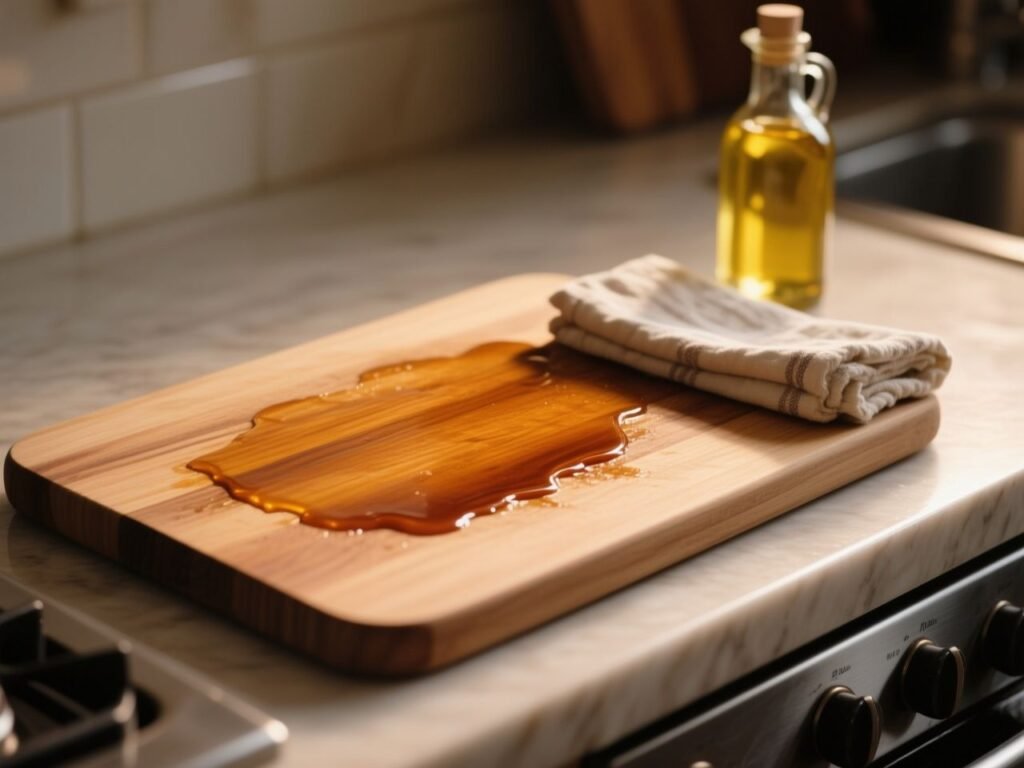
Many Epicurean boards are marketed as low-maintenance, and a paper composite does not require the same routine oiling used for unfinished wood. Food-grade mineral oil may be used for appearance or conditioning when the manufacturer permits it, but the exact care instructions should decide whether oil is appropriate for the model.
Vegetable oils are a poor substitute because oils that oxidize can become rancid and leave an unpleasant film. Never assume that an oil labeled kitchen-friendly belongs on every cutting surface. If the model permits food-grade mineral oil, apply it as directed and wipe away excess rather than leaving a wet coating.
For a focused explanation of why the product matters, see what to know before oiling a cutting board with mineral oil. That advice is mainly aimed at wood, so the Epicurean model’s own instructions remain the deciding source.
What not to do
- Do not use vegetable oil as a routine conditioner.
- Do not scorch the board by placing a hot pan, baking tray, or skillet on it.
- Do not sand the surface unless the manufacturer specifically authorizes resurfacing.
- Do not leave raw-food residue on the board while preparing ready-to-eat food.
- Do not mistake a cosmetic stain for a reason to use harsher chemicals than the care directions allow.
Useful Life, Replacement, and Ongoing Cost
Signs the board should be replaced
Replacement becomes reasonable when cleaning no longer removes residue, the board rocks because of severe warping, or the surface has deep fissures. Cracks and delamination can allow food and moisture into areas that ordinary washing cannot reach. A burn is also a compatibility warning: the board was exposed to heat beyond the job of a cutting surface.
Light marks do not automatically justify replacement. A stained but intact surface may still be serviceable if it cleans properly and remains stable. The decision should rest on cleanability, structural condition, and safe separation of raw and ready-to-eat tasks.
An Epicurean board should be replaced when cracks, delamination, deep fissures, severe warping, or persistent hard-to-clean grooves compromise the surface. Cleaning cannot restore missing material or rejoin separated layers.
Resurfacing versus replacement
Some wooden cutting boards can be resurfaced, which is one reason end-grain and edge-grain boards remain attractive for cooks who accept more upkeep. The available Epicurean information does not establish a universal resurfacing process. Sanding may change the surface finish, remove printed markings, or expose construction layers, so it should not be treated as a default repair.
The ongoing cost is therefore tied to the exact model’s purchase price, care requirements, and eventual replacement rather than to a guaranteed refinish cycle. The listing does not provide enough information to calculate a lifespan or resurfacing expense. That missing information should be acknowledged, not replaced with a made-up ownership estimate.
How it compares over useful life
End-grain wood can offer a substantial work surface and may be repairable, but it demands more attention to moisture and conditioning. Bamboo can be a firm plant-based option, though its bonded construction differs from paper composite. High-density polyethylene plastic is simple to segregate for raw food and easy to replace, yet its grooves and surface wear still require judgment.
An Epicurean board earns its place when its combination of prep use, serving use, and simpler care suits the kitchen. It is less convincing for a cook who wants a thick chopping block, regularly handles bones, or expects any board to remain pristine. For material context, the guide to how bamboo and wood cutting boards differ in daily use covers a separate construction choice.
Practical Care Routine by Skill Level
Beginner: establish a clean workflow
- Place the board on a stable, clear surface before cutting.
- Use it for one food category at a time instead of alternating raw protein and ready-to-eat ingredients.
- Remove scraps promptly and wash the board after each task.
- Dry the board fully before storing it.
- Check the model’s care label before using a dishwasher, oil, or any abrasive cleaner.
This routine does more for safe use than buying a second gadget. It also makes wear easier to monitor because food residue is less likely to hide developing damage.
Intermediate: assign tasks and protect the edge
Assign separate boards to raw proteins and ready-to-eat food when the kitchen allows it. Use a knife suited to the ingredient, avoid cutting bones on a surface intended for ordinary prep, and transfer food with a scraper rather than dragging the knife edge across the composite.
If a board has feet on both sides, check which face the care instructions identify as the working surface. If the model is dishwasher safe, use that feature within the stated instructions rather than assuming every cycle is harmless.
Advanced: audit the material and the kitchen layout
Advanced care is mostly about preventing avoidable abuse. Keep the board away from hot cookware, store it where air can circulate, and inspect the edges and surface whenever cleaning reveals new marks. Replace it when the surface becomes difficult to sanitize rather than trying to extend its use with an unauthorized repair.
For cooks choosing among several material families, compare the board’s actual tasks with the maintenance they will receive. A paper composite that is used, washed, and stored properly is a more sensible tool than a premium wood board that stays in a cabinet because its care feels burdensome.
Frequently Asked Questions
What is an Epicurean cutting board made of?
An Epicurean cutting board is made from layers of wood-fiber paper consolidated with a thermosetting resin. It is a dense paper composite, not solid wood, laminated hardwood, or ordinary paper. Richlite is a useful material comparison, but exact thickness, finish, and care instructions vary by model. Read the product listing for those details instead of treating every Epicurean board as identical.
Can an Epicurean cutting board go in the dishwasher?
Verified information states that Epicurean cutting boards can be cleaned in a dishwasher, but dishwasher suitability should be checked against the exact model’s care instructions. Repeated high heat, uneven drying, contact with a heating element, and sudden temperature changes can contribute to warping or deterioration. Dishwasher safety does not remove the need for sanitation after raw meat or seafood.
Does an Epicurean board need food-grade mineral oil?
Not every paper-composite board requires routine oiling. Food-grade mineral oil may be used for appearance or conditioning when the manufacturer permits it, but the model’s instructions control. Vegetable oils should not be substituted because oils that oxidize can become rancid. Low-maintenance construction means less routine conditioning than unfinished wood, not permission to ignore cleaning or heat limits.
Is an Epicurean board hygienic for raw meat and seafood?
The material does not eliminate cross-contamination risk. Wash and sanitize the board promptly after raw meat or seafood, and use a separate board for ready-to-eat food when possible. A visibly gouged surface can trap residue and may need replacement.
When should an Epicurean cutting board be replaced?
Replace the board when cracks, delamination, deep fissures, severe warping, burns, or persistent hard-to-clean grooves affect the surface. Light stains, knife marks, and ordinary edge wear are normal use effects if the board remains stable and cleans properly. The available information does not establish a universal resurfacing method, so do not sand or refinish a composite board unless the manufacturer specifically allows it.