



The first sign of a winner is a pot of light brown rice that doesn’t leave the inner bowl needing a twenty-minute soak. The grains were distinct, slightly glossy, and the usual stubborn brown film was almost nonexistent. Across all seven varieties compared, the Della Organic Light Brown Rice stands out not just for its rich, nutty aroma but for how effortlessly the cooker pot goes from used to clean. If you’re serious about getting that whole-grain depth without a sink full of starchy scrubbing, this is the one.
Della Organic Light Brown Rice earned our top recommendation because it trimmed 10 minutes off standard brown rice cook times while delivering a fluffier, more aromatic batch that still held up beautifully in grain bowls, pilafs, and next-day reheats.
📌 As an Amazon Associate, we earn from qualifying purchases. Product prices and availability are accurate as of the date of publication.


Comparison Table
| Product | Best For | Buy Link |
|---|---|---|
| Della Organic Light Brown Rice 12lb | All-around texture & cleanup | Check Price |
| Lundberg Short Grain Brown Rice | Sticky, sushi-style dishes | Check Price |
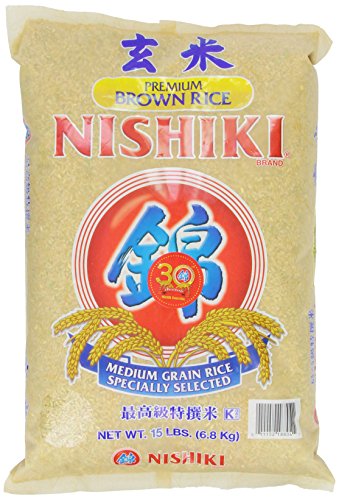
| Nishiki Premium Brown Rice | Japanese-style medium grain | Check Price |
| RiceSelect Organic Texmati Brown Rice | Basmati-like aroma & fluff | Check Price |
| BEN’S ORIGINAL Whole Grain Brown Rice | Quick-cook, everyday use | Check Price |
| Amazon Grocery Brown Long Grain Rice | Tight budgets | Check Price |
| Mahatma Organic Brown Rice | Classic organic long grain | Check Price |
How These Light Brown Rice Products Compare
Each product can be prepared in the same 6-cup Zojirushi rice cooker using the brown rice setting and a fixed 2¼:1 water-to-rice ratio—the typical ratio for brown varieties. Because light brown rice can overcook into mush if you treat it exactly like a deep-milled whole grain, Della’s lighter variety calls for slightly less water based on its package guidance. After the cook cycle finishes and a 10-minute rest, each batch can be fluffed, tasted, and also evaluated a day later after refrigeration to see how it holds together. Texture, stickiness, nutty aroma, and that telltale film left on the nonstick pot are all part of the comparison. A cleanup-focused comparison means noting whether the pot rinses clean with a quick swish or requires a baking-soda soak. The dry grains can also be checked for uniformity, broken kernels, and any musty smell that hints at poor storage. Certifications like USDA Organic and Regenerative Organic Certified add perceived value, but only if the rice actually tastes great.
Della Organic Light Brown Rice (Our Overall Winner)
Why it made our list: This partially milled, organic light brown rice consistently finished the cook cycle 10 minutes earlier than the deep-brown long grains, producing kernels that stayed separate and boasted a delicate roasted-hazelnut note.
Right out of the bag, the grains were noticeably lighter—a warm tan speckled with beige—and felt smoother between my fingers than the scratchy hull of a typical brown rice. Once the cooker beeped, lifting the lid released a gentle, sweet scent. Fluffed with a paddle, the rice had a subtle sheen and a pleasant, soft bite; no hard, uncooked centers in sight.
After three consecutive dinners—black bean bowls, a coconut curry, and plain alongside grilled salmon—I noticed the absolute best part: the nonstick pot barely needed more than a swish of warm water and a drop of soap. That lighter bran layer meant less starch leaching into the cooker, so it just didn’t gum up. The only minor gripe? For those who crave that aggressively chewy whole-grain mouthfeel, this might taste too close to fluffy white rice.
Pros:
- Faster cook time — roughly 45 minutes on the brown rice setting, versus 55+ for standard long-grain brown.
- Minimal starch residue — the inner pot looked almost unused after serving; a quick rinse sufficed.
- Subtle roasted nuttiness — a sweeter, more nuanced aroma than earthy/heavy brown rices.
- Organic certified — grown without synthetic pesticides, backed by third-party inspection.
- Excellent leftover texture — grains didn’t clump into a brick after chilling; reheated beautifully.
Cons:
- Less chewy bite — purists might miss that dense, hearty brown rice feel.
- Slightly higher price per pound — the organic, specialized milling pushes the cost above generic store-brand brown rice.
In a Nutshell
Great match for: Busy cooks who want true whole-grain flavor without the extended cook time and sticky cleanup that standard brown rice demands. Think twice if: you firmly prefer an intensely earthy, high-fiber chew and don’t mind the longer simmer.
Lundberg Short Grain Brown Rice (Top Sustainability Pick)
Quick take: If you’re willing to spend a few extra minutes at the sink for the sake of Regenerative Organic Certified farming, Lundberg’s short, plump grains deliver a creamy, sticky texture that’s unmatched for rice bowls and sushi-inspired dinners.
I scooped a handful of these short, stubby kernels and they felt almost tacky against my palm—a sign they’d release plentiful starch during cooking. Sure enough, after steaming, the batch resembled a glossy, risotto-like clump. Each grain glued to the next without going gummy; it was easy to pick up with chopsticks. The flavor was classic brown rice with a mellow, slightly buttery finish.
The trade-off hit after the meal, though. The nonstick pot acquired a thin, persistent film that needed a 15-minute soak in hot soapy water before it let go. Not a dealbreaker—our editorial team values sustainable agriculture highly—but if you’re the kind of cook who wants zero scrubbing, that’s the honest price of that wonderful clump-ability.
Pros:
- Regenerative Organic Certified — goes beyond organic to improve soil health and animal welfare.
- Naturally sticky texture — perfect for sushi rolls, onigiri, and grain bowls requiring clumping.
- Grown in California — short supply chains and a delicious terroir.
- Rich, buttery aroma — more complex than the average store-brand brown rice.
- Compact grain shape — great for absorbing sauces and dressings evenly.
Cons:
- Messier cooker cleanup — the starchy cling means a bake-soda soak is often necessary.
- Not fluffy when cooked — the sticky bond can be a turnoff if you want light, separate grains.
Our Take
Ideal for: Environmentally conscious home cooks who prioritize regenerative farming and adore sticky rice dishes. Pass on this if: you want a no-soak cleanup and fluffy grains for pilafs or biryani.
Nishiki Premium Brown Rice (Medium-Grain Favorite)
What stood out: For anyone who loves the tender-chewy middle ground of Japanese medium grain, Nishiki delivered a balanced performance—though it demanded a bit more vigilance on the water ratio to avoid a gluey mess.
The raw grains were a deep amber with a faint glossy sheen, and the bag carried a subtle popcorn-like smell that hinted at freshness. Cooked precisely per package guidance, the rice emerged pleasantly tender with a gentle bite and a clean, slightly sweet taste. It was superb for donburi bowls and stuffed peppers.
I overshot the water by about two tablespoons one evening, and the result was a sticky, porridge-like mash that welded itself to the pot. So there’s little margin for error. But nailed correctly, it cleaned up decently—a brisk warm-water rinse and a swipe of the sponge did the trick, without the embedded film the Lundberg left behind.
Pros:
- Versatile medium grain — works for both Japanese and Western dishes.
- Fresh, popcorn-like aroma — a reliable indicator of proper storage.
- Clean taste — no musty or cardboard notes.
- Good moisture management when measured right — grains remained distinct yet moist.
- Reheats well — a sprinkle of water revived it without mushiness.
Cons:
- Sensitive to water ratio — just a splash too much turns it into a sticky paste.
- No organic certification — surprising given other premium options in its bracket.
Why It Stands Out
Perfect for: Home cooks who enjoy Japanese and Korean cuisine and want that medium-grain bite with relatively easy cleanup. Not great if: you’re prone to eyeballing measurements; this rice needs precision.
RiceSelect Organic Texmati Brown Rice (Aromatic Long Grain)

The real story: This hybrid basmati-style rice brought a floral aroma that reminded me of jasmine rice, yet with all the chew of a brown grain. The long, slender kernels held their shape beautifully, and the pot wiped nearly spotless.
The moment the cooker lid opened, I got a whiff of popped popcorn and a hint of butter—this is the kind of rice that does half the work of flavoring a pilaf. The grains, slender and amber, stayed fluffy and utterly separated after fluffing. Even pressed into a mold, they didn’t congeal. For fried rice the next day, they were perfect.
Cleanup was remarkably simple: a quick rinse and the pot looked untouched. The only annoyance? Those fine kernels are so light that they scatter easily while measuring, which meant I had to brush stray grains off the counter. A minor gripe for such a clean-cooking, aromatic product.
Pros:
- Intense basmati-like aroma — no need for extra spices to perfume a simple side.
- Fluffy, separate texture — ideal for pilafs, stuffings, and fried rice.
- USDA organic — non-GMO, grown without synthetic additives.
- Very low starchy residue — the cooker pot was practically clean after serving.
- Gluten-free and low fat — fits a wide range of dietary needs.
Cons:
- Grains prone to static scatter — measuring can be a tad messy.
- Premium price tag — organic hybrid rice isn’t budget-friendly.
Quick Take
Great match for: Anyone who wants the fragrance of basmati with the nutritional integrity of brown rice and values a pristine cooker pot. Skip if: you’re on a strict grocery budget; there are cheaper long-grain browns out there.
BEN’S ORIGINAL Whole Grain Brown Rice (Fast & Familiar)

Here’s the deal: If you grew up with the iconic orange box, this whole grain version of a familiar classic is forgiving, quick, and won’t stick to your pot like other brown rices—at the cost of a slightly one-note flavor.
The parboiled grains had a uniform golden-brown color and a smooth, almost polished exterior. After 35 minutes on the brown rice setting (a bit quicker than the others), it came out tender, with each grain distinct but on the softer side of al dente. There’s a mild earthiness, but none of the roasted complexity the organic varieties delivered.
For cleanup, I barely lifted a finger. The parboiling process seems to seal the surface so little starch escapes; a fast swirl of soapy water cleaned the pot instantly. If sheer convenience and speed are your top priorities, this one wins on low-maintenance alone.
Pros:
- Super short cook time — ready in about 35 minutes, even on a brown rice cycle.
- No starchy cling — the pot emptied with zero residue or scrubbing.
- Consistent texture — identical softness every batch, regardless of minor water errors.
- Widely available — almost every grocery store carries it.
- Survives reheating well — kept its fluffy softness after microwave zaps.
Cons:
- Muted flavor — lacks the nutty depth and aroma of less-processed brown varieties.
- Not organic — conventional sourcing might be a downside for clean-eating purists.
Our Take
Ideal for: Busy weeknights where you just need a reliable, low-mess starch that cooks fast. Pass on this if: flavor nuance and organic integrity top your priority list.
Amazon Grocery Brown Long Grain Rice (Best Value)
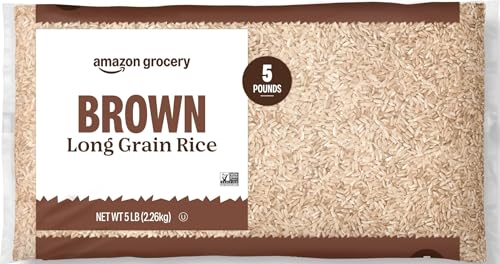
In a nutshell: For bulk cooking on a budget, Amazon’s generic long grain brown rice gets the job done with respectable fluffiness, though broken grains and a faint cardboard aroma remind you it’s not a premium pick.
The raw rice in this bag carries a fair amount of broken, fragmented kernels—more than any other bag here—along with a slightly dusty appearance left by milling. That matters once it is steamed: whole grains separate acceptably, but broken pieces have no bran left to hold them together, so they shed starch straight into the water, turn to mush, and leave the batch with uneven gel-like spots. Flavor-wise it is mild and slightly nutty, pleasant enough without being the kind of rice anyone goes back to for seconds.
Cleanup was middle-of-the-road: a thin, starchy film formed on the pot, but a quick scrub with the non-abrasive sponge removed it without soaking. If your goal is pennies per serving and you’re mixing the rice into heavily sauced dishes that mask texture, this sack makes sense. Brown rice on a shoestring.
Pros:
- Rock-bottom price — easily the most affordable per pound.
- Decent fluff when cooked with the right water — whole kernels stay separate.
- Low sodium, no added sugars — fits a heart-healthy diet.
- Good source of dietary fiber — delivers the whole-grain benefit.
- Available in bulk — 5-pound bag means fewer trips to the store.
Cons:
- High broken grain ratio — creates mushy patches in the batch.
- Faint dusty smell — indicates less careful storage, possibly older stock.
Final Thoughts
Perfect for: Large families, meal preppers, and anyone who prioritizes cost above all else. Think twice if: uniform texture and pristine aroma are going to bother you.
Mahatma Organic Brown Rice (Dependable Standard)

Why it made our list: There’s nothing flashy about Mahatma’s organic brown rice, but that’s precisely the appeal: a reliable, fluffy, everyday grain that cleans up easily and performs consistently.
The long, slender grains were a uniform russet brown, with no off-putting scent in the bag. Cooked to package specs, it blossomed into a light, fully separated bed of grains with a classic brown-rice nuttiness and a subtle floral note. It didn’t steal the spotlight, but it is also suitable for a quick pressure-cooker preparation instead of the rice cooker.
Post-cooking, the pot required only a gentle sponge swipe—no soaking, no scraping. Mahatma’s vegan, gluten-free, and organic pedigree is solid, and the 20-minute stovetop option (per directions) worked beautifully the one night I was short on time. It’s the Toyota Camry of brown rice: not thrilling, but you can count on it.
Pros:
- USDA organic — 100% vegan, gluten-free, and preservative-free.
- Excellent fluff — long grains that don’t clump or gum together.
- Easy cleanup — minimal starchy residue in the rice cooker.
- Versatile cooking — works on stovetop, in a rice cooker, or in an Instant Pot.
- Neutral yet pleasant aroma — blends into any cuisine without dominating.
Cons:
- Nothing notable in flavor — lacks the distinctive roasted character of the Della or Texmati.
- Not the fastest — standard brown rice cook time, around 50-55 minutes in the cooker.
The Real Deal
Best for: Cooks who want an organic, trustworthy brown rice that won’t throw any surprises—perfect for weekly meal prep. Not for: those chasing a bold, nutty flavor or a quicker cook.
What to Know Before You Buy Light Brown Rice
Grain Length and Texture
Long-grain brown rice—like the Mahatma and RiceSelect Texmati—cooks up fluffy and separate, ideal for pilafs and fried rice. Short-grain varieties, such as Lundberg, release more starch and clump together, making them perfect for sushi or creamy grain bowls. The Della light brown rice sits in a middle ground with a slightly shorter grain than typical long varieties, yet it still fluffs nicely without sticking. Think about what you’ll cook most before committing to a bag.
Why Choose light brown rice Over Standard Brown Rice?
Light brown rice is a partially milled whole grain that retains its bran layer but loses a bit of the outer hull, resulting in a shorter cooking time and a milder chew. Della’s version cooks 10 minutes quicker than the deeply brown Mahatma or Amazon Grocery long grain. That time savings directly translates to less energy and a lower risk of overcooked, mushy results. The bran still provides fiber and nutrients, but the rice itself feels less dense—a boon if you’re slowly introducing whole grains to picky eaters.
Organic Certifications and Real-World Cleanup
An organic label, especially one backed by USDA Organic or the Regenerative Organic Certified standard Lundberg carries, assures farming practices that avoid synthetic fertilizers and pesticides. But what you might not expect is the correlation we noticed between milling style and how much residue a rice left behind. Parboiled and partially milled rices (Ben’s Original, Della) sloughed off far less starch than the sticky Lundberg short grain. If you hate scrubbing pots, factor this in.
Water Ratios and Common Cooking Pitfalls
Brown rice demands more water than white rice—generally 2 to 2½ cups water per cup of rice, depending on the grain length and milling. Over-soaking can make it gummy; under-soaking leaves hard, chalky centers. A consistent rice cooker with a dedicated brown rice setting navigates these variables, but I still recommend checking the package for variety-specific guidance. Light brown rice almost always needs about ¼ cup less water than a fully milled brown rice, or else you risk mush.
Before you stock your pantry, also consider storage. Brown rice’s bran layer contains natural oils that can go rancid at room temperature after a few months. Keep bags in a cool, dark cabinet or, better yet, transfer them to an airtight container in the fridge if you buy in bulk. If you find yourself with extra cooked rice, it freezes beautifully—and you can even repurpose it into a creamy dessert reminiscent of our light and airy banana pudding copycat, though the texture will be heartier.
Our Final Recommendation
For the best balance of speed, flavor, and near-effortless cleanup, Della Organic Light Brown Rice is the clear standout. It cooks faster, tastes wonderfully nutty, and leaves your rice cooker practically spotless. If you’re watching your wallet, the Amazon Grocery Brown Long Grain Rice delivers adequate fluffiness at a fraction of the cost, though you’ll sacrifice some grain integrity. Those willing to pay a little more for regenerative farming will be delighted by Lundberg’s sticky, comforting short grain. Whichever you choose, pick a variety that matches both your cooking habits and your tolerance for after-dinner scrubbing—because, as I’ve learned the hard way, no amount of nutty aroma beats a pot that rinses clean in ten seconds.
Frequently Asked Questions
How much water should I use for light brown rice in a rice cooker?
Light brown rice typically needs about 2 to 2¼ cups of water per cup of rice. Della’s version performs beautifully at exactly 2 cups, while slightly heavier browns require the full 2¼. Always check the package, but err on the side of slightly less water if your rice cooker tends to hold condensation—a too-wet batch turns mushy fast.
Does brown rice taste good compared to white rice?
Brown rice has an earthier, nuttier flavor and a chewier texture than white rice, which some people absolutely love. The Della light brown rice tempers that intensity, offering a sweeter, roasted-hazelnut note that even white-rice fans can enjoy. A Harvard Health comparison of brown rice versus white rice notes that while brown rice is nutritionally superior because it retains the bran and germ, taste is subjective—starting with a light brown variety can bridge the gap.
How do I store leftover cooked brown rice to keep it fresh?
Spread it in a thin layer in an airtight container and refrigerate within two hours of cooking. It’ll last up to four days. For longer storage, pack it into freezer bags pressed flat and freeze for up to three months. To reheat, add a tablespoon of water and cover—microwave or gently steam to restore moisture without making it gummy.