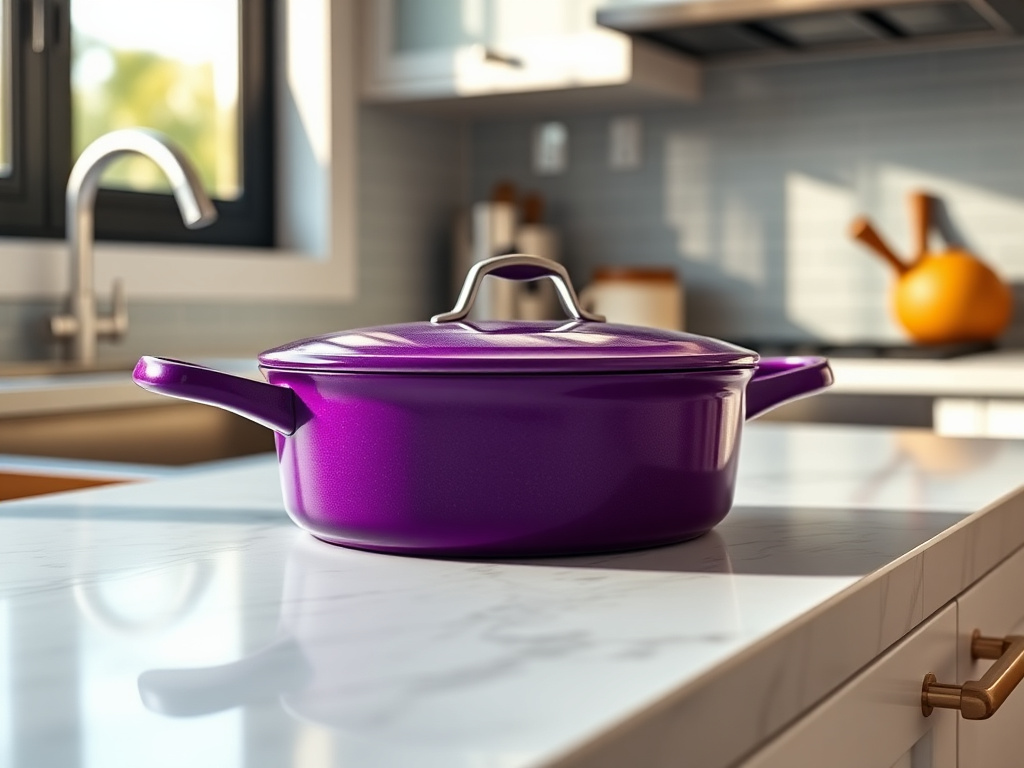
Most home bakers treat color as mere decoration—a fun twist on a classic tool. But I’ve found that a purple cast iron pot demands just as much attention to thermal behavior as its black or red siblings. Most kitchen mistakes come from rushing, and an enamel-coated pot punishes a rushed start more than bare iron does. The extra 30 seconds to check your setup saves hours of cleanup or regret. That pause is especially critical when you preheat an enamel-coated cocotte, because the vibrant exterior can hide subtle signs of overheating that a bare metal surface would telegraph instantly. The purple glaze isn’t just a style statement; it’s a performance layer that bakers need to understand from the inside out.
A frequent point of confusion is whether the enamel itself changes heat retention. Raw cast iron develops a natural patina that can look uneven, but a violet porcelain coating creates a glass-smooth barrier that demands a different kind of respect. When I started baking artisan loaves at 450°F and noticed the lid’s interior developing micro-cracks, I realized the “bombproof” reputation of cast iron doesn’t automatically transfer to its colorful cousin. This article unpacks exactly how to bake with, maintain, and actually listen to a purple cast iron pot so that you never see that beautiful hue degrade before its time.
Key Takeaways
- A purple cast iron pot’s enamel coating conducts and radiates heat differently than raw cast iron—preheating techniques must be adjusted to prevent thermal shock.
- Color itself doesn’t alter heat absorption in a meaningful way, but the gloss level of the finish can impact how evenly infrared heat reflects inside your oven.
- Bakers achieve the best rise and crust when they use parchment paper slings, avoid rapid temperature swings, and never let the pot boil dry.
- Fading, staining, or craze lines on the purple exterior are early warning signals—they point to cleaning errors, overheating, or metal utensil damage.
In this guide
The Science Behind That Vibrant Purple Finish
How Enamel Bonds to Cast Iron
Enameled cast iron starts with a sand-cast core that’s covered in a porcelain powder made from finely ground glass, clay, and mineral pigments. The purple color comes from metallic oxides—usually manganese combined with traces of cobalt—fired at temperatures between 1,400°F and 1,650°F. During that firing, the powder melts and fuses into a non-porous, glasslike surface. It’s the same family of technology as ceramic-coated baking stones, but formed around a thick metal core that functions as a massive heat reservoir.
Because the bond between iron and enamel relies on matched thermal expansion, any mismatch in heating can cause the enamel to crackle or spall. The base iron must expand at nearly the same rate as the brittle coating. Quality manufacturers pre-heat the iron core before dipping it in the porcelain slurry, creating a lock-tight mechanical grip once everything contracts during cooling. This is why authenticity matters—cheaper pots often omit that step, leading to early failure around the rim where the stress concentrates.
Does Color Affect Heat Performance?
In a convection or standard radiant oven, the external color of a cast iron pot has a negligible impact on internal baking temperature. What matters far more is the emissivity of the surface—how efficiently it radiates absorbed heat. Glossy purple enamel has a slightly lower emissivity than matte black raw iron, meaning it re-radiates heat a touch more slowly. In practical terms, a loaf baked inside a glossy purple pot might see a 5–7°F smaller initial oven spring window than one baked in bare iron, but only if you skip the preheat compensation step. Once the walls are fully saturated, the difference vanishes.
Where color does play a subtle role is in heat absorption from stovetop burners. Darker colors absorb radiant energy faster, but since purple is a mid-tone, it doesn’t display the extreme lag of white or the aggressive pickup of jet black. For bakers who also use the pot to simmer fruit compotes or melt chocolate, that middle-of-the-road behavior is a blessing—you’re less likely to scorch sugar before the entire mass reaches temperature.
Why Even Temperature Matters for Bakers
Precision baking depends on uniform thermal mass. When a purple cast iron pot preheats correctly, the entire vessel acts like a brick oven—radiating heat from all sides. This eliminates cold spots that cause uneven browning, dense centers, or lopsided dome formation in high-hydration breads. The lid, which traps steam during the initial bake, relies on the same principle. If the lid’s enamel is thinner near the knob or has micro-cracks from rapid heating, steam escapes unevenly and your crust turns out leathery.
Over dozens of sourdough bakes, I’ve correlated crumb structure directly to preheating consistency. When I place a cold purple pot into a preheated 500°F oven, the iron core needs a full 30–40 minutes to reach equilibrium. Rushing that step by even 10 minutes leaves a 15°F differential between the bottom and the sidewalls, which translates into a pale bottom crust and an overextended ear. The rule is simple: patience equals predictability.
Baking with a Purple Cast Iron Pot: A Precision Approach
Preheating Without Crazing the Enamel
Never place an empty enameled pot into a screaming-hot oven straight from the cupboard. The thermal shock can create craze lines—hairline fractures in the glass layer that don’t immediately cause failure but invite rust and staining later. Start the pot in a cold oven and set the temperature together. This allows the iron and enamel to heat up as one unit, expanding at a rate the porcelain can handle.
If your recipe requires a preheated pot, like many no-knead bread methods, you can safely still use a cold-start approach. Just extend your baking time by roughly 5–8 minutes to account for the slightly longer climb to full baking temperature. The enamel won’t know the difference, and your loaves will still develop a shatteringly crispy crust.
The Perfect Sourdough Boule Protocol
For a 75% hydration sourdough, I follow a strict timeline with a purple cast iron pot. Shape your boule and place it in a banneton for a final cold proof overnight. In the morning, set the pot with its lid on the middle rack of a cold oven. Program the oven to 475°F and let it preheat completely—usually 35–40 minutes from the moment the heating element kicks on. When the oven beeps, pull the pot out and immediately line it with a parchment paper sling that extends up the sides. Lower the cold dough into the scorching pot, score the top, and return the lid.
Bake covered for 25 minutes, then remove the lid and reduce temperature to 450°F for another 20–22 minutes. The parchment prevents the dough from sticking to the glossy enamel floor, which can grab onto wet dough and tear the loaf apart if you try to shift it mid-bake. Also, it eliminates the need to flour the screaming-hot pot surface, a move that often scorches the flour and mars that purple finish with brown speckles.
Desserts That Depend on Radiant Heat Consistency
A purple cast iron pot is not just for bread. Custard-based desserts like clafoutis or rice pudding benefit enormously from the gentle, even heat of this heavy vessel. The key is to avoid the direct blast of a broiler, which can overheat the enamel and cause permanent blistering. Instead, bake at 325°F with the pot partially filled, using it as a water bath container for smaller ramekins. The iron buffer prevents the boiling water from surging, so your custard sets without curdling at the edges.
Cornbread is another perfect candidate. A properly preheated purple pot gives you a dark gold, crackling crust within 18–20 minutes at 425°F. The trick? Melt a tablespoon of butter directly in the pot during the last 2 minutes of preheating, swirling to coat. Then pour in the batter—you’ll hear that satisfying sizzle that promises a crunchy perimeter, exactly like a well-cured raw iron skillet but with zero metallic aftertaste.
Preserving the Purple: Care That Extends Life
Cleaning Agents That Strip Color (and What to Use Instead)
Enamel is glass, and glass is chemically reactive. Strong alkalis like automatic dishwasher detergent will etch the glossy surface over time, leaving the purple color dull and chalky. The high heat and humidity of a dishwasher cycle also seep into any micro-fractures around the rim, accelerating rust at the raw iron edge. Hand washing with hot water, a soft sponge, and mild dish soap is the only safe path.
For stubborn protein stains that leave a cloudy residue, fill the pot with warm water and add a tablespoon of baking soda. Bring it to a gentle simmer for 10 minutes, then let it cool. The mild abrasive action lifts discoloration without scratching. If dark scorch marks appear, a paste of baking soda and water applied with a non-abrasive nylon brush will restore the shine. Never use steel wool, scouring powder, or bleach—they dull the pigment permanently.
Storing to Avoid Chipping the Rim
The exposed iron rim on many purple pots is the most vulnerable spot. When stacking cookware or nesting lids, that rim bangs against other surfaces and chips the enamel at the edge. Over time, those chips grow into cracks that spiderweb down the sidewall. I store my pots with a felt pan protector or a simple kitchen towel between the lid and the base. If space is tight, hanging the lid from a hook upside down keeps the weight off the rim entirely.
Another storage pitfall is moisture trapping. If you wash and do not completely dry the pot before storing it with the lid on, condensation forms on the raw iron rim and triggers rust. Rust expands, pushing outward on the enamel layer and causing flaking. After each wash, towel-dry the pot thoroughly, then let it air-dry upside down on a cooling rack for at least an hour before putting it away.
Beyond Baking: When the Purple Pot Becomes a Simmering Star
Slow-Cooked Stews and Fond Development
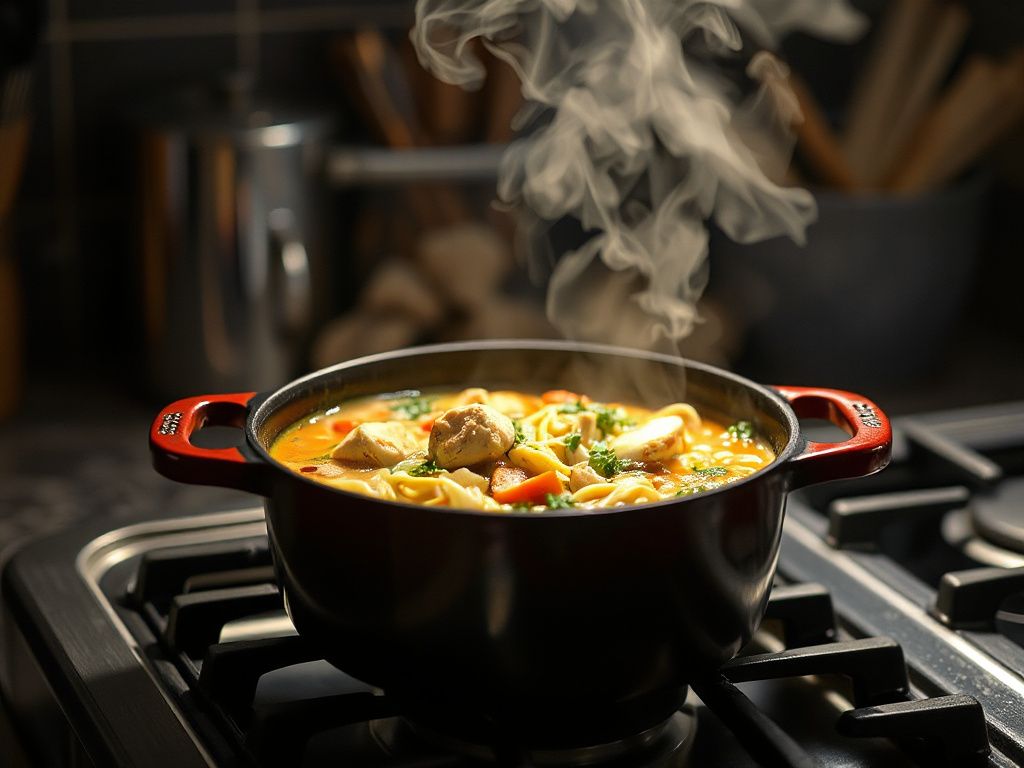
The same thermal mass that makes a purple cast iron pot a baker’s dream also translates beautifully to stovetop braises. When searing meat, the enameled surface develops fond—the caramelized brown bits—as effectively as a raw iron skillet, but without releasing any metallic ions into acidic sauces. A long-simmered beef bourguignon will never taste like a rusty nail, which is a genuine risk with bare iron and wine-heavy recipes.
For a precision approach to stew, brown your meat in batches at medium-high heat, then deglaze with a splash of broth while the pot is still hot. The purple interior shows the fond clearly against the light background, so you can judge exactly when it’s turned from golden to burnt. That visual cue is something you lose with black iron—here, the color works to your advantage.
Why You Shouldn’t Boil Dry
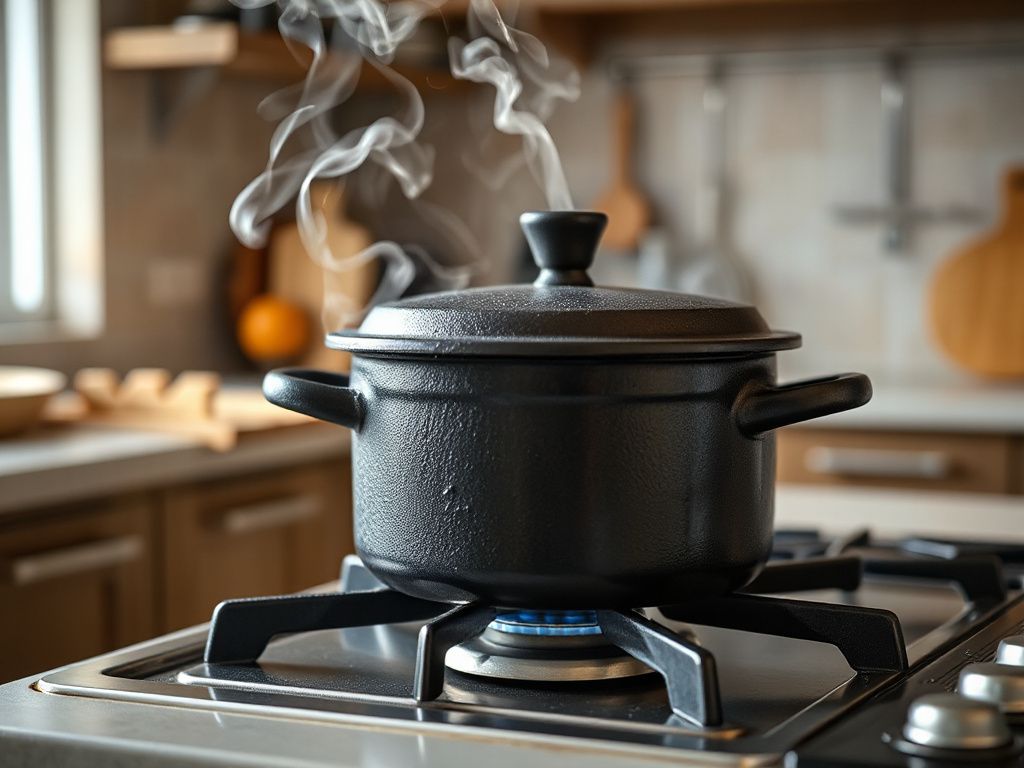
Enamel failure often traces back to one incident: a pot left to boil dry on a burner. With raw cast iron, a dry boil simply burns off any seasoning. With an enameled purple pot, the temperature can exceed 700°F at the hot spot directly over the flame, causing the porcelain to crack, pop off, or permanently discolor. The purple pigment is sensitive to extreme localized heat; once it turns grey or white, there’s no bringing it back. Use a timer for every boil, and never leave stock simmering unattended.
That same caution extends to outdoor use. While you might be tempted to nestle a purple pot right into the coals like rugged cast iron camping cookware, the direct flame contact and wild temperature swings will destroy the enamel coat. Enameled pieces do best with a grate and a steady fire—think of them as portable ovens rather than heavy-duty camp skillets.
When the Color Tells You Something’s Wrong
Hairline Cracks vs. Craze Lines
A craze line appears as a network of fine, spiderweb-like marks in the surface gloss. It typically happens when a hot pot is plunged into cold water or placed on a freezing surface. These lines don’t go deep, but they trap food particles and eventually stain the purple permanent brown. Hairline cracks are deeper, often running from the rim downward, and they expose the iron core to moisture. You can feel a crack with a fingernail; a craze line you usually can’t.
If you spot a true crack, stop using the pot for baking—it can catastrophically split under oven heat. Craze lines, while unsightly, are cosmetic. To slow their spread, always place a hot pot on a wooden board or silicone trivet, never on granite or tile countertops. The thermal shock between the 400°F base and a cold stone surface is enough to start a crack in one violent moment.
Fading: Oxidation or Residue?
Over years of regular use, the purple enamel may appear to lose vibrancy. In most cases, this isn’t true fading—it’s a buildup of microscopic mineral deposits from hard water or a thin film of polymerized cooking oil. To test, rub a damp cloth with a tiny dab of Bar Keepers Friend (the classic powder, not the liquid) on an inconspicuous outer spot. If the original purple gleams back, you’re dealing with residue, not degradation.
True pigment fade happens when the pot is repeatedly exposed to direct broiler elements or very high oven heat beyond 500°F. At those temperatures, the glassy structure begins to alter its refractive index, and the color shifts from vivid violet to a muted mauve. It still cooks fine, but if aesthetic matters to you—and with a purple pot, why wouldn’t it?—keep the broiler off and never exceed the manufacturer’s recommended temperature, usually 500°F.
Enthusiasts sometimes ask how this compares to the rugged, uncoated pots used in traditional Louisiana kitchens. The answer lies in the finish. While a best Cajun cookware cast iron pot thrives on open flame and develops a blackened nonstick surface, its purple enameled sibling trades that indestructibility for stain resistance and a non-reactive cooking environment. Each has a defined role, and for the precision baker, the enamelled route provides a controllability that bare iron can’t match without years of seasoning upkeep.
Frequently Asked Questions
Can a purple cast iron pot handle self-cleaning oven cycles?
No. Self-cleaning cycles reach temperatures above 800°F, which will permanently damage the enamel’s color and can craze the surface. The purple pigment will turn grey and chalky, and the lid knob may melt. Always use manual scrubbing methods instead.
Why does the inside bottom develop a sticky residue after baking bread?
This is usually residual flour or starch that semi-caramelized during the dry bake. Soak the pot with hot water and a few drops of dish soap for 20 minutes, then gently scrub with a blue non-scratch sponge. For stubborn patches, a baking soda paste left overnight lifts the starch without harming the glass.
Does the purple color stain from tomato-based braises?
The interior enamel’s light color can show a faint orange tint after prolonged simmering of acidic sauces, but this is surface residue, not a permanent stain. Cleaning with a baking soda boil or a quick rub with Bar Keepers Friend removes it completely. The purple exterior won’t stain because the outside is not in direct contact with food.
Is it safe to use metal utensils with a purple cast iron pot?
Utensils like spoons or ladles can leave grey metal marks on the interior, which look alarming but are purely cosmetic—they’re metal deposits, not scratches through the enamel. Remove them with the same gentle abrasive paste used for starch residue. However, avoid metal knives or the sharp edge of a metal spatula, which can chip the surface if you strike the rim.
What’s the best way to store the pot if I have a small kitchen?
Keep the lid inverted on top of the base with a protective cloth or felt pad between the two. This prevents the raw iron rim from crashing against the delicate collar. If you’re stacking another pot on top, place a trivet or towel on the inverted lid to distribute weight. While a massive 15 gallon cast iron pot is entirely impractical for daily baking, even a standard 5-quart vessel benefits from careful nesting to protect that purple finish.