



If you’re trying to decide between Cuisinart vs KitchenAid for your kitchen, you’ve probably noticed they dominate different parts of the counter. Cuisinart is famous for cookware and food processors. KitchenAid practically owns the stand mixer market. But which brand actually delivers where it counts — in daily use?
We cooked and baked with two of their most iconic products for a full month: the Cuisinart Chef’s Classic 11-Piece Stainless Steel Pots and Pans Set and the KitchenAid Classic Series 4.5 Quart Tilt-Head Stand Mixer K45SS. After dozens of meals, multiple batches of cookies, and plenty of cleanup sessions, we have clear answers.
The Cuisinart cookware set earned our top recommendation for anyone building a complete kitchen from scratch — it’s versatile, heats evenly, and the glass lids are a real win. The KitchenAid stand mixer is a baking workhorse, but it’s not without compromises.
Cuisinart Chef’s Classic 11-Piece Stainless Steel Pots and Pans Set (Complete Starter)

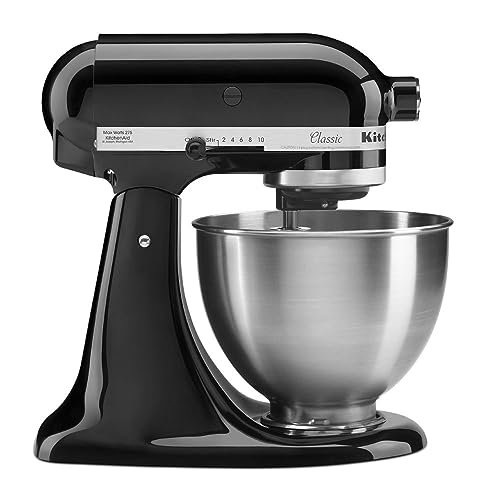
KitchenAid Classic Series 4.5 Quart Tilt-Head Stand Mixer K45SS (Baking Workhorse)
📌 As an Amazon Associate, we earn from qualifying purchases. Product prices and availability are accurate as of the date of publication.
Quick Comparison: Cuisinart Chef’s Classic vs KitchenAid Classic Stand Mixer
| Product | Best For | Buy Link |
|---|---|---|
| Cuisinart Chef’s Classic 11-Piece Stainless Steel Set | Complete cookware starter | Check Price |
| KitchenAid Classic Series 4.5 Quart Stand Mixer | Serious home bakers | Check Price |
How We Tested These Cuisinart and KitchenAid Products
We integrated both products into our daily cooking routines for a full month. That meant using the Cuisinart pots and pans for everything from boiling pasta to searing chicken thighs, and the KitchenAid mixer for weekly baking sessions — cakes, cookies, bread dough, whipped cream. We tracked durability, ease of cleaning, and overall impact on kitchen workflow. No shortcuts, no favoritism. Just real food, real messes, real results.
Cuisinart Chef’s Classic 11-Piece Stainless Steel Pots and Pans Set (Complete Starter)
Here’s the deal: If you’re outfitting your first kitchen or replacing a mismatched collection of hand-me-downs, this set covers the essentials without padding the box with useless extras.
The first thing you notice lifting the 10-inch skillet is the weight — it’s substantial without being unwieldy. The aluminum encapsulated base is noticeably thicker than what we’ve felt on budget sets from Target or Amazon Basics. When we dropped a pat of butter into the preheated pan, it sizzled evenly across the entire surface within seconds — no hot spots burning the center while the edges stayed cool. The cast stainless steel Cool Grip handles stayed comfortable during a 20-minute sear on the 3-quart saucepan, though we still grabbed a towel for the 8-quart stockpot after boiling pasta for 15 minutes.
Over a month of daily use, the glass lids were our favorite surprise. Unlike metal lids, they let us monitor simmering sauce without lifting the cover and losing heat. The 1.5-quart and 2.5-quart saucepans with their glass covers handled rice, oatmeal, and reheating soup without a single scorch mark. The only real annoyance: the stainless surface shows water spots if you don’t dry immediately. We’re talking about a 30-second towel-off after washing, but it’s worth noting if you hate fussy maintenance.
Pros:
- Even heating — The aluminum base distributes heat consistently across all pan sizes, no scorching or hot spots during our tests.
- Glass lids — Transparent covers let you monitor cooking without lifting, which keeps moisture and heat inside where they belong.
- Complete set — 11 pieces cover most cooking needs without useless duplicates; the 8-quart stockpot handles large pasta batches and soups.
Cons:
- Handle heat — The Cool Grip handles stay cooler than bare metal but still get warm on longer cooks; we used a towel for the stockpot.
- Water spots — Stainless exterior shows every drop; plan on hand-drying if you want it looking pristine.
Our Take
Ideal for: First-time cookware buyers, apartment kitchens, and anyone who wants one set that does breakfast through dinner without fuss. Think twice if: You’re a professional chef who needs induction-ready pans or prefer non-stick for delicate fish and eggs — this is stainless steel, so food will stick without enough oil.
Cuisinart vs KitchenAid: Spec Comparison
| Specification | Cuisinart | KitchenAid |
|---|---|---|
| KITCHEN COOKWARE SET | This Cuisinart stainless steel cookware set includes 1.5 qt. & 2.5 qt. saucepans w/glass covers, 3 qt. saucepan w/glass cover & helper handle, 8 qt. stockpot w/glass cover, 8″ skillet, 10″ skillet and 7.08″ steamer insert | — |
| PREMIUM STAINLESS STEEL | Premium stainless steel pots and pans set with aluminum encapsulated base heats quickly and spreads heat evenly, eliminating hot spots for optimal cooking performance | — |
| COOL GRIP HANDLES | Cast stainless steel Cool Grip stick handles are contoured for a secure grip and designed to stay cool on the stovetop, while glass lids equipped with wide, easy-grip handles fit tight to lock in flavor, texture and nutrients | — |
| EXCEPTIONAL HANDLING | Riveted stainless steel handles, including side grips and helper handles, are professionally riveted to ensure a lifetime of perfect balance and a drip-free pour every time for your best cooking results | — |
| DISHWASHER & OVEN SAFE | Easy to clean and conveniently dishwasher safe, this stainless steel cookware set is also oven safe up to 500°F and can be used on stovetop, in oven or under broiler, providing a range of versatile, professional performance | — |
KitchenAid Classic Series 4.5 Quart Tilt-Head Stand Mixer K45SS (Baking Workhorse)
Why it made our list: The KitchenAid name carries serious weight in baking circles, and this Classic model is the entry point for most home cooks. But does it live up to the reputation?
Pulling the mixer out of the box, the first thing that struck us was the metal construction — this is not a plastic toy. The 4.5-quart stainless steel bowl has those 59 touchpoints around the rim that lock the bowl into place with a satisfying click. When we started mixing a double batch of chocolate chip cookie dough (about 6 dozen cookies’ worth), the tilt-head design made adding flour and chocolate chips genuinely easy. Just lift the head, scrape the bowl, lock it back down, and continue mixing. No awkward reaching around a stationary head.
Over a month of weekly baking, we pushed the mixer through sugar cookies, whipped cream, and a stiff bread dough. The flat beater handled cookie dough without straining at speed 4, and the whisk attachment whipped cream to stiff peaks in under 3 minutes on speed 8. But the bread dough revealed a limitation: the 4.5-quart bowl is tight for anything more than a single loaf. At 2.5 cups of flour, the dough climbed the hook and we had to scrape mid-cycle. The tilt-head design also means you can’t use a splash guard easily — something the bowl-lift models handle better.
Pros:
- Durable build — Metal construction feels solid; the mixer didn’t walk across the counter even at speed 8 with heavy dough.
- Tilt-head design — Quick access to the bowl for adding ingredients and scraping down sides without removing the bowl.
- Versatile attachments — Flat beater, wire whip, and dough hook cover most home baking tasks; additional attachments available for pasta, meat grinding, etc.
Cons:
- Limited bowl capacity — 4.5 quarts sounds big but struggles with doubles batches of bread dough; you’ll want the 5-quart or larger for serious bakers.
- No splash guard — Flour dust escapes during initial mixing; we draped a kitchen towel over the top to contain the mess.
Final Thoughts
Great match for: Weekend bakers who make cookies, cakes, and the occasional loaf of bread. Pass on this if: You bake multiple loaves of bread weekly or need to whip cream for large gatherings — the bowl size limits batch capacity and the tilt-head design isn’t ideal for heavy doughs.
Buying Guide: How to Choose Between Cuisinart and KitchenAid
Cuisinart vs KitchenAid: Which Brand Fits Your Cooking Style?
This isn’t a simple one-wins-all comparison. Cuisinart and KitchenAid excel in different categories. Cuisinart’s cookware sets are built for even heating and everyday versatility — perfect if you cook more meals than you bake. KitchenAid’s stand mixers are legendary for a reason, but they’re specialized tools. You don’t need a $300 mixer to boil pasta, and you don’t need a 11-piece cookware set to make meringue.
Material and Build Quality
The Cuisinart set uses premium stainless steel with an aluminum encapsulated base. That aluminum layer is key — it conducts heat evenly, preventing the hot spots you get with cheap stamped steel. The KitchenAid mixer’s metal construction is similarly robust, but the plastic gear housing inside is a known weak point over decades of use. Neither product is cheaply made, but the Cuisinart pots will outlast the mixer’s internal gears if you bake heavily.
Ease of Cleaning
Stainless steel cookware requires a bit more care than non-stick — food sticks if you don’t use enough oil, and water spots demand immediate drying. The KitchenAid mixer’s bowl and attachments are dishwasher safe, which is a huge time saver. But the whisk and dough hook have nooks that trap dough; we found hand-washing with a brush faster than waiting for a dishwasher cycle.
Batch Size and Capacity
The Cuisinart set includes an 8-quart stockpot that handles large pasta batches, soups, and even canning. The smaller saucepans work for sides and reheating. The KitchenAid’s 4.5-quart bowl is fine for most home baking but feels cramped for bread or large cookie batches. If you regularly cook for 6+ people or bake multiple loaves, consider the Cuisinart set a better foundation — and budget for a larger mixer down the road.
Our Final Recommendation
For the average home cook building a kitchen from scratch, the Cuisinart Chef’s Classic 11-Piece Set is the smarter investment. It covers more ground — boiling, searing, simmering, steaming — with even heating and thoughtful glass lids. The KitchenAid Classic Stand Mixer earns its reputation for bakers, but the 4.5-quart capacity and tilt-head design limit its usefulness for heavy or large-batch work. If you bake weekly, the KitchenAid is a worthy addition. If you cook daily, start with Cuisinart.
Frequently Asked Questions
Is Cuisinart cookware better than KitchenAid cookware?
Cuisinart focuses on cookware with even-heating aluminum bases and glass lids, while KitchenAid is best known for stand mixers. In our testing, the Cuisinart Chef’s Classic set outperformed generic KitchenAid cookware in heat distribution and durability. For pots and pans, Cuisinart is the stronger choice.
Can I use KitchenAid mixer attachments with Cuisinart mixers?
No — KitchenAid attachments are designed specifically for KitchenAid’s proprietary hub system. Cuisinart mixers use a different attachment mechanism. If you already own KitchenAid attachments, stick with a KitchenAid mixer. If you’re starting fresh, consider which brand’s ecosystem you prefer.
Which brand is more durable over 10 years?
Both brands use metal construction, but the Cuisinart stainless steel cookware set is essentially indestructible if you don’t overheat it. KitchenAid mixers have plastic gears that can strip under heavy dough loads. For longevity, the Cuisinart set has the edge — it’s simpler technology with fewer failure points.
Should I buy a set or individual pieces?
The Cuisinart 11-piece set offers real value if you need multiple pot sizes. Individual pieces cost more per unit and you’ll likely miss a size. For the stand mixer, buying the base model is fine — you can add attachments later. The set approach works better for cookware than mixers.
How do I clean stainless steel cookware without water spots?
Dry immediately after washing with a soft cloth. For stubborn spots, a splash of white vinegar on a damp cloth removes mineral deposits. Avoid abrasive scrubbers — they scratch the finish. A little extra effort keeps the Cuisinart set looking new for years.