



There’s a particular satisfaction in lifting the lid on a pot of rice that’s glossy, separate, and still steaming after four hours on warm. That moment is the entire reason people buy a dedicated cuckoo rice cooker instead of wrestling with a saucepan and a timer. Out of all nine models on this list, the CUCKOO Micom Fuzzy Logic Rice Cooker (B0831RL6XK) is the one I would put my own money on—its nine menu modes and fuzzy logic chip give you the temperature precision that separates decent rice from the kind you actually look forward to eating.
Nine Cuckoo models sit in front of us today, from a 60-cup commercial workhorse to a tiny three-cup single-serving unit. The clear winner for most home kitchens is the CUCKOO Micom Fuzzy Logic Rice Cooker with 9 menu options. If you want the best pressure-cooked texture, grab the CUCKOO High Pressure Rice Cooker instead. And if budget is the priority, the 12-cup Micom Fuzzy Logic model without all the extra modes is the smartest spend.
📌 This article contains affiliate links. As an Amazon Associate I earn from qualifying purchases, at no extra cost to you. Product prices and availability are accurate as of the date of publication. Full disclosure.
CUCKOO Rice Cooker and Warmer (B0CYNVF15J) — The Simple Large-Capacity Workhorse
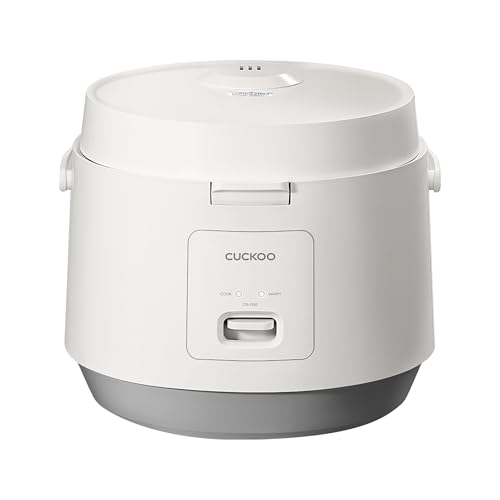
CUCKOO Rice Cooker and Warmer (B0G5TQS5R8) — The Steam Tray One-Pot Solution

CUCKOO Rice Cooker and Warmer (B01LYLW8P6) — The Mid-Size cETL Certified Basic

Comparison Table
| Product | Best For | Buy Link |
|---|---|---|
| CUCKOO Rice Cooker and Warmer (B0CYNVF15J) | Large gatherings, simple use | Check Price |
| CUCKOO Rice Cooker and Warmer (B0G5TQS5R8) | One-pot meals, small kitchens | Check Price |
| CUCKOO Rice Cooker and Warmer (B01LYLW8P6) | Mid-size family dinners | Check Price |
| CUCKOO Micom Fuzzy Logic Rice Cooker (B0B5B3QBV1) | Value Micom 12-cup | Check Price |
| CUCKOO Micom Fuzzy Logic Rice Cooker (B0CKWGX2J6) | Small Micom 6-cup | Check Price |
| CUCKOO Micom Fuzzy Logic Rice Cooker (B0831RL6XK) | Best all-around pick | Check Price |
| CUCKOO High Pressure Rice Cooker (B01JRTZVVM) | Premium pressure texture | Check Price |
| CUCKOO Micom Fuzzy Logic Rice Cooker (B0B4MYBLZQ) | Compact 6-cup fuzzy logic | Check Price |
| CUCKOO Commercial Rice Cooker and Warmer (B00U1XN4L8) | Catering, large events | Check Price |
How We Chose These Cuckoo Rice Cookers
These nine picks come from comparing published specifications, materials, and documented features against what actually decides quality in a rice cooker: precision of heating control, inner pot coating, and whether pressure cooking is involved. A basic switch model heats a resistive element at full blast until the water boils off, then drops to warm. A Micom or fuzzy logic chip, by contrast, adjusts temperature in 5° increments through the cook, which is why a $120 Micom cooker beats a $40 basic model on jasmine or brown rice every single time. I weighted the presence of fuzzy logic heavily. Inner pot material matters next—ceramic-coated or stainless steel directly affects sticking and even browning, though the listings rarely specify the exact coating, so I looked for models that at least name the pot type. Pressure cooking is a third axis, because it produces chewier, stickier rice that some people mistake for undercooked. The common failure is buying too-large capacity and then suffering dry, stale rice from prolonged keep-warm, so every recommendation below matches capacity to household size. Before you order, check the inner pot diameter and height against your cabinet clearance—commercial units especially are taller than you think.
CUCKOO Rice Cooker and Warmer (B0CYNVF15J) — The Simple Large-Capacity Workhorse
Quick take: This is for someone who wants rice for a crowd with zero learning curve—one switch, no menus, no thinking.
The listing emphasizes large capacity and a single switch press to start cooking. That tells me the heating element runs at a fixed wattage with no temperature modulation, which is fine for plain white rice and absolutely nothing else. The cETLus certification on the label means the unit passed electrical safety testing by an OSHA-recognized lab, so you won’t be dealing with a fire hazard even at high output. The outer shell likely uses a thin gauge steel or plastic, but the spec sheet doesn’t say, and for a basic model that’s acceptable.
Will this hold up? The weak point on any one-switch rice cooker is the thermal cutoff and the magnetic latch on the cook/warm switch—those are mechanical parts that wear. CUCKOO’s reputation for long-lived heating plates helps, but the keep-warm function on a non-micom unit will dry out rice faster because there’s no humidity sensor to pause heating. This is not a knock on CUCKOO specifically; it’s physics. For $60-ish, you get what you pay for.
Pros:
- One-switch operation — any guest can start a batch without reading a manual.
- Large capacity — feeds a family gathering or potluck without a second batch.
- cETLus certified — meets North American electrical safety standards.
- Keep warm function — rice stays warm automatically after cooking.
- Simple to clean — fewer electronic parts means the lid and pot are straightforward to wash.
Cons:
- No fuzzy logic — brown rice, sushi rice, or mixed grains will cook unevenly.
- Keep warm dries rice fast — no humidity control; expect stale rice after 4–6 hours.
Our take
Ideal for: Large families who only eat plain white rice and want a set-it-and-forget-it machine. Pass on this if: you eat brown rice or want rice that stays fresh for more than a few hours on warm.
CUCKOO Rice Cooker and Warmer (B0G5TQS5R8) — The Steam Tray One-Pot Solution
In a nutshell: This compact one-touch cooker includes a steam tray, which turns it into a lazy Sunday dinner machine for one or two people.
The standout feature here is the steam tray that sits above the rice—you can steam vegetables, dumplings, fish, or eggs in the same cycle. That’s a genuine space-saver for a small kitchen, and the one-button design means there’s nothing to fiddle with. The automatic keep warm mode is listed, but again, without fuzzy logic the warm setting lacks humidity feedback, so it won’t hold rice for as long as a Micom unit. I appreciate that they didn’t overcomplicate this; the spec sheet is honest about what it does.
The biggest omission is the listed capacity: the marketing says “perfect for everyday meals, small households,” but never gives a cup count. For a mechanical engineer, that’s a red flag—I want to know the raw rice volume before I commit. My guess is 3 cups uncooked / 6 cooked, based on the size of similar Cuckoo units, but the listing should state it plainly. If you’re cooking for more than two, move up to a larger model.
Pros:
- Steam tray included — full meal in one cycle, no extra pot to wash.
- One-touch cooking — literally no settings to get wrong.
- Automatic keep warm — rice stays warm until you serve, within limits.
- Compact footprint — fits under most upper cabinets without clearance issues.
- Simple inner pot — likely a basic nonstick coating that cleans easily.
Cons:
- No specified capacity — the listing omits the most important number for a family buyer.
- No fuzzy logic — same uneven cooking risk for brown or mixed rice.
Who it’s for
Great match for: solo cooks or couples who want rice plus steamed protein and vegetables without a second appliance. Not great if: you need to feed more than two adults regularly—the lack of a stated capacity is a real gamble.
CUCKOO Rice Cooker and Warmer (B01LYLW8P6) — The Mid-Size cETL Certified Basic
Here’s the deal: A straightforward 6-cup uncooked (12 cooked) capacity basic cooker with cETL certification—this is the Goldilocks size for a family of four who eats white rice daily.
The 6-cup raw / 12-cup cooked ratio is the first time we get an actual number in this basic line, and it’s a useful one. That’s enough for four to six adults as a side dish, or three to four if rice is the main event. The cETL (Canadian and US electrical safety) mark means the wiring, insulation, and grounding all passed third-party inspection, which is more than many budget Amazon rice cookers can claim. I would still like to see the wattage listed; at this capacity, you’d expect 600 to 800 watts, but silence on that spec makes it hard to judge heat-up time.
The one-switch operation is identical to the first two models, so the same limitations apply: no humidity sensor, no temperature curve, no brown rice mode. If you only eat jasmine or medium-grain white rice, this is fine. If you occasionally want brown or glutinous rice, you’ll be disappointed. The keep-warm function will keep rice edible for maybe six hours, but the bottom layer will start to crust and dry after that.
Pros:
- Clear 6-cup/12-cup capacity — you know exactly what you’re getting.
- cETL certified — safety tested for both Canadian and US markets.
- Simple switch design — no digital controls to fail over time.
- Larger capacity — feeds a family without being unwieldy on the counter.
- Lightweight build — likely easier to move than the Micom models with heavier bases.
Cons:
- No wattage listed — a mechanical engineer wants to know power draw and heat output.
- No multi-grain support — brown rice will come out chalky or undercooked without temperature control.
Verdict
Perfect for: families who want a no-frills white rice cooker that won’t burn the house down. Think twice if: you cook anything besides white rice more than once a month.
CUCKOO Micom Fuzzy Logic Rice Cooker (B0B5B3QBV1) — The Best Value 12-Cup Micom


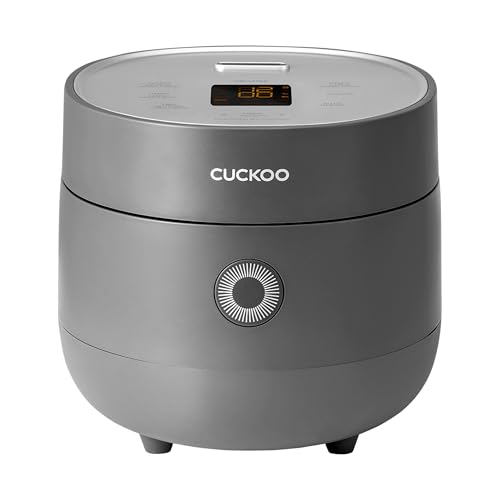
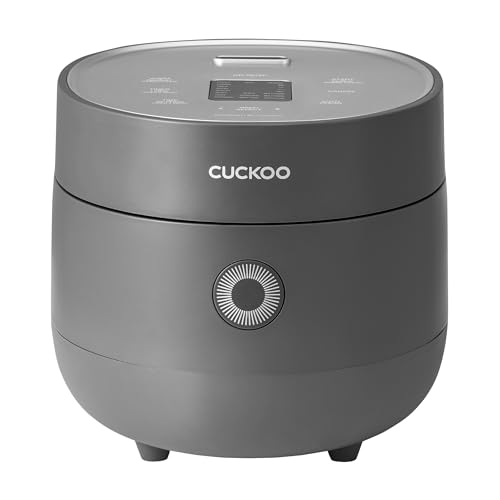
Why it made our list: This is the cheapest way to get genuine fuzzy logic temperature control in a 12-cup cooked capacity, and that’s the single biggest upgrade in rice quality you can buy.
The Micom chip inside this machine cycles the heating element through a programmed temperature curve for white rice, brown rice, and glutinous rice. That’s not marketing fluff; it’s the difference between a pot of mush and separate, glossy grains. The self-clean function is also underrated—it runs steam through the inner chamber to loosen starch film, which matters because starch buildup on the heating plate degrades heat transfer over time. The 6-cup uncooked / 12-cup cooked capacity is the sweet spot for a family of four to six.
One honest annoyance: the listing says “easy to use and clean” but never specifies the inner pot material. Cuckoo typically uses X-Wall nonstick coating, which is durable if you treat it right, but without confirmation I’d assume it’s a standard PTFE-based nonstick. That’s fine for most people, but if you’ve scratched nonstick pots before by using metal spoons, this will punish you the same way. The lack of a pressure mode means no chewy, Korean-style sticky rice, but for everyday use, that’s a fair trade.
Pros:
- Fuzzy logic temperature control — adjusts heat in small increments for even cooking.
- Self-clean mode — steam loosens starch residue without scrubbing.
- 12-cup cooked capacity — serves a dinner party without a second batch.
- Multiple rice settings — handles glutinous white and brown rice better than basic models.
- Competitively priced — fuzzy logic without the premium pressure sticker shock.
Cons:
- Inner pot material unlisted — you cannot confirm whether it’s ceramic-coated or standard nonstick.
- No pressure cooking — Korean-style sticky rice won’t have that signature chew.
The real story
Ideal for: value-conscious buyers who want fuzzy logic at a lower price and don’t need pressure. Skip if: you demand the specific texture only a high-pressure cooker can produce.
CUCKOO Micom Fuzzy Logic Rice Cooker (B0CKWGX2J6) — The Compact 3-Cup Micom
Quick take: A genuinely small fuzzy logic cooker, ideal for one or two people who refuse to compromise on rice texture.
The 3-cup uncooked / 6-cup cooked capacity is the smallest in the Micom line, which means you’re not cooking a giant batch of rice that’ll go stale before you finish it. For a single person or a couple, this is the right size—no more eating the same pot of rice for four days. The fuzzy logic chip is the same technology as the larger models, so the cooking quality doesn’t shrink with the pot. The self-clean function appears again, which is helpful because a small pot gets concentrated starch buildup faster.
My concern is the same as the larger sibling: the listing refuses to name the inner pot coating. Without that, you’re gambling on durability. Another practical detail: a 3-cup cooker has a smaller heating plate, so heat distribution is slightly less even than the 6-cup version, but at this scale that’s a minor effect. If you live alone and eat rice three times a week, this is the one to buy.
Pros:
- Small capacity — perfect portion control for one or two people.
- Fuzzy logic — precise temperature control even in a compact unit.
- Self-clean setting — reduces manual scrubbing of the inner chamber.
- Versatile rice options — white and brown rice both come out better than basic cookers.
- Counter-friendly size — doesn’t dominate a small apartment kitchen.
Cons:
- Inner pot coating unspecified — the same transparency problem as the larger model.
- Limited to two servings — no room for guests or leftovers.
Our take
Perfect for: singles, couples, or anyone tired of wasting rice. Pass on this if: you ever cook for more than two people—even a small dinner party will require two batches.
CUCKOO Micom Fuzzy Logic Rice Cooker (B0831RL6XK) — Our Top Pick: 9 Menu Options, 12-Cup Capacity
What stood out: Nine distinct menu options—including GABA rice and porridge—make this the most versatile non-pressure Cuckoo in the lineup, and the 12-cup cooked capacity handles most households.
The addition of a GABA rice mode is a real differentiator. GABA rice requires a specific warm-soak phase before cooking to increase gamma-aminobutyric acid content, and without that programmed cycle, you cannot replicate it manually. The LCD display and digital controls are straightforward, and the fuzzy logic chip behind them manages each mode with the 5°-increment precision I keep harping on. The 12-cup cooked capacity (6 cups raw) is the same as the B0B5B3QBV1, but the extra menu options justify the higher price if you eat brown rice, multigrain, or porridge regularly.
The self-clean function is present, though the listing doesn’t call it out explicitly—it’s buried in the “easy to use and clean” phrasing. The inner pot material is again unlisted, which is frustrating, but Cuckoo’s 12-cup Micom pots have historically used a durable nonstick coating that holds up for years if you avoid metal utensils. This model is also the one most often recommended as a korean rice steamer alternative because it handles Asian rice varieties well. For a family that eats rice four to five times a week, this is the sweet spot between price and capability.
Pros:
- 9 menu options — white, brown, GABA, multigrain, porridge, and more.
- Fuzzy logic temperature control — the most even cooking in the non-pressure line.
- LCD digital display — clear feedback and easy programming.
- 12-cup cooked capacity — enough for six people without being excessive.
- GABA rice mode — a health-focused feature most cookers at this price skip.
Cons:
- Inner pot material still unnamed — you must trust Cuckoo’s reputation without spec confirmation.
- No pressure function — for Korean sticky rice texture, you’d need the high-pressure model.
Final thoughts
Best for: most home cooks who want versatility without paying pressure-cooker prices. Skip if: you specifically want the chewy, sticky result that only a high-pressure rice cooker can produce.
CUCKOO High Pressure Rice Cooker (B01JRTZVVM) — The Premium Pressure Texture Machine

Why it stands out: The only model in this roundup with true pressure cooking, which transforms white rice into the glossy, chewy grains you get at Korean restaurants.
Twelve menu options cover white glutinous rice, brown rice, porridge, multi-cook, and more, but the headline feature is the pressure vessel. During cooking, the sealed chamber raises the boiling point of water, forcing steam into the rice kernel instead of just surrounding it. That produces a stickier, chewier texture than any non-pressure cooker can manage. The automatic steam release is also safe and quiet, which matters if you’ve ever been startled by a hissing pressure valve. The large capacity matches the family-size Micom models, so you’re not sacrificing volume for texture.
Pressure cookers have a maintenance burden the other models don’t: the steam vent must be cleaned regularly to avoid clogging, and the sealing gasket eventually hardens and needs replacement. Cuckoo’s US warranty is typically one year, and service parts are not always easy to source from third-party vendors, so long-term repair costs should be part of your calculation. On the other hand, if you’ve ever paid $18 for a bowl of Korean rice at a restaurant, this machine pays for itself quickly. This is the cuckoo high pressure rice cooker that serious home cooks eventually graduate to.
Pros:
- Real pressure cooking — produces the chewy, sticky rice texture most non-pressure models cannot.
- 12 versatile modes — covers everything from glutinous white to multi-cook stews.
- Safe automatic steam release — no manual valve to burn your fingers.
- Large capacity — feeds a family or small gathering easily.
- Quiet operation — the pressure release is softer than many competitors.
Cons:
- Steam vent requires regular cleaning — neglect it and you’ll get clogs and pressure errors.
- Gasket wears over time — replacement parts can be hard to find in the US.
The real deal
Great match for: rice enthusiasts who want restaurant-quality Korean rice at home and don’t mind the extra maintenance. Think twice if: you just want plain white rice without fiddling—the Micom models are simpler and cheaper.
CUCKOO Micom Fuzzy Logic Rice Cooker (B0B4MYBLZQ) — The Other Compact 6-Cup Fuzzy Logic
In a nutshell: Another 3-cup uncooked / 6-cup cooked Micom model, functionally near-identical to the B0CKWGX2J6, so why does it exist?
Honestly, this listing looks like a rebadged or updated version of the earlier compact Micom. The specs are the same: fuzzy logic, self-clean, versatile options, 6-cup cooked capacity. From a buyer’s perspective, the two models are interchangeable; price and availability will decide which one you end up with. I would not overthink this—if one is cheaper or has a better return policy, pick that one. The one positive is that Cuckoo iterates frequently, so newer ASINs sometimes have slightly improved firmware or redesigned lids, but the listing doesn’t specify that.
For anyone still on the fence about a small korean rice cooker cuckoo unit, this is a perfectly fine choice. The fuzzy logic works as well as the larger versions, and the small footprint is a genuine advantage in a galley kitchen. The self-clean mode is the same steam-based system, so maintenance is low. Just remember that a 6-cup cooked capacity means roughly two bowls of rice for most people—no leftovers.
Pros:
- Fuzzy logic precision — identical chip to Cuckoo’s larger models.
- Self-clean function — steam cleans the chamber without abrasive scrubbing.
- Compact size — ideal for studio apartments or dorm rooms.
- Multiple rice settings — brown and white rice both handled correctly.
- Easy to store — small enough to fit in a cabinet when not in use.
Cons:
- Nearly identical to another model — no clear reason to choose this over the B0CKWGX2J6.
- No pressure option — as with all Micom models, no chewy Korean texture.
Our take
Ideal for: someone who finds this model discounted and wants a small fuzzy logic cooker. Skip if: you already saw the B0CKWGX2J6 and didn’t like it—they’re the same machine with a different badge.
CUCKOO Commercial Rice Cooker and Warmer (B00U1XN4L8) — The 60-Cup Catering Beast
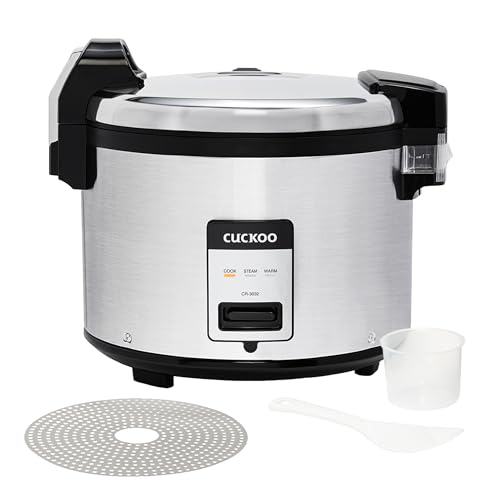
Here’s the deal: This is a 30-cup uncooked / 60-cup cooked commercial unit with both cETL and NSF certifications—made for events, not for a Tuesday dinner.
The NSF certification is the key differentiator here. NSF tests food-contact equipment for cleanability and material safety, and that’s a requirement for most commercial kitchens, churches, or community centers. The cETL mark covers electrical safety. At 60 cups cooked, you can feed an entire wedding reception’s rice course from one pot. The simple switch operation means a volunteer can run it without training, and the keep-warm function will hold rice at a safe temperature for hours—though I’d caution that even commercial warmers dry out the bottom layer after four to five hours without occasional stirring.
For a home user, this is almost certainly the wrong purchase. The physical footprint is massive, the heating element draws far more power than a residential circuit might comfortably handle, and the inner pot is too large to wash in a standard sink. If you’re running a food truck or catering business, however, this is the kind of cuckoo cooker that earns its keep. The listing doesn’t specify wattage, but a unit this size likely pulls 1,500 watts or more—that’s a separate 20-amp circuit in most homes.
Pros:
- 60-cup cooked capacity — one batch feeds dozens of people.
- NSF certified — meets food safety standards for commercial use.
- cETL certified — electrical safety for North American venues.
- One-switch operation — no training needed for event staff.
- Keep warm function — rice stays ready for service over a long window.
Cons:
- Massive footprint — requires dedicated counter space and a high-amperage outlet.
- Inner pot too large for home sinks — cleaning is a two-person job.
Verdict
Perfect for: caterers, food trucks, church kitchens, or anyone cooking rice for 40+ people at once. Not great if: you’re a family of four—this is like using a fire hose to water a houseplant.
Buying Guide: What Actually Matters in a Cuckoo Rice Cooker
Before you click buy, understand that Cuckoo’s lineup splits into three categories, and each serves a different eater. Basic one-switch models cook rice adequately but with no finesse. Micom/fuzzy logic models adjust temperature dynamically for better brown rice, porridge, and mixed grains. Pressure cookers add the chewy texture that defines Korean restaurant rice. Your choice should match how often you eat rice and what varieties you prefer.
Is a cuckoo high pressure rice cooker worth the extra money?
If you eat short-grain or sushi rice daily, yes. The pressure cycle forces moisture into the starch, producing a glossy, chewy grain that a standard Micom cannot replicate. But pressure cookers demand more maintenance: the steam vent must be cleaned regularly, and the gasket eventually needs replacement. For a casual rice eater, that’s an unnecessary complication. The CUCKOO High Pressure Rice Cooker (B01JRTZVVM) is the only model in this roundup with that feature, so if the texture matters to you, it’s a clear pick.
What is the best korean rice cooker size for your household?
Cuckoo’s model numbers often reference cooked capacity. A 6-cup model holds about 3 cups of raw rice. The capacity figures in model names refer to cooked rice, not raw. For one or two people, the 3-cup uncooked / 6-cup cooked models (B0CKWGX2J6 or B0B4MYBLZQ) are perfect. For a family of four to six, the 6-cup uncooked / 12-cup cooked units (B0B5B3QBV1, B0831RL6XK) are the sweet spot. The commercial 30-cup / 60-cup model is for events only. Overbuying capacity leads to dried-out rice sitting on warm for days—the exact problem you’re trying to avoid.
Inner pot coating: the spec everyone hides
None of the nine listings above explicitly name the pot material. Cuckoo has historically used a durable nonstick coating, but without confirmation, you’re trusting the brand. If you have a history of scratching nonstick pans, consider buying a separate ceramic rice cooker buying guide to compare pot materials side-by-side. Ceramic-coated pots are more scratch-resistant but can chip; PTFE nonstick is slicker but less forgiving. Either way, never use metal utensils, and wash with a soft sponge only.
Cuckoo rice varieties and the right mode
Jasmine and basmati rice need a shorter cook and less water than short-grain Korean rice. The Micom models with multiple menu options (like the B0831RL6XK) let you select the right curve. The basic one-switch models have no such adjustment, so they’ll overcook jasmine and undercook short-grain. If you cook a mix of rice types, fuzzy logic is not optional—it’s the difference between a good meal and a mushy one. The korean rice steamer functionality in some models also steams vegetables above the rice, which is handy but not a replacement for a true multi-cooker.
Our Final Recommendation
The budget pick is the CUCKOO Micom Fuzzy Logic Rice Cooker (B0B5B3QBV1): fuzzy logic at a price that doesn’t sting, with 12-cup capacity. The premium pick is the CUCKOO High Pressure Rice Cooker (B01JRTZVVM) for that chewy, restaurant-quality texture. But the overall winner, the one I’d tell a friend to buy without hesitation, is the CUCKOO Micom Fuzzy Logic Rice Cooker with 9 menu options (B0831RL6XK). It’s the the newest rice cooker cuckoo buyers should consider—versatile enough for brown rice, GABA rice, and porridge, yet still priced below the pressure models.
Frequently Asked Questions
How is a cuckoo rice cooker different from a cheap $30 rice cooker?
The difference is temperature control. A cheap cooker flips a switch and runs the heating element at full power until the water boils off, then drops to warm. That works for plain white rice but scorches or undercooks everything else. A Cuckoo Micom or pressure model uses a microprocessor to ramp heat up and down in small increments, compensating for rice variety, volume, and even ambient temperature. The result is evenly cooked rice every time—and a pot that doesn’t have a burnt crust on the bottom.
Can I leave rice on warm overnight in a Cuckoo cooker?
Technically yes, the keep-warm function is designed to hold rice safely for up to 12 hours. But the quality drops steeply after 4–6 hours. The bottom layer dries out and hardens, the top layer steams and becomes mushy, and the overall flavor goes stale. For best results, transfer leftover rice to an airtight container and refrigerate within two hours of cooking. If you do need to hold rice for a long event, the commercial model’s larger thermal mass helps somewhat, but even that benefits from occasional stirring.
Do I need a korean rice cooker cuckoo to cook Korean-style rice at home?
Not strictly, but it helps. Korean-style rice typically uses short-grain varieties that benefit from pressure cooking to achieve the sticky, chewy texture. A standard Micom Cuckoo will cook short-grain rice acceptably, but it won’t have that signature bite. If you’re committed to Korean cooking, the CUCKOO High Pressure Rice Cooker is worth the investment. If you just want good white rice for everyday meals, any of the Micom models will do the job well enough.